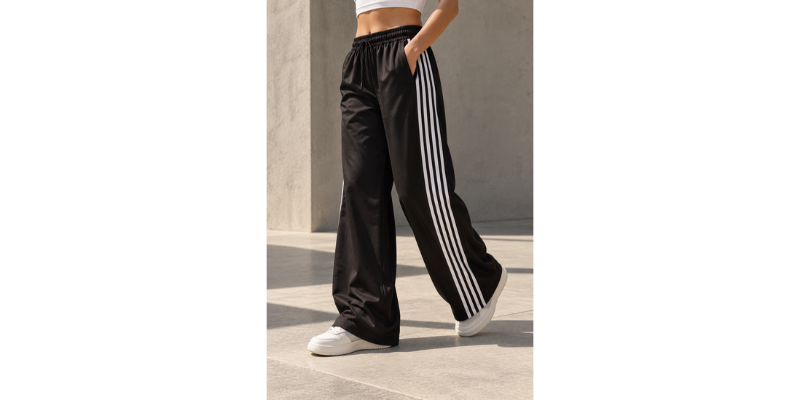
Adidas has filed a trademark infringement lawsuit against Australian fashion brand White Fox Boutique, alleging that its four-stripe clothing designs are too similar to Adidas’s well-known three-stripe trademark. The dispute concerns apparel including shorts, pants, and socks, and raises questions about how far trademark protection extends to common design elements in fashion.
The lawsuit, filed in Australia’s Federal Court in September 2026, follows months of reported efforts by Adidas to stop the sale of the disputed products. According to published reports, Adidas also objects to White Fox’s advertising, including photographs showing models wearing White Fox clothing alongside Adidas footwear.
The case raises a question for fashion brands and apparel manufacturers: When does a decorative clothing design become a trademark infringement? The answer depends on how the design is used, whether consumers may associate it with another brand, and the trademark rights protected under Australian law.
Why Adidas Claims White Fox’s Four-Stripe Clothing Infringes Its Trademark
Adidas’s three-stripe design is one of the most recognizable trademarks in the athletic apparel industry. The company has registered and enforced variations of the design across numerous markets, including Australia, where it is pursuing its current claims against White Fox.
According to The Daily Front Row’s coverage of the lawsuit, Adidas alleges that White Fox used four parallel stripes on clothing in a way that closely resembles its protected designs. The dispute reportedly involves several apparel categories and promotional materials featuring the products.
Adidas reportedly contacted White Fox in March 2026 to request that it stop selling the disputed merchandise. The company subsequently documented product sales and advertising before commencing legal proceedings in September. These allegations remain subject to the court’s determination.
The advertising may become particularly relevant. Adidas alleges that White Fox displayed models wearing its four-stripe garments with genuine Adidas footwear, potentially suggesting a connection between the brands. For companies managing recognizable trademarks, the way a competing product is photographed and marketed can influence whether consumers believe that the trademark owner approved or collaborated on it.
The dispute also reflects broader concerns about brand protection. As discussed in our article on rising trademark and licensing risks in 2026, intellectual property disputes remain an important consideration for companies managing established brands and expanding product portfolios.
Can Four Stripes Infringe Adidas’s Three-Stripe Trademark Under Australian Law?
Australian trademark law does not require two designs to be identical for infringement to occur. Under Section 120 of the Trade Marks Act 1995, a company may infringe a registered trademark by using a substantially identical or deceptively similar sign as a trademark on covered goods or services.
For Adidas, the central issue is whether White Fox’s four-stripe designs are sufficiently similar to its registered trademarks to cause the type of confusion recognized under Australian law. The court must also consider whether White Fox is using the stripes to identify the commercial origin of its products or simply as decoration.
That distinction matters because fashion frequently incorporates stripes, patterns, colors, and other familiar design features. A company cannot automatically prevent competitors from using every variation of a decorative element simply because it owns a trademark featuring a similar design.
Adidas has previously succeeded in an Australian dispute involving four stripes. In Adidas AG v. Pacific Brands Footwear Pty Ltd (No. 3) [2013] FCA 905, the Federal Court found that certain four-stripe footwear designs infringed Adidas’s registered trademarks. The decision established that adding a fourth stripe does not necessarily eliminate the risk of trademark infringement.
However, the earlier ruling does not guarantee the same outcome against White Fox. The court must evaluate the particular designs, their placement on the clothing, and how consumers would understand their use.
Adidas’s Trademark Loss Against Thom Browne
Adidas’s dispute with American luxury fashion house Thom Browne provides another useful comparison. Adidas previously challenged Thom Browne’s four-bar designs in the United States, arguing that they infringed its three-stripe trademarks.
In 2023, a U.S. jury rejected Adidas’s infringement and dilution claims. Subsequent proceedings did not overturn that verdict, illustrating that even a widely recognized trademark does not necessarily prevent other fashion companies from using similar design arrangements.
The White Fox lawsuit presents a different legal question because it is being decided under Australian law. The U.S. verdict does not determine whether White Fox’s products infringe Adidas’s Australian registrations, and the relevant designs and marketing practices are different.
Nevertheless, both disputes demonstrate the limits of trademark protection in the fashion industry. Courts examine how consumers encounter a design, whether it functions as a trademark, and whether the competing use interferes with the rights protected by the registration.
For apparel companies, these disputes also have practical consequences beyond litigation. A design challenged after products enter the market may require changes to manufacturing, packaging, advertising, and inventory. Addressing potential trademark conflicts during product development can reduce the commercial disruption associated with redesigning an established collection.
White Fox’s Response to Adidas Could Affect Damages
One of the more important legal issues concerns what reportedly happened after Adidas notified White Fox of its objections.
Under Section 126 of Australia’s Trade Marks Act, a court that finds infringement may award damages or an account of profits, subject to the applicable statutory rules. The legislation also permits additional damages after considering factors such as the seriousness of the infringement, the need for deterrence, and the defendant’s conduct after receiving notice.
Adidas alleges that White Fox continued selling the disputed products despite its requests to stop. If infringement is established, the court may consider the company’s response when determining whether additional damages are appropriate.
Receiving a cease-and-desist letter does not automatically require a company to withdraw its products. A business may reasonably dispute a trademark owner’s allegations, particularly when the disagreement concerns whether a design is decorative or functions as a trademark. However, continuing sales without properly assessing the allegations may increase financial exposure if a court later finds infringement.
The case also raises questions about product advertising. If promotional images suggest an unauthorized connection between competing brands, they may create additional concerns under Australian consumer protection law. Whether those issues form part of Adidas’s actual pleaded claims will depend on the court filings.
Strategic By Design: The Juris Law Group, p.C. Perspective on Trademark Protection
The Adidas and White Fox dispute highlights the importance of protecting recognizable brand elements while understanding the limits of trademark rights. At Juris Law Group, P.C., our intellectual property attorneys advise businesses on trademark protection, brand enforcement, and licensing strategies designed to protect brand identity and reduce the risk of infringement disputes.
Our work includes assessing potentially conflicting trademarks, addressing unauthorized use of protected designs, and advising on disputes involving consumer confusion, brand association, and commercial endorsement. For businesses in the consumer products and manufacturing industries, these issues can directly affect product development, advertising, distribution, and market expansion.
Over the next 12 months, the Adidas lawsuit may provide further guidance on how Australian courts distinguish decorative clothing features from protected trademarks. The outcome will depend on the particular registrations, products, and evidence presented. For Adidas, the proceedings represent another effort to enforce its three-stripe trademark following mixed results in international litigation.
For the broader fashion industry, the dispute reinforces the importance of establishing clear trademark protection and enforcement strategies before entering new markets. Brands must consider how their designs are used, how competitors may challenge them, and how trademark rights differ across jurisdictions. Early legal assessment can help businesses protect valuable brand assets while avoiding disputes that disrupt product launches and commercial operations.
Common Legal Inquiries
Can Adidas legally prevent other brands from using four stripes?
Not automatically. Adidas may challenge four-stripe designs that infringe its registered trademarks, but the number of stripes alone does not determine infringement. Courts consider the overall appearance, whether the design is being used as a trademark, and whether it is substantially identical or deceptively similar to the protected mark.
Can a fashion brand be sued for using another brand’s products in advertising?
Yes, depending on the circumstances. Advertising that includes another company’s products may raise trademark or misleading representation concerns if it falsely suggests sponsorship, approval, or a commercial relationship. Simply displaying another brand’s product, however, does not automatically establish infringement.
What happens if a company ignores a trademark cease-and-desist letter?
A cease-and-desist letter is not a court order, and receiving one does not automatically establish wrongdoing. However, continuing disputed conduct after receiving notice may affect damages if infringement is later proven. Companies should assess the allegations, relevant trademark registrations, and commercial risks before deciding how to respond.