California Prop 65 enforcement remained active in August 2026, with 519 Notices of Violation filed during the month. Lead continued to dominate enforcement by a substantial margin, appearing in 370 notices, followed by cadmium in 63 notices and DEHP in 33. Aflatoxins, PFOA, hexavalent chromium, Delta-9 THC, and ochratoxin A rounded out the principal chemical targets.
Food and agricultural products remained a major source of enforcement activity. August notices targeted seafood, spices, cacao and chocolate products, botanical powders, mushrooms, seaweed, supplements, and other imported or agricultural goods. Consumer products remained exposed through phthalates, PFAS, and hexavalent chromium claims involving plastic, leather, coated, and household goods.
Retail exposure also remained pronounced. The TJX/HomeGoods/Marshalls group appeared in approximately 57 notices, Amazon in 44, and Walmart in 26, followed by Ross Stores, Sprouts, Albertsons/Vons/Safeway, Whole Foods, and Target. The pattern continues to show how Prop 65 plaintiffs use retailers and ecommerce channels to pursue alleged exposure arising elsewhere in the supply chain.
Monthly Violation Summary
| Number of Violations | Listed Chemicals | Types of Products Targeted |
|---|---|---|
| 370 | Lead / Lead and lead compounds | Seafood, spices, botanical powders, chocolate, supplements, food products, household and imported consumer goods |
| 63 | Cadmium / Cadmium compounds | Seafood, cacao products, powders, spices, seaweed, agricultural commodities |
| 33 | DEHP | Plastic and vinyl goods, household products, accessories, flexible components |
| 18 | Aflatoxins | Nuts, seeds, spices, grains, food and agricultural products |
| 17 | PFOA | Coated goods, consumer products, packaging and PFAS-related applications |
| 16 | Hexavalent chromium | Leather goods, footwear, accessories and treated materials |
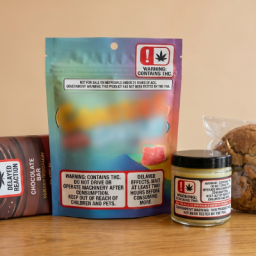
| 13 | Delta-9 THC | Cannabis and hemp-derived products |
| 12 | Ochratoxin A | Coffee, cacao, grains and other agricultural products |
Prop 65 Enforcement Observations — August 2026
August filings continued the enforcement pattern seen throughout the summer: plaintiffs concentrated on chemicals and products where exposure can arise from raw materials, agricultural conditions, component materials, or upstream manufacturing practices. Lead alone appeared in more than seven out of every ten notices filed during the month, making it the dominant enforcement theory across otherwise unrelated product categories.
Food-related claims were especially broad. Notices involved oysters, mussels, sardines, squid, black pepper, cinnamon, sea moss, seaweed chips, cacao nibs, dark chocolate, maca, moringa, mushroom powders, Tongkat Ali, and other botanical and specialty food products. The variety matters because it demonstrates that plaintiffs are testing beyond traditional high-risk categories and moving through adjacent products that share sourcing or contamination characteristics.
Retail and ecommerce exposure remained a central enforcement mechanism. Large sellers were repeatedly named alongside manufacturers, importers, and distributors. This allows plaintiffs to pursue an identifiable California-facing defendant even where the alleged chemical originates from an overseas supplier, agricultural ingredient, coating, plasticizer, or production process.
Most Common Chemicals Cited
| Rank | Chemical | Notices |
|---|---|---|
| 1 | Lead | 370 |
| 2 | Cadmium | 63 |
| 3 | DEHP | 33 |
| 4 | Aflatoxins | 18 |
| 5 | PFOA | 17 |
| 6 | Hexavalent chromium | 16 |
| 7 | Delta-9 THC | 13 |
| 8 | Ochratoxin A | 12 |
| 9 | DBP | 5 |
| 10 | PFOS | 4 |
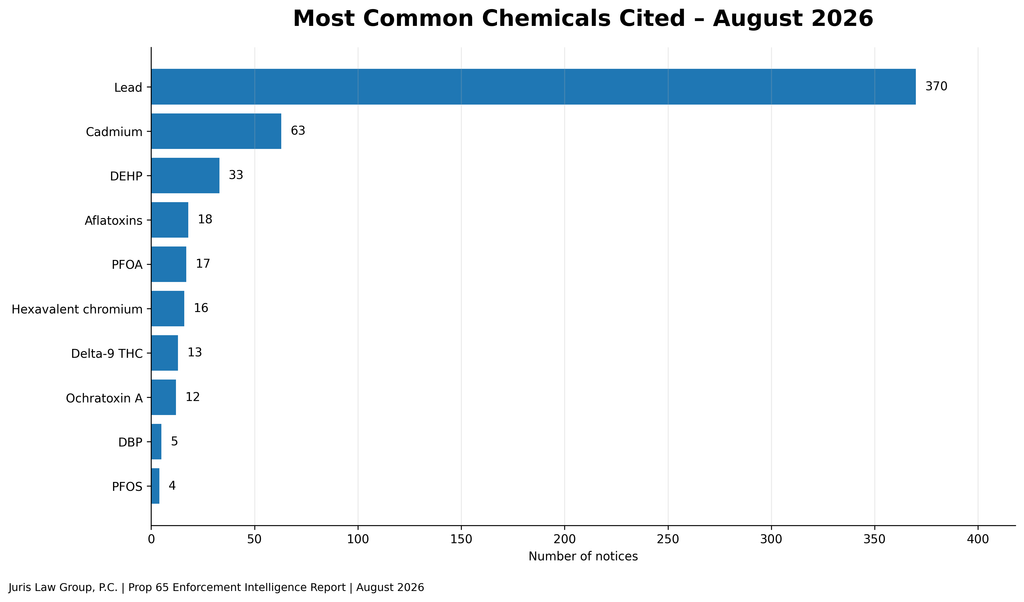
Lead remained the defining enforcement issue of August. Its presence across agricultural ingredients, seafood, supplements, chocolate, botanical products, and consumer goods gives plaintiffs a broad universe of potential targets. For businesses, the enforcement problem is compounded where lead levels fluctuate between production lots or suppliers.
Cadmium presented many of the same supply-chain concerns, particularly in seafood, cacao, botanical powders, and agricultural products. DEHP enforcement followed a different pattern, remaining tied primarily to flexible plastics, vinyl components, and consumer goods.
The smaller PFAS totals should not be interpreted as low litigation risk. PFOA and PFOS claims remain difficult because businesses may have limited information about coatings and treatments used by upstream vendors and may lack established safe harbor levels on which to base a conventional exposure defense.
Notable Chemical Trends
Lead in Botanical Powders and Supplements
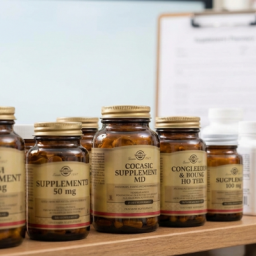
Botanical powders were prominent August targets. Notices included maca root, moringa, mushroom extracts, Tongkat Ali, sea moss, superfood powders, and other wellness products.
These products create recurring Prop 65 exposure because plants can accumulate metals from soil and water. The finished product may also combine ingredients sourced from several regions, making supplier qualification and lot-specific testing central to risk management.
Lead and Cadmium in Seafood
August notices targeted oysters, mussels, sardines, squid, and other seafood products. Several notices cited lead and cadmium together, reflecting the ability of marine products to accumulate environmental contaminants.
Importers and seafood distributors face additional complexity because contamination levels may vary according to species, harvest location, environmental conditions, and supplier. Retailers selling the finished product may nevertheless be named alongside those upstream entities.
Heavy Metals in Cacao and Chocolate
Cacao nibs, dark chocolate, and related products appeared among August notices. Lead and cadmium enforcement in cacao remains particularly challenging because contamination can occur at different stages of cultivation and post-harvest processing.
Food companies sourcing cacao should distinguish between supplier specifications and actual finished-product exposure. Periodic testing should account for geographic origin, ingredient concentration, serving size, and production-lot variability.
DEHP in Plastic and Vinyl Consumer Products
DEHP remained the leading phthalate target. Flexible plastics and vinyl components continue to provide plaintiffs with a repeatable enforcement category because plasticizers may be found in handles, coverings, straps, cords, grips, accessories, or other secondary components.
Product testing should therefore address individual materials rather than relying exclusively on the product’s principal composition.
Hexavalent Chromium in Leather Goods
Hexavalent chromium appeared in 16 August notices, continuing the enforcement activity observed during June and July. Leather goods, footwear, and accessories remain vulnerable where chromium compounds arise from tanning or finishing processes.
Downstream brands may have little direct involvement in tanning, making supplier documentation, restricted-substance requirements, and material testing particularly important.
Aflatoxins and Ochratoxin A in Agricultural Goods
Aflatoxins and ochratoxin A collectively appeared across food and agricultural products. Unlike intentionally added ingredients, these contaminants may arise from growing, drying, transportation, or storage conditions.
This makes static product specifications insufficient. Supplier controls and testing frequency must account for changing environmental and storage conditions.
PFAS in Coated and Treated Consumer Products
PFOA appeared in 17 notices and PFOS in four. The products associated with PFAS allegations continue to demonstrate that enforcement extends beyond traditional food-contact packaging.
Coatings, water-resistant treatments, packaging, textiles, and treated consumer-product components remain areas where businesses may lack complete chemical information from upstream suppliers.
Product Categories Most Frequently Targeted
Food & Beverage
- Oysters, mussels, sardines, and squid
- Black pepper and cinnamon
- Cacao nibs and dark chocolate
- Seaweed and sea moss products
- Relishes and packaged specialty foods
Supplements & Botanical Products
- Maca root powder
- Moringa powder
- Mushroom extracts
- Tongkat Ali
- Ashwagandha
- Superfood and wellness powders
Plastic and Vinyl Consumer Goods
- Flexible plastic components
- Household goods
- Plastic accessories
- Coated and treated consumer products
- Vinyl components
Leather Goods and Accessories
- Footwear
- Leather accessories
- Treated leather components
- Fashion goods
Cannabis & Hemp Products
- Delta-9 THC products
- Cannabis-derived consumer products
- Hemp products
Product Category Table
| Product Category | Enforcement Activity |
|---|---|
| Food & Beverage | Very High |
| Supplements / Botanical Products | Very High |
| Imported Consumer Goods | High |
| Plastic / Vinyl Products | High |
| Leather Goods / Accessories | Moderate |
| Cannabis / Hemp | Moderate |
| PFAS-Treated / Coated Products | Moderate |
Top Companies Cited
| Rank | Company / Retail Group | Notices |
|---|---|---|
| 1 | TJX / HomeGoods / Marshalls | 57 |
| 2 | Amazon | 44 |
| 3 | Walmart | 26 |
| 4 | Ross Stores | 15 |
| 5 | Sprouts Farmers Market | 14 |
| 6 | Albertsons / Vons / Safeway | 12 |
| 7 | Whole Foods Market | 12 |
| 8 | Target | 10 |
| 9 | Grocery Outlet | 8 |
| 10 | Kroger / Ralphs | 7 |
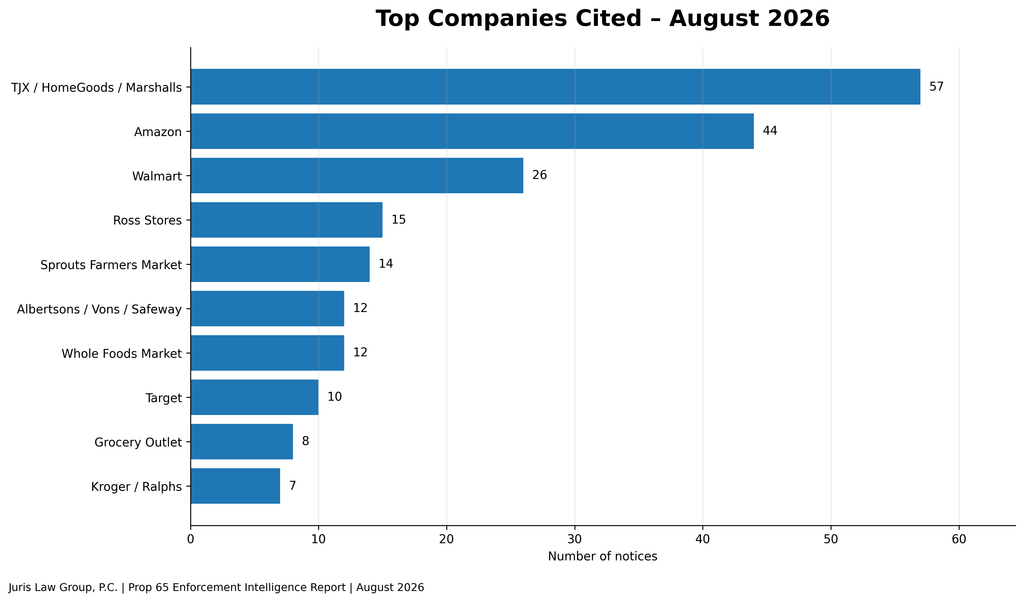
The TJX group moved ahead of Amazon as the most frequently cited retail group in August. The concentration reflects continuing plaintiff interest in off-price and home-goods retail, where inventories often consist of large numbers of imported products sourced through numerous suppliers.
Amazon remained a major target. Ecommerce continues to provide plaintiffs with a scalable means of identifying products, sellers, California availability, and warning practices without visiting a physical store.
Grocery retailers also remained prominent. Sprouts, Albertsons/Vons/Safeway, Whole Foods, Grocery Outlet, and Kroger/Ralphs collectively appeared across notices involving food, supplements, agricultural products, and specialty imported goods. These filings reinforce the exposure faced by retailers even where contamination originates with an ingredient supplier or manufacturer.
Top Noticing Parties
| Rank | Noticing Party | Notices |
|---|---|---|
| 1 | Environmental Health Advocates, Inc. | 155 |
| 2 | CalSafe Research Center, Inc. | 111 |
| 3 | Clean Product Advocates, LLC | 34 |
| 4 | Center for Consumer Safety, LLC | 31 |
| 5 | Ema Bell | 24 |
| 6 | Precila Balabbo | 22 |
| 7 | Ecological Alliance, LLC | 20 |
| 8 | MONARCH | 17 |
| 9 | Gabriel Espinoza | 16 |
| 10 | Dennis Johnson | 15 |
Environmental Health Advocates remained the largest noticing party in August, accounting for approximately 30% of the month’s filings. CalSafe Research Center accounted for another 111 notices, meaning the two organizations together generated more than half of August filing activity.
That concentration provides useful intelligence for businesses assessing future risk. High-volume noticing parties can develop repeatable testing strategies around particular chemicals, products, retailers, and suppliers. Once a product category generates notices, adjacent products sold through the same distribution channels may become natural testing targets.
The remaining filing activity was distributed among several repeat plaintiffs and organizations. Monitoring their individual product and chemical preferences can provide more useful forecasting information than monthly notice volume alone.
Emerging Enforcement Areas
Botanical supplements and specialty powders warrant continued attention. August notices reached across maca, moringa, mushrooms, sea moss, Tongkat Ali, ashwagandha, and multi-ingredient superfood products. The category combines agricultural variability, concentrated serving formats, international sourcing, and strong ecommerce distribution.
Seafood is another area likely to remain active. August notices involving oysters, mussels, sardines, and squid demonstrate continued plaintiff testing for lead and cadmium. Importers and grocery retailers should expect scrutiny to extend across species and suppliers.
PFAS enforcement remains comparatively limited in volume but carries substantial uncertainty. Plaintiffs may continue moving into coated materials, packaging, textiles, and treated consumer products as testing capabilities expand.
Hexavalent chromium enforcement also appears persistent rather than isolated. Three consecutive months of leather-related activity suggest that footwear and accessory suppliers should treat chromium VI testing as an ongoing Prop 65 concern.
Legal Gap Analysis
One recurring gap is the reliance on ingredient specifications instead of finished-product exposure analysis. A botanical ingredient may satisfy a supplier specification yet contribute enough lead or cadmium to create a Prop 65 issue when concentrated in a powder or supplement serving.
Another gap involves lot variability. Agricultural products, seafood, cacao, spices, and botanical ingredients cannot always be evaluated through a single historical laboratory result. Contaminant levels may change by geography, harvest, season, supplier, or production lot.
A third gap involves secondary materials. Companies may test the principal product but overlook vinyl components, coatings, leather treatments, adhesives, packaging, or accessories that create an independent exposure allegation.
Ecommerce creates a separate operational gap. Even where the physical product carries a warning, the warning must be handled correctly through California-facing online sales channels. Marketplace listings controlled by distributors or third parties can create compliance failures outside the brand owner’s direct website.
Licensor and Private-Label Liability Considerations
Licensors, private-label companies, and retailers remain exposed when their brands appear on products that they do not manufacture directly. August filings again demonstrate that plaintiffs may name multiple entities throughout the supply chain rather than limiting a notice to the company responsible for the underlying chemical.
Protective measures should include:
- Product-specific Proposition 65 warranties
- Finished-product and component testing requirements
- Supplier disclosure and documentation obligations
- Approval rights over warnings and online listings
- Indemnity covering settlements, penalties, attorneys’ fees, testing, and corrective measures
- Appropriate insurance requirements
- Audit rights and access to laboratory reports
Private-label food and supplement companies should place particular emphasis on testing allocation because heavy metals and mycotoxins may arise from agricultural conditions outside the contract manufacturer’s direct control.
Practical Risk Management Considerations
1. Testing Protocols
Testing should reflect actual product risk. Agricultural ingredients may require recurring lot testing, while plastic, leather, and coated consumer goods may require component-level testing.
2. Packaging Review
Packaging and secondary components should be assessed separately from the finished formulation. Coatings, plastics, adhesives, and treated materials may create independent exposure.
3. Warning Language
Physical and online warnings should be reviewed together. Ecommerce warnings should remain connected to the correct product and variations before purchase by California consumers.
4. Supplier Agreements
Contracts should clearly allocate testing, disclosure, warning, indemnity, insurance, and corrective-action responsibilities. Generic legal-compliance clauses provide limited protection when a notice arrives.
5. Monitoring Enforcement Activity
Notice monitoring should focus on chemicals, plaintiffs, products, retailers, and suppliers. A notice involving a competitor’s product can provide advance warning of testing activity in the category.
6. Counsel Involvement
Early Prop 65 counsel involvement allows businesses to evaluate exposure, testing methodology, defenses, supplier responsibility, warning strategy, and settlement options before litigation begins.
The Juris Law Group Perspective on Prop 65 Enforcement
Our Prop 65 attorneys continue to see enforcement move through identifiable product clusters rather than isolated products. August activity involving botanical powders, seafood, flexible plastics, leather goods, and PFAS-treated materials demonstrates how plaintiffs can apply established testing theories to adjacent products once a category proves productive.
As CPG attorneys, we assess these filings as indicators of where plaintiff resources are being deployed. The August data points toward continued pressure on food and beverage companies, supplement brands, importers, national retailers, ecommerce sellers, and businesses relying on complex overseas supply chains.
Prop 65 risk management therefore extends beyond warning-label review. Testing strategy, supplier qualification, contract allocation, packaging, marketplace controls, and rapid response procedures all affect a company’s position after a 60-day notice is served.
Common Enforcement Inquiries
Why are botanical powders receiving Prop 65 notices?
Botanical ingredients can absorb naturally occurring metals from soil and water, and concentrated powders may increase exposure per serving. August notices involving maca, moringa, mushroom extracts, sea moss, and other botanicals demonstrate the category’s current enforcement exposure.
Can a retailer receive a notice for contaminated seafood it did not produce?
Yes. Retailers may be named for selling an allegedly noncompliant product into California even where the alleged lead or cadmium originated from environmental conditions or an upstream seafood supplier. Contractual indemnity may determine ultimate responsibility but does not necessarily prevent the retailer from receiving a notice.
Does one passing laboratory test establish continuing Prop 65 compliance?
Not necessarily. Agricultural products, seafood, spices, cacao, and botanical ingredients may vary between production lots. Testing frequency should reflect the variability and risk profile of the product.
Can Amazon sellers receive Prop 65 notices directly?
Yes. Online sellers remain subject to California Prop 65 requirements. Warning procedures should address the physical product and the online purchasing process, including product variations and third-party marketplace listings.
Why do leather products continue to receive hexavalent chromium notices?
Hexavalent chromium can arise from leather tanning and finishing processes. Brands may therefore face claims even when they did not perform the chemical treatment themselves. Supplier controls and finished-material testing are central to managing this exposure.
Are lower-volume PFAS notices still a concern?
Yes. PFOA and PFOS accounted for fewer notices than lead or cadmium in August, but the absence of established safe harbor levels for many PFAS compounds can create substantial uncertainty in exposure analysis and defense strategy.
Strategic Outlook
August 2026 enforcement reinforces the continued dominance of lead claims, particularly in food, seafood, supplements, botanical powders, and imported consumer products. Plaintiffs are likely to continue expanding within these categories because the underlying contaminants can vary between suppliers and lots, creating recurring opportunities for testing and enforcement.
Agricultural contaminants should remain a central concern for food and supplement companies. Lead, cadmium, aflatoxins, and ochratoxin A collectively create exposure that cannot always be controlled through formulation. Supplier qualification, origin data, certificates of analysis, independent testing, and lot traceability will remain important components of defensible compliance programs.
Consumer-product companies should also expect continued scrutiny of secondary materials. DEHP in flexible plastics, chromium VI in leather, and PFAS in coatings or treated components demonstrate how Prop 65 exposure can originate from a material that receives relatively little attention during conventional product review.
Retailers and ecommerce platforms remain strategically important defendants because they connect these products to the California market. The August filings show that plaintiffs continue to pursue retailers alongside manufacturers and importers, making contractual risk allocation and supply-chain documentation central components of Prop 65 defense strategy.
About Juris Law Group
Juris Law Group serves as trusted Proposition 65 counsel to manufacturers, retailers, importers, distributors, food and beverage companies, supplement brands, cosmetic companies, cannabis businesses, licensors, and consumer products companies operating in California.
Our services include Proposition 65 compliance programs, product and packaging audits, warning-label strategy, supply-chain reviews, retailer and private-label compliance counseling, settlement negotiations, and defense of 60-day notices and enforcement actions.
Want to Protect Your Brand from a Prop 65 Lawsuit?
To speak with a regulatory attorney or schedule a compliance audit, contact us today: