September 2026 Prop 65 Enforcement Report: Lead Dominates as Cannabis, Leather, and Phthalate Notices Expand
California Proposition 65 enforcement generated 428 Notices of Violation in September 2026, down from the 519 notices recorded in August. Lead remained the dominant chemical, appearing in 261 notices, but September’s filing mix showed stronger concentrations in Delta-9 THC, phthalates, hexavalent chromium, leather goods, bags and accessories, and cannabis products.
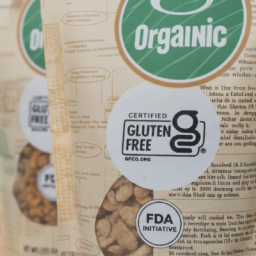
Delta-9 THC appeared in 36 notices, making cannabis and hemp-derived products one of the month’s most visible specialized enforcement categories. DEHP appeared in 34 notices, cadmium in 33, and hexavalent chromium in 31. Food and beverage products remained prominent, with notices involving seasonings, sauces, botanical powders, supplements, seafood, protein products, and other agricultural or imported foods.
Retail and ecommerce defendants continued to anchor enforcement activity. Amazon appeared in approximately 50 notices, followed by Walmart, TJX/HomeGoods/Marshalls, Ross Stores, Costco, Whole Foods, and Bristol Farms. The distribution of defendants reinforces a recurring enforcement pattern: plaintiffs frequently pursue California-facing retailers and marketplaces alongside the companies responsible for manufacturing, importing, or supplying the underlying product.
Monthly Violation Summary
| Number of Violations | Listed Chemicals | Types of Products Targeted |
|---|---|---|
| 261 | Lead / Lead and lead compounds | Food products, seasonings, botanical powders, supplements, metal goods, imported consumer products |
| 36 | Delta-9 THC | Gummies, beverages, vapes, hemp products, cannabis-derived consumer products |
| 34 | DEHP | Bags, backpacks, pouches, accessories, flexible plastics, hardware and consumer goods |
| 33 | Cadmium / Cadmium compounds | Foods, noodles, seafood, powders, seasonings and agricultural products |
| 31 | Hexavalent chromium | Leather shoes, suede footwear, wallets, journals, accessories and leather goods |
| 16 | PFOA | Apparel, food products, treated materials and coated consumer goods |
| 9 | Aflatoxins | Agricultural foods, grains, nuts and other susceptible food products |
| 9 | Ochratoxin A | Agricultural and food products |
| 7 | Toluene | Contact cements and adhesive products |
| 7 | Fumonisin B1 | Food and agricultural products |
Prop 65 Enforcement Observations — September 2026
September’s 428 notices represent a decrease of approximately 18% from August, but the decline in total volume did not translate into a narrower enforcement profile. Instead, filings were distributed across several distinct testing programs involving food, cannabis products, leather goods, flexible plastics, PFAS-related materials, adhesives, and metal components.
Lead remained the principal enforcement theory, appearing in roughly 61% of September notices. Food products accounted for a large identifiable product cluster, including sauces, noodles, seasonings, dried fruit, matcha, tea, botanical powders, protein products, seafood, and supplements. The breadth of these products continues to place pressure on businesses relying on agricultural ingredients or imported raw materials.
September also showed sustained enforcement outside food. Leather and suede shoes, wallets, journals, bags, backpacks, pouches, hardware, and brass products appeared repeatedly. These notices demonstrate how enforcement can move from the primary product to a particular material or component, including leather tanning chemistry, plasticizers, coatings, or metal alloys.
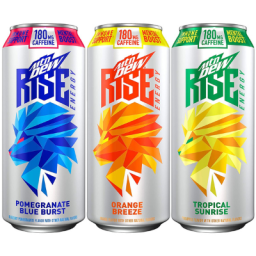
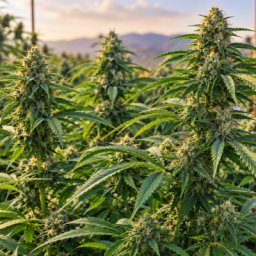
Cannabis and hemp products were another distinct September concentration. Delta-9 THC notices targeted gummies, beverages, vapes, cartridges, and other hemp-derived products. Unlike contaminant claims involving lead or cadmium, these notices focus on a listed chemical intentionally associated with the product itself.
Most Common Chemicals Cited
| Rank | Chemical | Notices |
|---|---|---|
| 1 | Lead | 261 |
| 2 | Delta-9 THC | 36 |
| 3 | DEHP | 34 |
| 4 | Cadmium | 33 |
| 5 | Hexavalent chromium | 31 |
| 6 | PFOA | 16 |
| 7 | Aflatoxins | 9 |
| 8 | Ochratoxin A | 9 |
| 9 | Toluene | 7 |
| 10 | Fumonisin B1 | 7 |
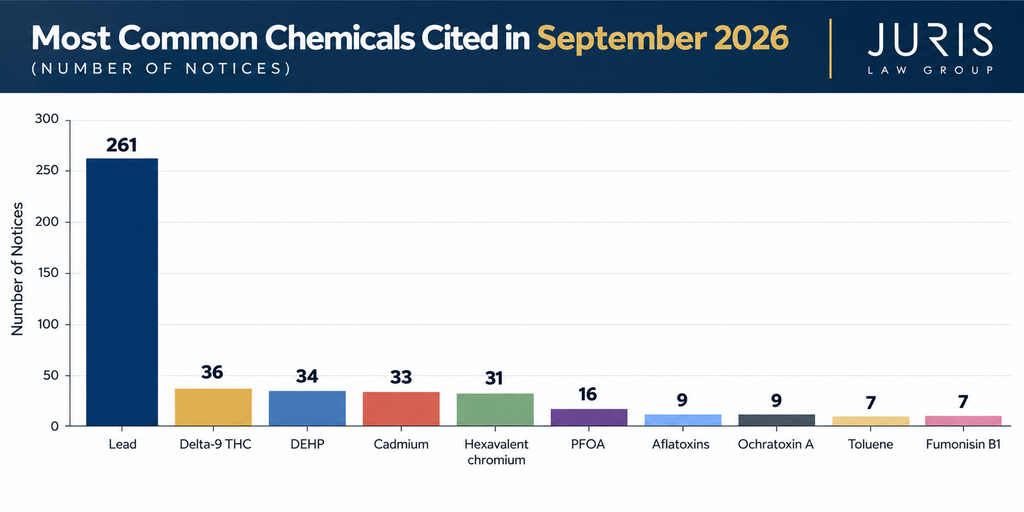
Lead remained far ahead of every other listed chemical, but the composition below lead is important. September did not have the same heavy-metal concentration seen in some prior months. Delta-9 THC, DEHP, and hexavalent chromium collectively accounted for substantial enforcement activity across three very different product groups.
DEHP enforcement centered on bags, backpacks, pouches, flexible components, hardware, and accessories. Hexavalent chromium remained strongly associated with leather and suede products. These patterns allow businesses to connect the chemical allegation to particular material risks rather than treating Proposition 65 solely as a finished-product issue.
PFOA remained active at 16 notices. The products cited demonstrate continued enforcement interest in treated or coated materials, apparel, and consumer products where upstream chemical information may be difficult for retailers and brand owners to obtain.
Notable Chemical Trends
Lead Remains Broadly Distributed Across Food and Consumer Goods
Lead appeared in 261 September notices, covering food products, botanical powders, seasonings, supplements, metal products, and imported consumer goods. Examples included broccoli powder, superfood mixes, turmeric and ginger tea, protein powders, seasoning mixes, seafood, and brass accessories.
The diversity of these products makes lead particularly difficult to manage through a single compliance protocol. Food companies may need recurring ingredient and lot testing, while consumer-product companies may need component-level analysis of metals, paints, coatings, and other materials.
Delta-9 THC Enforcement Expands Across Hemp Products
Delta-9 THC appeared in 36 notices, placing it second among September’s normalized chemical categories. Products included gummies, THC beverages, vape products, cartridges, and other hemp-derived goods.
The notices show that cannabis-related Prop 65 exposure is not confined to traditional dispensary products. Hemp-derived products sold online or through conventional retail channels can create the same California warning issues, particularly as product formats expand into beverages, gummies, and wellness products.
DEHP Targets Bags, Backpacks, and Flexible Components
DEHP appeared in 34 notices involving neoprene pouches, waterproof backpacks, wine totes, tank bags, accessories, clamps, valves, and other consumer products.
The operational problem is often component-specific. A company may describe a product primarily as textile, metal, or another material while a flexible plastic handle, coating, strap, pouch, or accessory contains the phthalate at issue. Component-level material information therefore remains important.
Hexavalent Chromium Remains Concentrated in Leather
September generated 31 hexavalent chromium notices, continuing the leather-related enforcement activity observed throughout the summer. Products included leather and suede shoes, moccasins, wallets, padfolios, journal sleeves, and other leather goods.
The recurring pattern suggests that chromium VI testing should be treated as a continuing sourcing concern for footwear and accessory companies rather than as an isolated enforcement event. Brands should understand the tanning and finishing processes used by their leather suppliers.
Cadmium Continues in Food Products
Cadmium appeared in 33 notices, including food products such as noodles and seafood. It was frequently alleged alongside lead.
Food companies should account for the possibility that the same ingredient or finished product may generate exposure allegations involving multiple metals. Testing protocols should therefore address the relevant contaminant profile rather than a single chemical.
PFAS Enforcement Continues Across Treated Products
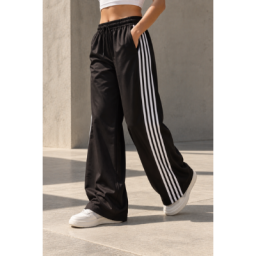
PFOA appeared in 16 notices, with products ranging from food items to apparel and treated consumer goods. September examples included chair covers, children’s pants, shorts, swim shirts, scrubs, and other products.
PFAS enforcement remains operationally difficult because brands may lack visibility into treatments used several tiers upstream. Chemical restrictions and supplier declarations should therefore extend to coatings, water-resistant treatments, and other functional finishes.
Toluene Notices Target Adhesive Products
Seven notices involved toluene, with contact cements appearing repeatedly. This is a more concentrated enforcement pattern than the month’s lead or DEHP activity.
For adhesive and chemical-product manufacturers, formulation review and warning practices should address listed solvents directly rather than relying on general consumer-product compliance documentation.
Product Categories Most Frequently Targeted
Food & Beverage
- Seasoning and taco mixes
- Sauces and noodles
- Dried mango and trail mix
- Matcha and tea
- Seafood products
- Protein bars and powders
- Botanical and superfood powders
Cannabis & Hemp
- Delta-9 THC gummies
- Hemp-derived gummies
- THC beverages
- Vape cartridges
- THCa products
- CBD and Delta-9 combination products
Leather & Footwear
- Leather shoes
- Suede shoes and clogs
- Moccasins
- Leather wallets
- Padfolios and journal sleeves
- Leather accessories
Bags & Accessories
- Waterproof backpacks
- Tech pouches
- Wine totes
- Tank bags
- Travel cases
- Fashion bags
Hardware & Metal Products
- Brass accessories
- Valves
- Clamps
- Pressure gauges
- Metal fittings and components
Product Category Table
| Product Category | Enforcement Activity |
|---|---|
| Food & Beverage | Very High |
| Cannabis / Hemp | High |
| Leather / Footwear | High |
| Bags / Accessories | High |
| Plastic / Flexible Components | High |
| Hardware / Metal Goods | Moderate |
| PFAS-Treated Apparel / Consumer Goods | Moderate |
| Adhesives / Chemical Products | Targeted |
Top Companies Cited
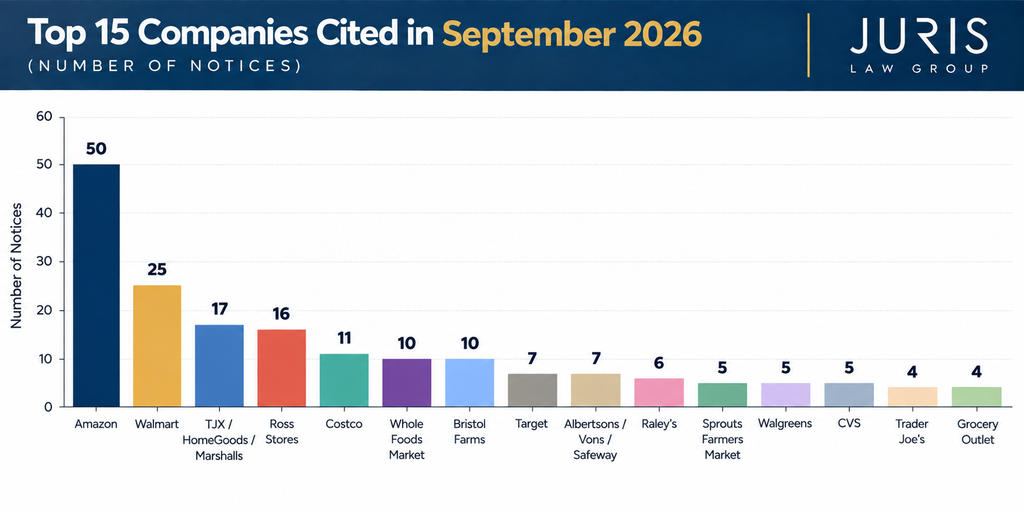
Amazon returned to the top position among normalized retailer and marketplace groups in September. Its approximately 50 appearances reflect the continuing role of ecommerce in Prop 65 enforcement. Online listings allow plaintiffs to identify products, sellers, California availability, and potentially missing warnings at scale.
Walmart followed with 25 appearances, while TJX/HomeGoods/Marshalls and Ross remained prominent. The continuing presence of off-price retailers is consistent with enforcement involving footwear, bags, accessories, and imported consumer merchandise.
Grocery retailers also accounted for a meaningful share of September activity. Whole Foods, Bristol Farms, Albertsons/Vons/Safeway, Raley’s, and Sprouts appeared in notices involving food and related products. For grocery retailers, supplier controls remain particularly important because heavy metals and mycotoxins may originate from agricultural ingredients rather than intentional formulation.
Top Noticing Parties
| Rank | Noticing Party | Notices |
|---|---|---|
| 1 | Environmental Health Advocates, Inc. | 87 |
| 2 | CalSafe Research Center, Inc. | 77 |
| 3 | Clean Product Advocates, LLC | 62 |
| 4 | MONARCH | 27 |
| 5 | Center for Consumer Safety, LLC | 24 |
| 6 | Precila Balabbo | 22 |
| 7 | Blue Sky Forever | 16 |
| 8 | Gabriel Espinoza | 15 |
| 9 | Ecological Alliance, LLC | 15 |
| 10 | Susan Davia | 14 |
Environmental Health Advocates remained the largest noticing party, but September enforcement was less concentrated around a single filer than in August. CalSafe Research Center filed 77 notices and Clean Product Advocates filed 62, creating three substantial centers of enforcement activity.
The distribution is useful from a forecasting perspective because different noticing parties may concentrate on different products and chemicals. Monitoring the product selections of individual groups can reveal testing campaigns before they become visible in aggregate monthly statistics.
The appearance of MONARCH in 27 notices also placed it among the month’s major filers. Companies assessing enforcement exposure should monitor these organizations by chemical and product category rather than relying solely on overall filing totals.
Emerging Enforcement Areas
Cannabis and hemp products stand out in September. Thirty-six Delta-9 THC notices and a broad range of gummies, beverages, cartridges, vapes, and related products indicate a concentrated enforcement area. Companies operating outside traditional dispensary channels should not assume hemp-derived products fall outside Prop 65 scrutiny.
Leather footwear and accessories remain another sustained target. September’s 31 hexavalent chromium notices follow similar activity during the summer, supporting the view that leather is now a recurring testing category.
Bags, backpacks, and accessories also deserve attention. DEHP notices involving flexible components and PFOA allegations involving treated materials show that the same product category may present several distinct chemical risks depending on construction and finishing.
PFAS-treated apparel presents a developing risk. September notices involving pants, shorts, swim shirts, scrubs, and other clothing demonstrate how PFAS allegations can migrate through categories where water, stain, or performance treatments may be used.
Legal Gap Analysis
One recurring gap is the assumption that a product’s principal material determines its Prop 65 profile. September notices involving backpacks, bags, footwear, and accessories show that a secondary component or treatment can generate the allegation even when most of the product is made from another material.
Another gap involves cannabis products sold through conventional ecommerce. Businesses may focus on age restrictions, cannabinoid labeling, and state cannabis rules without integrating Proposition 65 warnings into product pages and checkout processes.
Leather sourcing presents a third gap. A brand may have specifications for leather type, color, and durability without requiring chromium VI testing or documentation regarding tanning conditions. September’s continuing hexavalent chromium notices show the limitations of that approach.
Food businesses face a separate problem with agricultural variability. Supplier specifications and historical testing do not guarantee that every subsequent lot will contain the same levels of lead, cadmium, aflatoxins, fumonisin B1, or ochratoxin A.
Licensor and Private-Label Liability Considerations
Licensors and private-label companies should pay particular attention to categories where compliance depends on upstream materials or manufacturing processes. Leather tanning, flexible plastic formulation, PFAS treatments, agricultural contaminants, and cannabis formulations can all create exposure that is difficult for a brand owner to identify from the finished product alone.
Protective measures should include:
- Product-specific Proposition 65 representations and warranties
- Finished-product and component testing requirements
- Chemical restrictions for leather, plastics, coatings, and textiles
- Supplier disclosure obligations
- Approval rights over California warnings
- Ecommerce warning requirements
- Indemnity covering settlements, attorneys’ fees, penalties, testing, and corrective measures
- Access to laboratory reports and supply-chain documentation
Contractual allocation does not prevent a notice from being served, but it can materially affect how efficiently the parties respond once a claim arises.
Practical Risk Management Considerations
1. Testing Protocols
Testing should reflect the actual risk of the product and its components. Food and botanical products may require recurring testing, while leather, plastic, and coated goods may require material-specific analysis.
2. Packaging Review
Packaging, coatings, handles, straps, trims, adhesives, and other secondary materials should be included in product reviews where they can create independent exposure.
3. Warning Language
Warnings should be coordinated across physical products, websites, marketplaces, and other California sales channels. Cannabis and hemp sellers should give particular attention to ecommerce warning placement.
4. Supplier Agreements
Supplier contracts should define testing, chemical restrictions, disclosure obligations, warning responsibilities, indemnification, and corrective procedures rather than relying on broad compliance language.
5. Monitoring Enforcement Activity
Companies should track notices by plaintiff, chemical, product category, retailer, and supplier. September’s cannabis and leather activity demonstrates how quickly a concentrated testing strategy can become visible in monthly data.
6. Counsel Involvement
Prop 65 counsel can help evaluate whether a notice warrants additional testing, exposure analysis, warning changes, supplier claims, reformulation, settlement, or litigation.
strategic By Design: The Juris Law Group, P.C. Perspective on Prop 65 Enforcement
Our Prop 65 attorneys frequently see enforcement programs expand once plaintiffs identify a repeatable combination of product, chemical, and distribution channel. September’s leather, cannabis, bag, and food notices illustrate that pattern. A successful testing theory can be applied across competing brands and retailers without requiring plaintiffs to develop an entirely new enforcement strategy.
We view the September data as a reminder that Prop 65 compliance must extend beyond a list of traditionally high-risk products. Cannabis beverages, hemp gummies, suede footwear, backpacks, adhesives, and specialty foods present very different operational issues, but each can lead to the same 60-day notice process.
Businesses with stronger visibility into materials, suppliers, testing, and sales channels are generally better positioned to respond. The ability to identify the responsible supplier, retrieve relevant testing, evaluate exposure, and correct warnings quickly can materially affect the cost and trajectory of a claim.
Common Enforcement Inquiries
Are hemp-derived Delta-9 THC products subject to Prop 65?
Yes. Hemp-derived status does not itself eliminate Proposition 65 requirements. September notices targeted Delta-9 gummies, beverages, vapes, cartridges, and related products. Businesses should evaluate California warnings alongside their broader cannabinoid labeling and ecommerce compliance programs.
Why are leather shoes receiving hexavalent chromium notices?
Hexavalent chromium can arise during leather tanning or subsequent processing. September notices targeted leather and suede shoes, moccasins, wallets, and other leather products. Brands should evaluate supplier chemistry and finished-material testing rather than relying solely on general leather specifications.
Can a bag create Prop 65 exposure even if most of it is fabric?
Yes. A bag may contain flexible plastic, coated material, hardware, straps, grips, or other components associated with listed chemicals. September DEHP and PFAS-related notices illustrate why component-level review can be necessary.
Can Amazon sellers receive Prop 65 notices directly?
Yes. Amazon and individual marketplace sellers may be named in Prop 65 notices. Sellers should confirm that warnings appear before purchase and remain associated with the correct product and variations when listings are updated.
Does a supplier’s certificate of compliance eliminate retailer liability?
No. Supplier documentation can be valuable for compliance and contractual claims, but it does not necessarily prevent a retailer or distributor from receiving a 60-day notice. Testing rights, indemnification, and access to supporting records remain important.
Why can food testing from an earlier lot be insufficient?
Lead, cadmium, and mycotoxins may vary according to supplier, geography, harvest, storage, and production lot. Historical testing can inform a compliance program but may not establish the characteristics of every later shipment.
Strategic Outlook
September’s lower overall notice volume should not be read as a broad retreat in Prop 65 enforcement. The month’s 428 filings still reflect substantial activity, and the distribution of claims shows plaintiffs pursuing several specialized categories simultaneously. Lead will likely remain the principal chemical target, particularly in food, supplements, botanical powders, metal products, and imported consumer goods.
Cannabis and hemp enforcement warrants particular attention heading into the final quarter of 2026. The concentration of Delta-9 THC notices across gummies, beverages, vapes, and other formats provides plaintiffs with a product category that is expanding rapidly through ecommerce and conventional retail channels. Businesses should expect warning practices to remain part of that scrutiny.
Leather and accessory companies should likewise treat chromium VI and phthalate enforcement as persistent risks. Three months of leather-focused activity, combined with September’s DEHP notices involving bags and flexible components, indicate that material-level testing programs remain important for footwear, fashion, and accessory brands.
Retailers and ecommerce businesses will continue to sit at the center of these enforcement strategies. Amazon, Walmart, TJX, Ross, Costco, grocery retailers, and other California-facing sellers give plaintiffs identifiable distribution points even when the alleged compliance failure originates upstream. Supplier documentation, testing rights, indemnification, and reliable online warning procedures remain central components of managing that exposure.
About Juris Law Group, P.C.
Juris Law Group, P.C. serves as trusted Proposition 65 counsel to manufacturers, retailers, importers, distributors, food and beverage companies, supplement brands, cosmetic companies, cannabis businesses, licensors, and consumer products companies operating in California.
Our services include Proposition 65 compliance programs, product and packaging audits, warning-label strategy, supply-chain reviews, retailer and private-label compliance counseling, settlement negotiations, and defense of 60-day notices and enforcement actions.
Want to Protect Your Brand from a Prop 65 Lawsuit?
To speak with a regulatory attorney or schedule a compliance audit, contact us today: