California is changing how cannabis drinks and edibles must be labeled, packaged, sold and advertised.
Gov. Gavin Newsom signed Assembly Bill 2532 (AB 2532) on September 30, adding new requirements aimed largely at multi-serving THC beverages. The law requires clearer serving information, measurement tools for certain drinks and the national Poison Help number on edible cannabis and beverage labels. Several of the new rules for multi-serving beverages take effect July 1, 2027.
The law responds to a basic problem identified by state officials: California limits edible cannabis products to 10 milligrams of THC per serving, but a beverage can contain several servings in a single bottle or can. State auditors found products ranging from four-ounce energy-shot-style containers to 16-ounce root beer cans containing 100 milligrams of THC, or 10 servings, without a practical way for consumers to measure one serving.
Rather than eliminate those products, California is requiring manufacturers, retailers and marketers to make the serving structure much harder to overlook.
California’s New THC Drink Rules Focus on Serving Size
Assembly Bill 2532 (AB 2532) initially took a much stricter approach. An earlier version would have limited a cannabis beverage container to 10 milligrams of THC, effectively restricting each container to one standard serving. That proposal faced industry opposition and was removed before the bill became law.
The final version allows multi-serving cannabis beverages to remain on the California market but changes how they must be presented to consumers.
Beginning July 1, 2027, a multi-serving cannabis beverage must clearly state that it contains multiple servings. Its label must also provide the size of a single serving in fluid ounces, to the nearest tenth of an ounce, and information explaining how the consumer can accurately measure that serving.
The container itself may need attention. If it is transparent, or otherwise allows the consumer to see the remaining liquid, it must display clear and unobstructed lines marking individual servings or portions. An exception applies when the shape of the container makes accurate serving lines impossible.
Retailers also become part of the dosing system. When someone purchases a multi-serving cannabis beverage, the retailer must offer a measuring device at no additional cost. Manufacturers are responsible for providing those devices as needed, and the device must hold at least one fluid ounce and measure to the nearest tenth of an ounce.
The idea is similar to rules already applied to solid cannabis edibles. A multi-serving chocolate bar or other solid edible can be divided into identifiable portions. California is now trying to make a serving of a cannabis drink similarly easy to identify.
THC Labels and Advertising Must Tell the Same Story
AB 2532 reaches beyond what appears on the bottle.
Starting July 1, 2027, California will prohibit a person engaged in commercial cannabis activity, whether licensed or unlicensed, from advertising a multi-serving cannabis beverage as a single-serving product or otherwise encouraging consumers to consume multiple servings at one time.
That restriction creates an important issue for beverage companies because the legal review cannot stop after the packaging is approved.
A bottle might correctly state that it contains several servings while a social media post, product photograph or serving suggestion presents the entire bottle as one drink. That disconnect could create advertising exposure even when the physical label contains the required information.
Advertising exposure is not limited to serving-size claims. Recent lawsuits over cannabis mental health and wellness marketing also show how statements about a cannabis product’s benefits can become a separate source of legal risk.
California already restricts false or misleading cannabis advertising. AB 2532 makes the relationship between a product’s dosing instructions and its marketing even more important. Companies preparing for the new law may therefore need to review product pages, digital advertising, retailer materials, promotional images and other consumer-facing content alongside their packaging.
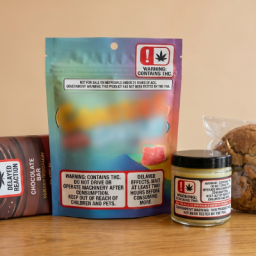
The law also adds a new disclosure for edible cannabis products and cannabis beverages: labels and inserts must include the toll-free telephone number for the national Poison Help line. The requirement follows a California State Auditor finding that calls to the California Poison Control System involving cannabis ingestion by children five and younger increased from 148 in 2016 to 842 in 2023.
California Is Tightening Cannabis Packaging Rules Beyond AB 2532
AB 2532 is part of a broader change in California’s approach to cannabis packaging and marketing.
Newsom also signed AB 2249 in August. That law strengthens restrictions on cannabis packaging, labeling, advertising and marketing that appeal to children, including certain cartoons, imagery associated with candy and sweets, and products that resemble non-cannabis goods marketed to children. Its new standards become operative January 1, 2028.
The new requirements also arrive as THC beverages are becoming a larger part of the U.S. consumer products market, including products made with hemp-derived THC that operate under a different legal framework from California’s licensed cannabis system. Companies looking to license hemp-derived THC drinks may face different state licensing, distribution and product requirements depending on where those beverages are sold.
That distinction matters here. AB 2532 applies within California’s regulated cannabis market and should not be treated as a general labeling rule for every THC beverage sold in the state. Companies operating across cannabis and hemp-derived THC categories need to identify which legal framework applies to each product before making packaging or labeling changes.
For manufacturers subject to AB 2532, the new rules can turn a legal change into a product-development issue. A company may need to determine whether its current container can support visible serving measurements, whether labels have room for new disclosures, how measuring devices will reach retailers, and whether existing advertising presents a multi-serving product consistently.
Those decisions can also affect packaging orders and existing inventory. With the July 1, 2027 requirements approaching, a package designed today could still be in circulation when the new rules become operative.
The Juris Law Group, P.C. Perspective on Cannabis Beverage Labeling
AB 2532 shows why cannabis beverage review increasingly extends beyond the ingredient list or THC disclosure.
Our food law attorneys in California assess labeling and advertising issues with attention to how a product is actually presented in the marketplace. For cannabis beverage manufacturers preparing for AB 2532, an important part of that analysis will be consistency: the serving information printed on the package should align with the container design, measuring method and marketing used to sell the product.
The final version of AB 2532 also shows how California balanced consumer safety concerns against the realities of the existing cannabis beverage market. Lawmakers considered a one-serving-per-container approach but ultimately preserved multi-serving products and imposed rules designed to make those servings measurable and identifiable instead.
Over the next several months, the practical issue will shift from the legislation itself to implementation. Manufacturers selling multi-serving beverages in California will need to determine which products require packaging changes and how measuring devices will be supplied to retailers before July 1, 2027. Marketing teams will also need to account for the new restriction against presenting those beverages as single-serving products.
The broader direction in California is also worth watching. AB 2532 and AB 2249 regulate different risks, but both place greater responsibility on the way cannabis products are presented to consumers. Packaging, product design and advertising are increasingly being treated as connected parts of the state’s cannabis safety rules rather than separate issues.
Common Legal Inquiries
What does California AB 2532 require for cannabis beverages?
AB 2532 adds new labeling, packaging and dosing requirements for cannabis beverages. Beginning July 1, 2027, multi-serving drinks face requirements involving serving disclosures, measurement instructions, visible portion lines on qualifying containers and measuring devices offered by retailers. The law also restricts advertising that presents multi-serving beverages as single-serving products.
Can cannabis beverages still contain more than 10 mg of THC in California?
Yes. California generally limits edible cannabis products to 10 milligrams of THC per serving, but AB 2532 does not impose a 10-milligram limit on the entire beverage container. An earlier version proposed that restriction, but lawmakers removed it before passage.
When do California’s new THC beverage packaging rules take effect?
Several of AB 2532’s requirements for multi-serving cannabis beverages become operative on July 1, 2027, including serving-measurement and advertising provisions. Manufacturers may need to prepare earlier because changes to container design, labels, packaging inventory, retailer procedures and marketing materials can require substantial lead time.