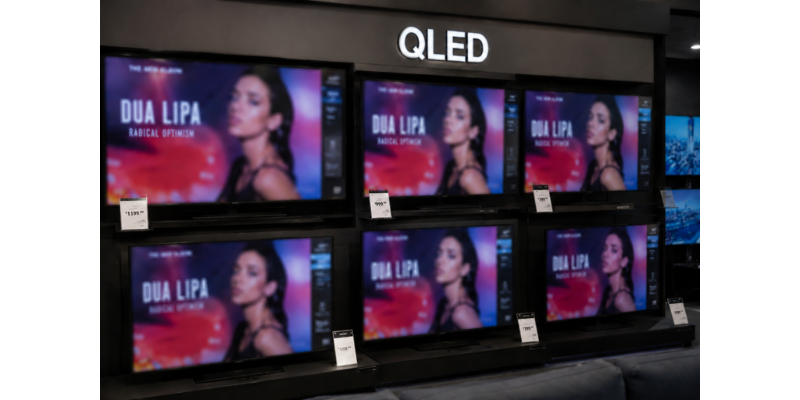
Samsung Electronics now faces a category of trademark and publicity-rights exposure that has become increasingly common in consumer electronics and entertainment marketing: the unauthorized commercial association claim. Dua Lipa’s $15 million lawsuit against Samsung centers on allegations that her image appeared on Samsung television packaging without authorization, creating the impression that she endorsed or collaborated with the company. The dispute extends beyond a standard copyright licensing disagreement. It places consumer perception, endorsement signaling, and identity monetization at the center of modern trademark litigation.
According to public reporting, Samsung allegedly used a backstage image of Dua Lipa on television retail packaging distributed across the United States. Samsung reportedly maintains that a third-party vendor supplied the image with assurances that all permissions had been secured. That defense reflects a recurring operational issue in national advertising campaigns: the growing separation between brand ownership and content sourcing. As marketing supply chains become increasingly decentralized, companies frequently rely on outside agencies, image licensors, streaming partners, and promotional vendors to populate advertising assets. The legal exposure, however, remains attached to the company whose branding appears on the product.
False Endorsement Exposure Under the Lanham Act in Celebrity Packaging Campaigns
The most consequential aspect of the lawsuit may ultimately be the Lanham Act allegations rather than the copyright claims. Section 43(a) of the Lanham Act allows plaintiffs to pursue false endorsement claims when consumers are likely to believe a celebrity authorized, sponsored, or approved a commercial product or campaign. In practical terms, the legal inquiry focuses less on ownership of the image itself and more on the commercial message communicated to consumers at retail.
Retail packaging creates a particularly sensitive environment for endorsement analysis because the consumer encounters the image at the point of purchase. Courts increasingly recognize that packaging functions as advertising, particularly in consumer electronics where product boxes operate as part of the purchasing experience. If a consumer reasonably interprets the appearance of a celebrity image as a signal of affiliation, the company may face advertising liability even without explicit endorsement language.
Public reporting surrounding the complaint references consumer reactions on social media indicating that some viewers believed Dua Lipa had partnered with Samsung or endorsed the product line. That type of evidence often becomes central in Lanham Act disputes because courts examine actual marketplace perception rather than internal corporate intent alone. The legal gap emerging in these cases involves the difference between image licensing clearance and endorsement perception analysis. A company may believe it secured adequate usage rights while still failing to assess whether the final presentation creates an implied commercial association.
Vendor Licensing Failures and Brand Representation Risk in Consumer Electronics
Samsung’s reported reliance on third-party assurances highlights a broader enforcement trend affecting large-scale advertising campaigns. Companies increasingly face scrutiny over the adequacy of their rights-verification procedures, particularly when celebrity likenesses appear in consumer-facing media. Vendor indemnification provisions remain important, but they do not prevent litigation exposure once the allegedly unauthorized content enters national distribution channels.
For consumer brands, the operational issue extends beyond litigation expense. Unauthorized endorsement allegations can interfere with existing sponsorship agreements, licensing exclusivity provisions, and future partnership negotiations. Celebrities increasingly manage their public identities as structured commercial portfolios. Dua Lipa reportedly maintains endorsement relationships with luxury and consumer brands including Porsche, Versace, Bulgari, Apple, Puma, and Nespresso. The alleged appearance of her image on unrelated Samsung retail packaging therefore raises questions about dilution of exclusivity value and portfolio management disruption.
Several legal exposure points commonly arise in these disputes:
- Implied sponsorship or affiliation claims under the Lanham Act
- State right-of-publicity violations
- Copyright infringement allegations involving commercial photography
- Unjust enrichment and disgorgement claims tied to advertising value
- Injunctive relief targeting nationwide packaging distribution
The expanding use of AI-assisted content sourcing tools may intensify this category of litigation over the next several years. Marketing departments increasingly acquire visual assets through layered licensing systems that obscure original ownership documentation. Courts appear less willing to treat “vendor reliance” as a sufficient defense where the disputed content becomes a prominent component of a national campaign.
Consumer Perception Standards Are Reshaping Trademark Litigation Strategy
The Dua Lipa dispute reflects a broader shift in trademark enforcement priorities. Traditional trademark litigation historically focused on source confusion involving logos, trade dress, or competing product identifiers. Modern endorsement disputes increasingly center on identity association and commercial signaling. That evolution has become particularly pronounced in industries driven by influencer marketing, celebrity partnerships, streaming integrations, and social commerce.
For major brands, the practical challenge involves distinguishing between cultural relevance and commercial association. Companies routinely incorporate musicians, athletes, influencers, and entertainment imagery into campaigns designed to create aspirational consumer connections. The legal risk emerges when those references move from contextual marketing into perceived endorsement territory.
Courts evaluating false endorsement claims frequently examine factors such as:
- prominence of the celebrity image,
- placement within advertising materials,
- surrounding branding context,
- consumer demographics,
- prior endorsement activity by the celebrity,
- and evidence of actual consumer confusion.
The Samsung litigation may become influential because it addresses retail packaging rather than a conventional digital advertising campaign. Packaging disputes create stronger arguments for implied endorsement because the image directly accompanies the product throughout the purchasing process. That distinction may affect how courts evaluate consumer perception evidence in future cases involving entertainment figures and consumer electronics brands.
The Juris Law Group Perspective on Trademark and Advertising Liability
Celebrity endorsement disputes now operate within a broader advertising liability framework that extends beyond basic image licensing analysis. An experienced IP attorney reviewing a campaign often evaluates not only chain-of-title documentation, but also whether the final presentation creates an implied affiliation message that consumers are likely to interpret as endorsement. That assessment has become more important as brands integrate entertainment figures into packaging, streaming promotions, and retail marketing intended to influence purchasing behavior.
As trademark attorneys, we frequently see internal clearance systems focus heavily on copyright ownership while overlooking endorsement perception under the Lanham Act. That gap becomes more pronounced when campaigns involve public figures with active sponsorship portfolios and exclusivity agreements. For consumer brands, these disputes increasingly require coordination between advertising counsel, procurement teams, and vendor management personnel before campaign assets reach national distribution.
Strategic Outlook for Samsung and the Future of Celebrity Endorsement Enforcement
Over the next twelve months, Samsung will likely focus heavily on limiting discovery exposure concerning its vendor management and rights-clearance procedures. Discovery requests may target internal communications, licensing verification processes, packaging approval workflows, and post-notice conduct after the alleged infringement was identified. If evidence shows insufficient escalation procedures or inadequate rights review protocols, the litigation pressure could increase substantially. A confidential settlement remains plausible because both parties may prefer to avoid extended examination of endorsement valuation methodologies and internal marketing operations.
The broader legal category is likely moving toward stricter scrutiny of implied endorsement practices in retail advertising environments. Courts increasingly recognize that celebrity identity functions as a monetized commercial asset rather than merely a publicity interest. Consumer brands using entertainment imagery may face heightened obligations to evaluate endorsement perception alongside traditional copyright clearance. That shift will likely influence advertising review standards across consumer electronics, fashion, streaming platforms, sports marketing, and AI-assisted content campaigns throughout the next product cycle.
Common Legal Inquiries
Can a company face trademark liability even if it licensed a celebrity photograph?
Yes. A valid image license does not automatically eliminate false endorsement exposure under the Lanham Act. Courts examine whether consumers are likely to believe the celebrity approved, sponsored, or endorsed the product. Commercial context, packaging placement, and consumer perception frequently determine liability.
Does reliance on a third-party marketing vendor protect a company from endorsement claims?
Usually not. Companies may still face liability if allegedly unauthorized content appears in national advertising or retail packaging. Vendor indemnification agreements may shift financial responsibility between contracting parties, but they rarely prevent lawsuits against the brand owner whose product displays the disputed material.
Why are celebrity endorsement disputes becoming more common in trademark litigation?
Entertainment figures increasingly manage their identities as structured licensing portfolios tied to sponsorship exclusivity and brand positioning. At the same time, companies rely more heavily on decentralized content sourcing systems and influencer-driven marketing strategies. Those conditions create more disputes involving implied affiliation, endorsement signaling, and consumer confusion.