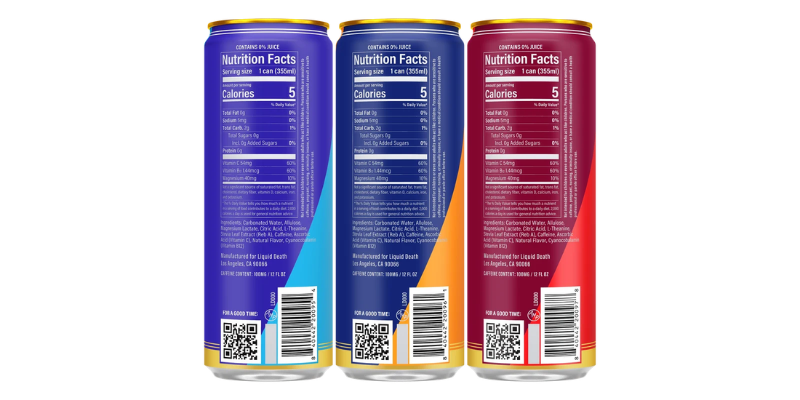
Liquid Death and DAVID Protein are facing proposed class actions over a claim that has become central to many better-for-you food products: “zero sugar.”
The lawsuits allege that Liquid Death’s Sparkling Energy drinks and DAVID Protein bars cannot be marketed as containing “0g Sugar” or “Zero Sugar” because they contain allulose, a low-calorie sweetener that is chemically a sugar. The California cases were filed in August, shortly after a federal appeals court revived similar claims against Chobani. Additional proposed class actions involving both brands have since been filed in other jurisdictions.
Neither case has established that the companies engaged in false advertising. But the lawsuits raise a more complicated labeling issue than the front of the package suggests. FDA allows allulose to be left out of the “Total Sugars” and “Added Sugars” figures on the Nutrition Facts panel under its current enforcement policy. At the same time, the federal regulation defining sugar still includes monosaccharides—and allulose is a monosaccharide.
That distinction is now driving a growing group of consumer lawsuits.
Liquid Death and DAVID Protein Challenged Over “Zero Sugar” Claims
DAVID has built much of its protein bar positioning around three numbers: 28 grams of protein, 150 calories and 0 grams of sugar. The proposed class action filed in Northern California alleges that the final number is misleading because the bars use allulose as a sweetener. The plaintiff claims he relied on the “0g Sugar” representation and paid more for the product as a result.
Liquid Death faces a similar challenge involving its Sparkling Energy line. Its lawsuit targets “0g Sugar” and “Zero Sugar” representations even though allulose appears as an ingredient in the drinks. According to the complaint, allulose is listed immediately after carbonated water, making it the second-listed ingredient.
These are no longer isolated filings. By late September, three proposed class actions concerning DAVID Protein bars and four involving Liquid Death Sparkling Energy drinks were identified as pending in federal courts across California, Florida and New York. Other allulose-related lawsuits have targeted products from KIND, WK Kellogg and Liquid I.V.
The common theory traces back to a July ruling involving Chobani.
The Chobani Ruling Put Allulose Claims Under New Pressure
The dispute in Franco v. Chobani involved yogurt marketed as “sugar free” even though it contained four grams of allulose per serving. A federal district court initially dismissed the case, relying in part on FDA guidance that permits manufacturers to exclude allulose from the amount of Total Sugars shown on the Nutrition Facts panel.
The Seventh Circuit reversed that decision in July 2026.
FDA’s regulation defines Total Sugars as the sum of free mono- and disaccharides. During the appeal, FDA told the court that this definition includes allulose because allulose is a monosaccharide. The agency also explained that its separate guidance allowing allulose to be excluded from Total Sugars is an exercise of enforcement discretion—in simpler terms, FDA has chosen not to enforce that particular labeling requirement while it considers future rulemaking. The underlying regulation itself has not been changed.
That distinction became important because federal rules place specific conditions on claims such as “sugar free,” “no sugar” and “zero sugar.” Among those conditions, a qualifying product generally must contain less than 0.5 grams of sugars per serving and reference amount.
The Seventh Circuit concluded that allulose falls within the regulatory definition of sugar and allowed the Chobani consumer claims to proceed. The court did not find Chobani liable for false advertising; it held that the plaintiffs had plausibly stated their claims and could continue pursuing them.
That ruling has given plaintiffs a framework for challenging other products marketed with similar claims.
“0g Total Sugars” and “Zero Sugar” May Not Be the Same
The emerging cases expose a labeling distinction that can easily disappear during product development.
FDA allows manufacturers to exclude allulose when calculating the Total Sugars and Added Sugars displayed in the Nutrition Facts panel. It also permits manufacturers to use 0.4 calories per gram when calculating calories from allulose rather than the four calories per gram generally associated with traditional sugar. Allulose must still be counted toward Total Carbohydrate.
That policy reflects the way allulose behaves in the body. FDA has recognized that allulose is metabolized differently from traditional sugars and does not have the same effect on blood glucose or insulin.
But a statement reporting an amount—such as “0 g total sugars”—and a claim characterizing a product as “sugar free” do not necessarily operate under identical FDA rules. FDA itself distinguishes quantitative statements of nutrient amounts from specific nutrient-content claims governed by separate requirements.
That creates a practical problem for products formulated with allulose. A Nutrition Facts panel may report zero grams of Total Sugars consistent with FDA’s enforcement policy, while prominent front-of-package statements such as “Zero Sugar” can still invite arguments that the product fails the separate requirements governing sugar-content claims.
The lawsuits against Liquid Death and DAVID also add state false-advertising law to that equation. Plaintiffs are arguing not simply that allulose appears in the products, but that consumers understood “zero sugar” to mean the products contained no sugar and paid a premium based on that understanding. The success of those arguments will depend on the claims, evidence and applicable law in each case.
strategic By Design: The Juris Law Group Perspective
The allulose cases show why a compliant Nutrition Facts calculation does not automatically support the same claim on the front of a package. “0g Total Sugars” and “Zero Sugar” may look interchangeable to consumers, but they can raise different legal questions under FDA rules and state false-advertising laws.
Juris Law Group’s food and beverage attorneys regularly work with labeling and advertising issues involving product formulations and consumer-facing claims. For products containing allulose, the review should extend beyond the Nutrition Facts panel to the exact wording and placement of sugar claims across packaging, websites, retailer listings and advertising. The recent lawsuits make that distinction particularly important when “zero sugar” is a central selling point rather than a secondary nutrition statement.
Common Legal Inquiries
1. Can a product containing allulose legally say “zero sugar”
The issue is currently being tested in court. FDA permits allulose to be excluded from Total Sugars on the Nutrition Facts panel under its enforcement policy. However, the Seventh Circuit held that allulose remains a sugar under the federal regulatory definition relevant to “sugar free” claims.
2. Why does FDA allow allulose to be excluded from Total Sugars?
FDA concluded that allulose behaves differently from traditional sugars. It contributes fewer calories and does not produce the same effects on blood glucose and insulin. FDA therefore exercises enforcement discretion allowing manufacturers to exclude it from Total Sugars and Added Sugars while still including it in Total Carbohydrate.
3. Are Liquid Death and DAVID Protein being sued for false advertising?
Yes. Proposed class actions allege that their “0g Sugar” or “Zero Sugar” representations mislead consumers because the products contain allulose. Those allegations remain pending, and the filings do not establish liability. Similar allulose labeling lawsuits have also been filed against other food and beverage companies.