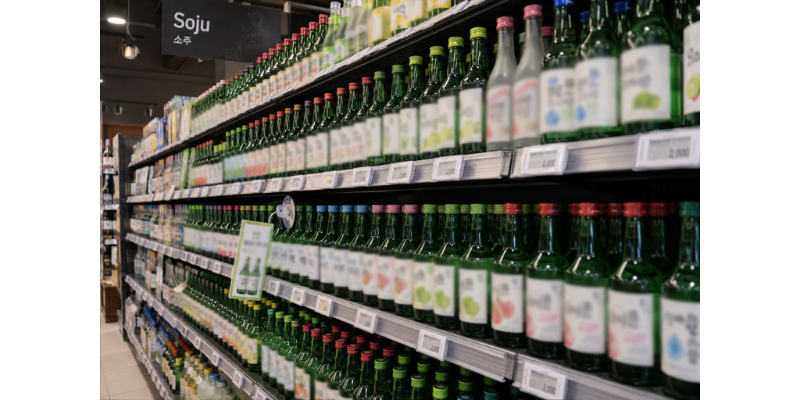
Sazerac entered the U.S. soju market on August 19, 2026, announcing DALHO, its first brand in the Korean spirits category. The launch includes Original, Peach, Strawberry and Lychee varieties at 17% alcohol by volume, sold in traditional 375 mL bottles and a new 50 mL format that Sazerac describes as a first for the soju category. IWSR projects U.S. soju volumes will grow approximately 16% annually through 2029.
The launch also shows how early legal planning can shape a new beverage brand. Sazerac Brands, LLC filed a federal trademark application for DALHO on November 11, 2025, more than nine months before consumers saw the product. Its strategy connects trademark protection with labeling, product positioning and the use of Korean cultural references to introduce an unfamiliar spirits category to a broader U.S. audience.
DALHO Trademark Filing Shows Why Beverage Brands Protect Names Before Launch
Sazerac’s DALHO trademark strategy began well before the August announcement. U.S. Trademark Application Serial No. 99490917 covers “alcoholic beverages, except beer” in International Class 33. The application is for the standard-character DALHO word mark rather than a particular logo or package design.
The scope of the filing is notable. Sazerac did not restrict the application to soju. The broader description potentially gives the company greater flexibility to extend DALHO into other alcoholic beverage products, subject to registration and existing third-party rights.
On January 8, 2026, the USPTO issued a nonfinal Office Action concerning the application, which remains pending. Sazerac also filed a European Union DALHO trademark application on December 2, 2025, months before publicly introducing the brand.
The sequence illustrates a practical point for beverage companies. Trademark clearance and filing often need to occur while formulation, packaging and distribution are still being developed. Discovering a naming conflict after retailers, packaging suppliers and advertising teams have committed to a launch can make a trademark problem substantially more expensive to resolve.
Soju Labeling Requirements Shape How DALHO Can Describe the Product
DALHO is built around soju’s Korean origins. Its name combines the Korean words dal, meaning moon, and ho, meaning tiger. Sazerac also connects the 375 mL bottle with the shared drinking occasions traditionally associated with soju, while using the smaller 50 mL format to encourage individual trial.
The product itself deserves closer attention. DALHO’s website describes it as made with grain neutral spirits and spirits distilled from grain with natural flavors. The company also states that DALHO does not contain fruit, even though three varieties are marketed as Peach, Strawberry and Lychee. Those flavor names therefore identify the intended flavor rather than stating that the products contain those fruits.
Alcohol labeling rules can become more technical when flavors or other ingredients are added to distilled spirits. Depending on the formulation and classification, TTB rules can require a truthful statement describing the composition of the finished product. The description on the label needs to correspond with what is actually in the bottle.
For DALHO, the legal analysis therefore extends beyond whether the trademark is available. The soju terminology, flavor names, ingredient descriptions and other package representations need to remain consistent as the brand grows.
Soju Marketing Creates Consumer Perception and Advertising Risks Beyond the Label
Food Dive reported on August 20, 2026 that U.S. consumers still have limited familiarity with soju, including some confusion between soju and sake. The category also lacks the familiar entry point that cocktails provide for spirits such as tequila or gin.
DALHO appears structured around that problem. Its 50 mL format lowers the cost and commitment of trying soju, while Peach, Strawberry and Lychee provide recognizable flavor choices. Sazerac’s website also suggests ways to consume DALHO, including chilled shots, a Somaek-style serve with beer and a DALHO Fizz.
The legal gap sits between technical label requirements and the broader message consumers receive. Label approval does not automatically resolve every issue created by advertising, websites, retailer listings or social media. A representation may be literally accurate while the surrounding presentation creates a broader impression that requires support.
Geographic and cultural references require similar precision. Sazerac describes soju as a Korean spirit and presents DALHO as a modern interpretation of the category. That differs from expressly claiming that DALHO itself is manufactured in Korea. Keeping that distinction clear becomes increasingly relevant as product descriptions move from Sazerac’s controlled materials to retailer pages, distributor materials and third-party advertising.
strategic by design: The Juris Law Group Perspective
DALHO illustrates why trademark protection, alcohol labeling and advertising review should operate as parts of the same brand strategy. At Juris Law Group, our IP attorneys evaluate how the trademark, packaging, product descriptions and advertising claims work together before those representations become established across the marketplace.
Our approach reflects a principle we apply across intellectual property and consumer product matters: “Bigger is not better, better is better®.” Effective portfolio management is not measured by the number of filings or layers of legal review. The objective is focused protection that matches how the company actually intends to build, market and extend the brand.
That approach is particularly relevant to DALHO. Sazerac sought trademark protection months before launch and used a Class 33 identification broad enough to preserve flexibility beyond a single product format. As DALHO reaches more retailers and distributors, consistent product descriptions will become equally important because marketplace language can quickly extend beyond the wording controlled directly by the brand owner.
Sazerac’s Soju Expansion Tests a Broader Alcohol Brand Strategy
Over the next 12 months, DALHO’s performance will test whether Sazerac’s smaller bottle format and flavor strategy can convert interest in soju into repeat purchases. If the brand gains traction, the DALHO trademark strategy leaves room for additional flavors, formats and potentially adjacent alcoholic products. Expansion will also increase the number of retailers, distributors and marketing partners describing the brand, making consistent product and origin representations harder to control.
The broader alcohol category is likely to produce more U.S. brands built around internationally established spirits and drinking traditions. Those launches create opportunities for distinctive trademarks and new product formats, while placing greater pressure on trademark clearance, category terminology, geographic wording and advertising accuracy. DALHO demonstrates that those issues can begin months before a product announcement and continue well after the first bottles reach shelves.
Common Legal Inquiries
Can an alcohol brand file a trademark before its product launches?
Yes. Companies can pursue federal trademark protection while a beverage remains in development, depending on the filing basis. Sazerac filed its DALHO application on November 11, 2025, more than nine months before the public launch. Early filing can identify trademark obstacles before substantial investments are made in packaging, distribution and advertising.
Does TTB label approval protect an alcohol brand from false advertising claims?
Not necessarily. Federal alcohol labeling rules govern specific information appearing on regulated labels, while advertising and other consumer representations can raise separate legal issues. Websites, retailer descriptions, packaging and promotional materials should be assessed for the overall impression they create rather than relying exclusively on label approval.
Can a U.S. alcohol brand use Korean references when marketing soju?
Korean cultural and category references can be used when they accurately describe the product, history or inspiration involved. Problems can arise when marketing creates an unsupported impression about geographic origin, manufacturing or authenticity. Brands should distinguish statements about soju’s Korean origins from representations about where a particular product was actually produced.