Private-label brands have become a more formidable part of the U.S. consumer packaged goods market. Retailers have expanded store-brand portfolios across food, beverages, household products, personal care and other categories, giving consumers alternatives that increasingly compete with national brands on more than price.
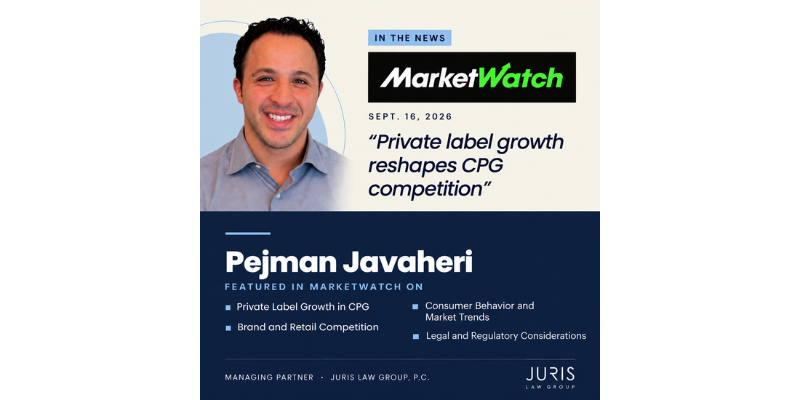
MarketWatch examined this shift in its September 16, 2026 feature, “Store brands like Kirkland are winning the war for consumers’ wallets, squeezing out national brands.” Juris Law Group, P.C. Managing Partner Pejman Javaheri contributed to the MarketWatch article, joining the broader industry discussion surrounding the growth of private label and its implications for the CPG market.
The trend reflects a structural change in retail. Store brands are gaining consumer acceptance while retailers are becoming more sophisticated brand owners. For national CPG companies, that creates new pressure around pricing, product differentiation, retailer relationships and the role private-label manufacturing may play within a broader brand portfolio.
Private Label Is Competing on Quality as Well as Price
Price remains one of the strongest advantages for store brands, particularly when consumers are closely managing household spending. But the competitive position of private label has changed because many retailer-owned brands are no longer presented simply as inexpensive substitutes.
Retailers have invested in packaging, formulations, product development and brand identity. Kirkland Signature, Great Value, Member’s Mark and other established private-label portfolios have become familiar consumer names in their own right. That recognition reduces one of the historical advantages held by national brands: the assumption that a familiar manufacturer name necessarily signals a better product.
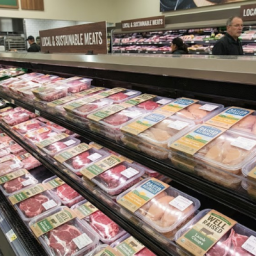
MarketWatch reports that U.S. private-label sales reached approximately $245 billion in 2025, up from $184 billion in 2020. Store brands now represent roughly one in five products purchased from U.S. retail shelves. That scale gives retailers greater reason to treat private label as a long-term brand asset rather than a secondary value category.
Product development is reinforcing the shift. Retailers can use purchasing data to identify changing consumer preferences and develop products around those demands. As store-brand portfolios become more responsive to ingredient preferences, product formats and category trends, national brands face competition from retailers that understand both the product and the point of sale.
National CPG Brands Face a More Difficult Pricing Equation
A stronger private-label category puts national brands under pressure at the shelf. When the price difference between two comparable products widens, consumers have greater incentive to reconsider whether the national trademark justifies the premium.
That creates a difficult pricing decision for established CPG companies. Price increases can protect margins but make store-brand alternatives more attractive. Price reductions can defend volume while compressing the margins that support advertising, distribution, research and product development.
Brand equity therefore has to perform more work. A national brand must give consumers a reason to pay more through product differentiation, reputation, formulation, innovation or another identifiable source of value. Familiarity alone becomes less persuasive when consumers have already developed confidence in a retailer’s competing portfolio.
Retailers occupy an unusual position in this competition. They control the environment where national and private-label products meet, while also owning one of the brands competing for the sale. Shelf placement, promotional activity, pricing and access to purchasing data can consequently influence the relationship between retailers and their national-brand suppliers.
Private-Label Manufacturing Changes the Retailer-Supplier Relationship
The market becomes more complex when national-brand manufacturers also produce private-label products.
MarketWatch highlights this dynamic through Edgewell Personal Care. The company manufactures products under its Schick brand while also producing private-label razors sold under retailer-controlled brands. The example illustrates how a CPG manufacturer can simultaneously operate as a brand owner and as a supplier behind competing store-brand products.
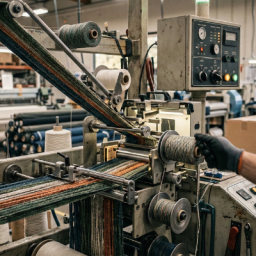
There are sound commercial reasons for that arrangement. Private-label manufacturing can increase production volume, improve utilization of manufacturing capacity and strengthen relationships with major retailers. The same arrangement can create tension when the manufacturer is helping supply a product that competes directly with its own branded portfolio.
That makes the underlying business relationship particularly important. Production specifications, pricing, confidentiality, quality control, intellectual property, product approvals, insurance, indemnification and termination rights can affect the economics of the relationship well beyond the initial manufacturing order.
Formula and specification ownership can become especially important when products are developed collaboratively. If a retailer changes suppliers, the parties should already understand which formulations, improvements, technical information and other proprietary assets can move with the product. Those questions are easier to address before a private-label product becomes commercially successful.
What Private Label Growth Means for CPG and Retail Strategy
The continued growth of private label suggests that national brands are dealing with more than a temporary consumer response to higher prices. Retailers have spent years developing their own brands, and consumers have had more opportunities to compare those products directly with national alternatives.
For CPG companies, the response requires coordination across pricing, brand management, manufacturing and retailer strategy. A private-label opportunity may make sense from a production standpoint while creating different considerations for the company’s branded business. Those interests need to be evaluated together rather than treating private-label manufacturing as an isolated supply arrangement.
Retailers face their own decisions. As private-label portfolios become larger and more recognizable, product quality, brand representations, intellectual property and supplier relationships carry greater commercial consequences. A retailer-owned product is increasingly a consumer-facing brand asset that can accumulate substantial goodwill.
The next phase of private-label growth will therefore depend on more than who offers the lowest price. Retailers are developing stronger brand portfolios while national CPG companies continue to rely on established trademarks, distribution networks and product innovation. The relationship between those businesses is becoming more intertwined even as their brands compete for the same consumer.
Pejman Javaheri’s contribution to MarketWatch’s coverage reflects Juris Law Group’s continued participation in the broader discussion surrounding developments affecting CPG companies, retailers and brand owners. As private label takes a larger position in the market, the commercial relationships supporting those products deserve the same attention as the brands consumers ultimately encounter on the shelf.
Read the full MarketWatch feature for its reporting on private-label growth and the competitive pressures facing national brands.