Van Leeuwen Ice Cream recently secured a decisive trade dress victory against Rebel Creamery, providing consumer packaged goods (CPG) companies with one of the clearest judicial discussions in years on when product packaging qualifies for trademark protection. Following a bench trial, the U.S. District Court for the Eastern District of New York held that Van Leeuwen’s pint packaging functions as protectable trade dress and entered a permanent injunction against Rebel, along with an award of approximately $23.8 million in the defendant’s profits.
The decision reaches beyond the premium ice cream market. As more food, beverage, beauty, and wellness brands rely on minimalist packaging to stand out on crowded retail shelves, the opinion explains how courts distinguish between a protectable brand identity and design choices that competitors remain free to use. It also reflects a growing expectation that companies define their packaging rights with precision before asking a court to enforce them.
Why Van Leeuwen Won Its Trade Dress Lawsuit
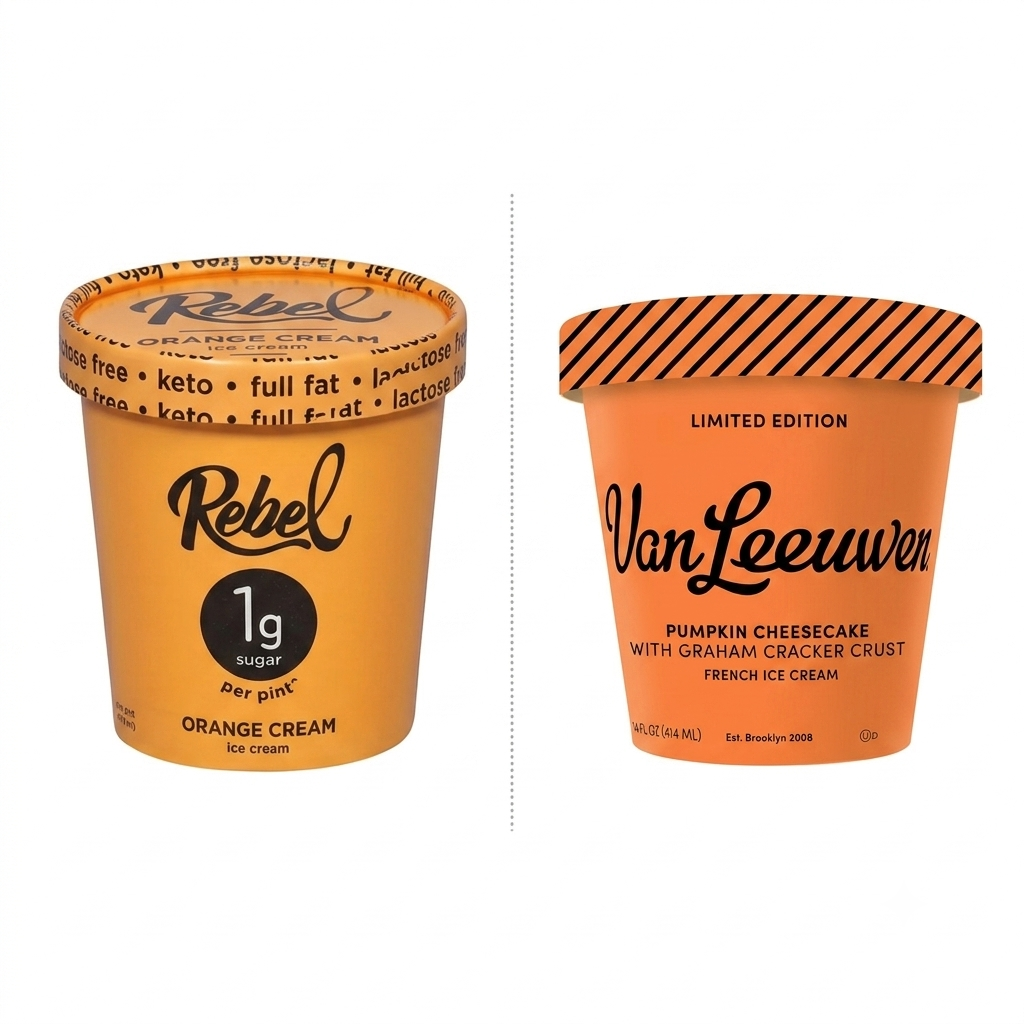
Van Leeuwen filed suit in 2023, alleging that Rebel Creamery adopted packaging that created a confusingly similar overall appearance. Rather than claiming ownership over pastel colors, script lettering, or minimalist design by themselves, Van Leeuwen argued that consumers recognized the combined presentation of its packaging as identifying the source of the product.
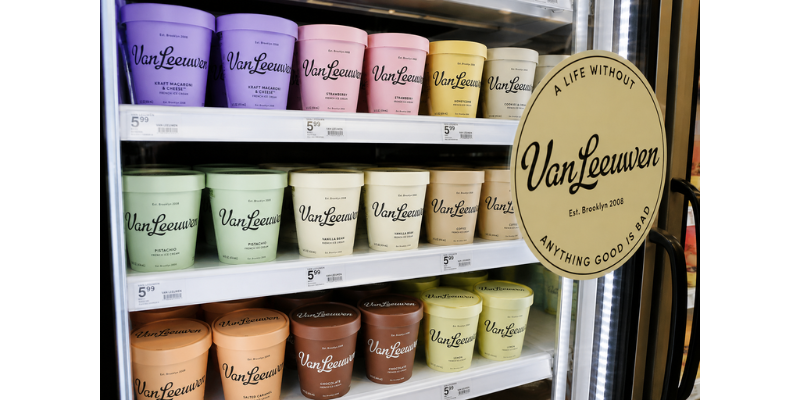
The claimed trade dress included a coordinated group of visual features, including monochromatic pint containers and lids, soft pastel colors, black script lettering, generous white space, and a clean layout. The court emphasized that trade dress law protects the overall commercial impression created by these elements working together rather than any single feature standing alone.
Rebel argued that descriptions such as “minimalist” or “primarily pastel” were too subjective to define legal rights. According to Rebel, those types of descriptions would leave competitors uncertain about what packaging they could lawfully use.
Judge Eric Komitee disagreed. He concluded that Van Leeuwen did more than describe a general design style. The company identified specific visual elements, their placement, typography, color relationships, and the way those features combined into a recognizable presentation. That level of detail allowed the court to identify exactly what was being protected.
The Court’s New Approach to Packaging Trade Dress
One reason this decision has drawn attention is its application of the Second Circuit’s recent Cardinal Motors decision. That appellate opinion made clear that businesses seeking trade dress protection must define their claimed packaging with objective detail instead of broad marketing language.
For companies developing new products, this changes how packaging should be documented. Internal brand guidelines, design standards, and trademark filings may all become more important because they can demonstrate exactly what visual features identify the brand.
The court also addressed another requirement of trade dress law: functionality. Trademark law cannot be used to prevent competitors from using packaging features that are necessary or provide a practical advantage. The court found that Van Leeuwen’s coordinated visual presentation was not functional because competitors remain free to sell premium ice cream using countless other color combinations, layouts, fonts, and packaging designs.
The court further concluded that Van Leeuwen’s packaging had acquired source-identifying significance. Instead of asking whether pastel colors or script fonts are inherently distinctive, the court examined whether consumers associate the complete packaging presentation with a single company.
Survey evidence played an important role during trial. The court noted a net confusion rate exceeding 34 percent, supporting Van Leeuwen’s argument that consumers could mistakenly believe Rebel’s products originated from or were associated with Van Leeuwen.
The Legal Gap: Packaging Clearance Goes Beyond Logo Searches
One overlooked aspect of the decision involves packaging clearance before a product reaches the market. Many companies continue to focus primarily on trademark searches for names and logos while giving less attention to the overall appearance of their packaging.
The Van Leeuwen opinion demonstrates that this approach may leave companies exposed. Courts increasingly evaluate whether the complete visual presentation creates consumer confusion, even when every individual design element remains available for public use.
That distinction carries practical consequences under both the Lanham Act and state unfair competition laws. A business may avoid copying another company’s logo while still creating legal exposure if its packaging conveys a sufficiently similar commercial impression. As minimalist branding becomes more common across food, beverage, cosmetics, supplements, and household products, this issue is likely to appear more frequently in litigation.
For brand owners, packaging reviews should therefore evaluate factors such as typography, spacing, color relationships, layout, and the overall visual presentation before products enter the marketplace. Addressing those issues early is generally less expensive than redesigning packaging after litigation begins.
strategic by design: The Juris Law Group Perspective
Trade dress disputes often develop after years of consistent branding rather than immediately after a product launch. Protecting those rights requires more than creative package design. It also depends on documenting how the packaging is used, maintaining consistency across product lines, and evaluating whether new designs create unnecessary risk when entering competitive markets.
As trade dress attorneys in California, we frequently see packaging become one of a company’s most valuable intellectual property assets, particularly within the food and beverage industry. Businesses that treat packaging as part of their broader intellectual property portfolio are generally better positioned to enforce their rights or defend against infringement claims. Our approach reflects our long-standing philosophy: Bigger is not better, better is better®.
The Van Leeuwen decision also illustrates that enforcement strategies should begin long before litigation. Internal design standards, marketing consistency, evidence of consumer recognition, and thoughtful trademark planning all strengthen a company’s position if disputes later arise.
What’s Next for Packaging Trade Dress
The Van Leeuwen decision is likely to influence how courts evaluate packaging disputes over the next twelve months. Companies asserting trade dress rights now have a clearer example of the level of detail courts expect when defining protected packaging. Businesses relying on broad descriptions such as “clean,” “modern,” or “minimalist” may face greater difficulty if those terms are unsupported by objective design characteristics.
The decision is also expected to influence product development teams. Brand owners introducing new packaging may invest more heavily in trade dress clearance reviews before launch, particularly in industries where visual presentation plays a major role in purchasing decisions. Companies that previously viewed packaging primarily as a marketing function may increasingly incorporate intellectual property counsel into the design process from the earliest stages.
Common Legal Inquiries
Can product packaging receive trademark protection without a federal registration?
Yes. Packaging may qualify for common law trade dress protection if consumers recognize it as identifying a single source. Federal registration provides additional advantages, but businesses can enforce unregistered trade dress when they establish distinctiveness and satisfy the requirements under the Lanham Act.
Can a company own rights to a color or minimalist design?
Usually not by themselves. Courts generally protect the overall combination of visual elements rather than individual colors, fonts, or design concepts. The complete packaging presentation must identify the product’s source and distinguish it from competitors.
Should packaging be reviewed before a product launch?
Yes. Packaging reviews should evaluate the overall commercial impression, including layout, typography, color relationships, and branding elements. Identifying potential trade dress issues before launch can reduce the risk of infringement claims and costly redesigns after products reach the market.