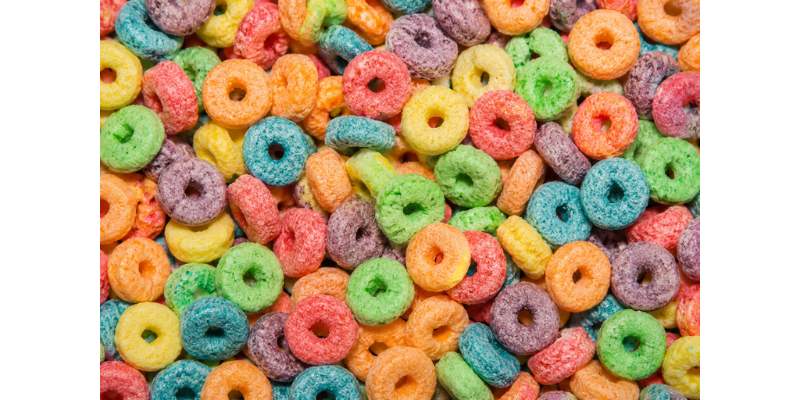
WK Kellogg Co. announced on August 6, 2026 that it will remove artificial colors from all of its cereals by the end of the year, bringing a highly visible reformulation to products including Froot Loops and Apple Jacks. The company plans to replace certified synthetic colors with alternatives derived from fruit and vegetable juices and other plant-based sources while preserving the appearance consumers associate with the brands. WK Kellogg is also removing BHT, an artificial preservative, from the small number of cereals that still contain it. (AP News)
For Froot Loops, the change is unusually sensitive. Color is embedded in the cereal’s product identity, packaging and advertising, so reformulation requires WK Kellogg to manage more than an ingredient substitution. It must coordinate the new formula with package claims, retailer information, product imagery and existing inventory while federal and state rules surrounding food colors continue to change.
Froot Loops Reformulation Moves Away From Certified Food Colors
Froot Loops has relied on certified colors including Red 40, Yellow 5, Yellow 6 and Blue 1 to produce its familiar appearance. WK Kellogg now says it has identified plant-derived alternatives capable of maintaining the distinctive colors of Froot Loops and Apple Jacks and has invested in manufacturing equipment to support the transition. The company has also tested the revised products for taste, aroma, appearance and overall quality.
The announcement follows several years of pressure surrounding synthetic food dyes. In 2024, protesters delivered petitions containing approximately 400,000 signatures to Kellogg’s Battle Creek headquarters calling for the removal of artificial dyes and BHT. More recently, federal and state actions have increased pressure across the food industry, while retailers have begun imposing their own ingredient standards.
FDA’s public tracker previously recorded WK Kellogg’s commitment to stop launching products containing certified colors beginning in January 2026, remove those colors from cereals supplied to K-12 schools for the 2026-2027 school year, and eliminate them from existing products by the end of 2027. Froot Loops is specifically identified by FDA among the products covered by the company’s commitment.
The August announcement moves the consumer cereal portfolio toward that transition sooner. For WK Kellogg, however, completing the manufacturing change is only part of the process. Statements about what Froot Loops contains must remain accurate while older and reformulated boxes may be circulating at the same time.
FDA’s New “No Artificial Colors” Policy Changes the Labeling Analysis
A federal development from earlier this year gives WK Kellogg and other manufacturers greater flexibility in describing reformulated products.
On February 5, 2026, FDA announced that it intends to exercise enforcement discretion when manufacturers use certain claims such as “no artificial colors,” “made without artificial food colors,” or “no added artificial colors” on foods that contain no FD&C Act certified colors. Previously, the regulatory definition of artificial color created difficulties because it does not simply divide colors into “natural” and “synthetic” categories based on their source. A color derived from a natural source can still fall within FDA’s technical definition of a color additive.
FDA’s new position addresses that problem without formally rewriting the underlying definition. The agency has stated that it generally does not intend to pursue enforcement under the specified provision of the Federal Food, Drug, and Cosmetic Act when qualifying products use these claims. The policy does not cover foods that continue to contain FD&C certified colors, and other labeling statements remain subject to requirements against false or misleading representations.
That distinction creates a less obvious labeling risk for Froot Loops. WK Kellogg may have greater federal flexibility to advertise the reformulated cereal as containing “no artificial colors,” even though plant-derived substances are still being added for coloring purposes. The claim therefore needs to be tied to the actual formula and carefully distinguished from broader representations such as “no artificial ingredients,” which could communicate considerably more about the product than the color reformulation supports.
Froot Loops Packaging and Advertising Face a Transition-Period Risk
The period between old and new formulations may create the greatest product representation risk. Existing Froot Loops inventory containing certified colors may remain in warehouses, stores and consumers’ homes after reformulated products enter distribution. Retailers may also continue displaying older ingredient information or product photography after newer packages begin arriving.
A national “no artificial colors” campaign launched before the supply chain has fully transitioned could therefore create inconsistent representations. A consumer might encounter advertising describing Froot Loops as free from artificial colors and then purchase an older box whose ingredient list still identifies certified dyes. FDA enforcement is only one consideration; inaccurate or overly broad representations can also support consumer claims under state false advertising and consumer protection laws.
BHT adds another layer. WK Kellogg has separately announced that it is eliminating the preservative from the limited number of cereals that still contain it. Louisiana, for example, has enacted a food ingredient disclosure law scheduled to take effect on January 1, 2028 that expressly includes BHT and Blue Dye 1 among covered ingredients.
The safer claim strategy follows the formula rather than the corporate announcement. Package copy, product webpages, retailer descriptions, digital advertising and ingredient databases should reflect which formulation consumers can actually purchase at that point in the transition.
strategic by design: The Juris Law Group Perspective on Food Labeling and Advertising
At Juris Law Group, our food and beverage attorneys in California approach reformulations such as Froot Loops as coordinated product, labeling and advertising matters. A manufacturer changing a recognizable ingredient system should determine what claims the revised formula supports, when those claims can begin, which SKUs they cover and whether existing inventory creates exceptions.
FDA’s February 2026 enforcement position makes that analysis particularly relevant. “No artificial colors” may now be available for products using qualifying plant-derived replacements, but the wording should not drift into broader claims about artificial ingredients, health or product quality unless the complete formulation supports them. Retailer content and digital product pages require the same review because consumers often encounter those representations before seeing the physical package.
Color reformulation can also affect brand management. Froot Loops has spent decades building recognition around brightly colored cereal pieces. If replacement ingredients change those colors, WK Kellogg must manage updated packaging photography, advertising assets and other visual representations without creating a disconnect between the product shown and the product sold.
Our approach remains bigger is not better, better is better. In a reformulation, more claims do not necessarily create a stronger marketing position. Narrow language supported by the actual product generally provides greater flexibility as formulas, distribution and government policy continue to change.
Froot Loops and the Next Phase of Artificial Color Reformulation
Over the next 12 months, WK Kellogg’s central challenge will be executing the Froot Loops transition consistently across manufacturing, packaging, advertising and retail distribution. FDA is continuing its broader work on petroleum-based color additives; on July 22, 2026, the agency revoked the authorization for Orange B and proposed revoking Citrus Red No. 2, while its industry tracker shows multiple major food manufacturers moving away from certified colors. As those changes continue, ingredient claims that were once primarily marketing language will receive closer legal scrutiny.
The broader CPG category is likely to follow the same path. Manufacturers will increasingly replace certified colors with plant-derived alternatives while evaluating whether their labels can carry “no artificial colors” and related statements. FDA’s enforcement discretion gives companies additional room, but it does not remove false advertising exposure or the need to substantiate the representation being made. For established brands such as Froot Loops, the legal work will increasingly sit at the intersection of formulation, labeling, advertising and brand identity.
Common Legal Inquiries
Can Froot Loops legally say “no artificial colors” after the reformulation?
Potentially. FDA announced on February 5, 2026 that it intends to exercise enforcement discretion for certain “no artificial colors” claims when a food contains no FD&C Act certified colors. The final claim still needs to accurately describe the product and avoid misleading consumers about other ingredients. (U.S. Food and Drug Administration)
Are artificial food dyes such as Red 40 already banned by FDA?
No. FDA has encouraged industry to move away from petroleum-based certified colors, but that effort should not be described as a federal ban on every dye currently being removed from products such as Froot Loops. Individual color additives can be subject to separate FDA actions, restrictions or authorization changes.
What legal risks arise when a food company reformulates a national product?
The transition can create labeling and advertising exposure when old and new formulas coexist. Manufacturers should coordinate package claims, ingredient lists, websites, retailer listings and advertising with actual production and distribution. Broad reformulation claims made before older inventory clears can create a gap between the advertised product and the product consumers purchase.