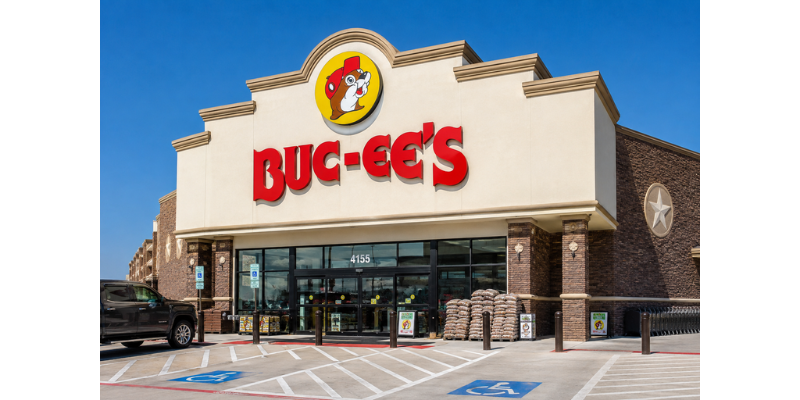
On July 28, 2026, Buc-ee’s Ltd. filed a trademark infringement lawsuit against Beaver’s Mini Mart, a family-owned convenience store in Beavercreek, Ohio, alleging that the store’s name and cartoon beaver branding are confusingly similar to Buc-ee’s protected marks. The case was filed in the U.S. District Court for the Southern District of Ohio shortly after Buc-ee’s expanded into the Ohio market.
The dispute goes beyond two convenience stores using cartoon beavers. Buc-ee’s is asserting rights in a highly recognizable national brand, while Beaver’s Mini Mart reportedly has operated under its name and branding for more than a decade. That chronology raises a less obvious trademark question: what happens when a national company holding federal registrations encounters a smaller business that claims it was already using similar branding in its local market?
Buc-ee’s Trademark Lawsuit Targets the Beaver Logo and BEAVER’S Name
According to reports describing the complaint, Buc-ee’s alleges that Beaver’s Mini Mart uses branding likely to create consumer confusion with its federally protected marks. Buc-ee’s points to the competing cartoon beaver, facial characteristics, prominent red elements, and other aspects of the store’s presentation. The allegations reportedly extend to the BEAVER’S wording itself rather than focusing exclusively on the mascot.
Buc-ee’s has substantial trademark rights surrounding its brand. Of particular relevance to this dispute, Buc-ee’s sought federal protection for BEAVER’S in 2019 and obtained a federal registration in August 2025. Its complaint reportedly contends that the Ohio store’s combination of the Beaver’s name and beaver imagery increases the possibility that consumers will believe the businesses are connected.
The lawsuit seeks an injunction preventing continued use of the challenged branding, along with destruction of infringing materials and monetary remedies. If successful, those requests could require changes extending from storefront signage to merchandise and advertising.
Trademark Protection Under the Lanham Act Depends on Consumer Perception
Owning a federal trademark registration does not give a company exclusive ownership of every depiction of an animal or every word related to it. The infringement analysis instead asks whether consumers are likely to believe that two businesses have a connection, affiliation, sponsorship relationship, or common source.
That places the overall commercial impression of the competing brands at the center of the case. A court can consider the strength of Buc-ee’s marks, similarities between the logos and names, overlap between the businesses, marketing channels, evidence of actual confusion, and the circumstances surrounding adoption of the challenged branding. Buc-ee’s national recognition could weigh heavily because its beaver mascot has become closely associated with its travel centers, merchandise, food products, and advertising.
The relevant comparison also does not occur in isolation. Both parties operate convenience-store businesses, making the relationship between the services more direct than it would be if the same beaver imagery appeared on unrelated products. Buc-ee’s can therefore argue that similarities consumers might disregard between businesses in different industries carry greater weight when the parties compete in closely related retail categories.
Prior Use Could Complicate Buc-ee’s Trademark Claims in Ohio
The most interesting legal issue may be chronology. Beaver’s Mini Mart owner Vik Boparai has reportedly said that he has operated the business for more than a decade. If evidence establishes continuous use of the Beaver’s name or related branding before Buc-ee’s acquired relevant federal rights, the dispute could involve priority and common-law trademark rights in addition to the likelihood-of-confusion analysis receiving most of the media attention.
Federal registration provides substantial nationwide benefits, including presumptions concerning ownership and validity. It does not necessarily eliminate every right previously acquired by another business through actual use. Under U.S. trademark law, an earlier user may under certain circumstances preserve rights within the geographic market where it established use before another party obtained broader federal protection. The scope of any such defense depends heavily on dates, territory, continuity of use, and the particular marks at issue.
Beavercreek adds another layer to the consumer-perception analysis. Beaver imagery has an established connection with the community, including local institutions and businesses. That does not give every Beavercreek business a defense to infringement, but it could provide context for why a local convenience store adopted a beaver identity and how local consumers understand the branding.
Intent could also become important. Evidence showing that Beaver’s Mini Mart adopted its branding independently years before Buc-ee’s entered the local market would present a different factual record from a business adopting similar imagery after Buc-ee’s became nationally recognized. Earlier independent adoption does not by itself defeat infringement, but it can materially change the trademark defense.
strategic by design: The Juris Law Group Perspective
Trademark disputes involving expanding national brands frequently require more than comparing registration certificates. Our brand protection lawyers examine priority, actual use, geographic reach, consumer perception, portfolio history, and the development of the competing brands before assessing enforcement or defense strategy.
For established companies, that analysis should occur as expansion enters new markets. A federal registration creates substantial protection, but existing local users can complicate an otherwise straightforward enforcement strategy. For smaller businesses, documenting first use, historical signage, advertising, sales records, domain activity, invoices, and geographic customer reach can become particularly valuable when a larger trademark owner enters the same territory.
The same discipline applies before litigation. Clearance work should examine names, mascots, visual elements, related services, existing local users, and anticipated geographic expansion. Bigger is not better, better is better. A trademark portfolio built around documented use and deliberate enforcement generally provides a stronger position than relying on registration alone after a conflict has developed.
Buc-ee’s Trademark Enforcement Faces a Test of Priority and Market Reach
Over the next twelve months, the Ohio case could provide a useful example of how federal trademark rights interact with an established local business claiming an earlier market presence. Much will depend on evidence that has not yet been developed publicly: when Beaver’s Mini Mart first used its current name and logo, whether that use was continuous, how far its reputation extended, and whether consumers have actually associated the business with Buc-ee’s. Those facts could narrow the dispute considerably even if Buc-ee’s maintains strong rights in its national marks.
The case also fits within Buc-ee’s broader enforcement strategy against businesses using cartoon animal mascots. Continued litigation may strengthen the boundaries around the Buc-ee’s brand, but each dispute will remain dependent on its own priority and marketplace evidence. For brand owners, the larger lesson is practical: federal registration is a central part of trademark protection, but registration, first use, geographic reach, and consumer perception must be evaluated together when established businesses enter overlapping markets.
Common Legal Inquiries
Does a federal trademark registration override an earlier local trademark user?
Not automatically. A business that used a mark before another company obtained federal rights may retain certain common-law rights in the geographic area where it established use. The result depends on the parties’ respective priority dates, continuity of use, territory, registrations, and other facts.
Can Buc-ee’s prevent other businesses from using a beaver logo?
Buc-ee’s cannot claim ownership of beavers generally. It can enforce trademark rights against branding that creates a legally sufficient likelihood of consumer confusion with its protected marks. Courts examine the entire commercial impression, including design, wording, services, market conditions, and the strength of the asserted trademark.
Why does first use matter in a trademark defense?
U.S. trademark rights are closely connected to use in commerce. Evidence showing when and where a business first used a name or logo can affect priority and the geographic scope of competing rights. Historical advertisements, photographs, sales records, invoices, websites, and other dated materials can therefore become central evidence in a trademark dispute.