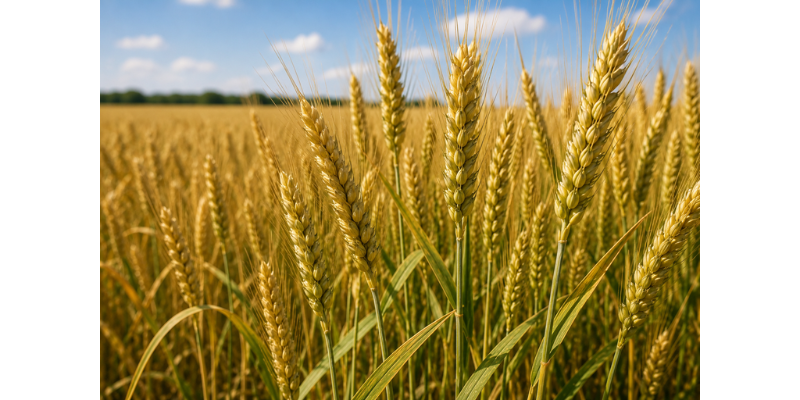
Bayer is expanding its hybrid wheat program through an exclusive licensing agreement with French seed company RAGT, turning a five-year research relationship into a broader commercial strategy for Europe and North America. Announced on July 15, 2026, the agreement gives Bayer licensed access to RAGT’s wheat genetics, scientific expertise, and research as Bayer works toward commercializing hybrid wheat seeds in both markets by the early 2030s.
The transaction places intellectual property licensing at the center of a potentially large new agricultural business. Bayer expects hybrid wheat to generate annual sales of up to €1 billion by the mid-2040s and projects an initial productivity increase of approximately 10 percent over conventional open-pollinated wheat. The legal value of the arrangement, however, extends beyond access to existing wheat genetics. Bayer intends to use RAGT’s genetic material with its own breeding technology, seed production capabilities, and agricultural expertise, creating questions about how licensed IP, proprietary know-how, newly developed varieties, and future commercial rights are divided between the companies.
How Does the Bayer-RAGT IP Licensing Agreement Support Hybrid Wheat Development?
The July agreement builds on a relationship formally announced on April 20, 2021, when Bayer and RAGT entered an exclusive collaboration to jointly develop hybrid wheat varieties for European markets. At the time, the companies planned to combine RAGT’s soft wheat genetics with Bayer’s breeding methods, seed production systems, crop protection position, and digital agricultural tools.
Five years later, the relationship has moved into a different phase. RAGT said the companies updated the terms of their agreement following years of collaboration and research investment, with Bayer now receiving licensed access to RAGT’s wheat genetics and scientific work. Bayer describes the arrangement as a broad license to elite wheat germplasm tailored to European growing conditions. Germplasm, in practical terms, is the genetic material breeders use as the foundation for developing new plant varieties.
That distinction makes the licensing structure particularly relevant. Bayer is gaining access to an underlying innovation platform rather than purchasing a finished seed variety for resale. Its commercial strategy depends on taking licensed genetic resources and combining them with Bayer’s own precision breeding capabilities to create products that are expected to reach the market years from now.
What Intellectual Property Does a Hybrid Wheat Licensing Agreement Cover?
Agricultural licensing agreements can involve several forms of intellectual property and proprietary information at the same time. The public announcements specifically identify RAGT’s wheat genetics, scientific expertise, research, and know-how. Those assets do not necessarily receive the same form of legal protection or carry the same contractual restrictions.
Patent rights may protect particular inventions or technologies, while plant variety rights can protect qualifying new plant varieties in relevant jurisdictions. Confidential breeding information, datasets, methodologies, and research may instead depend heavily on trade secret protection and contractual confidentiality provisions. A sophisticated license therefore has to define what Bayer may use, where it may use it, for what purposes, and what happens to information or technology generated through that use.
The geographic scope adds another layer. Bayer plans to focus on winter wheat in Europe and both spring and winter wheat in North America, where it already operates its WestBred wheat franchise. Bayer states that the genetic material available for its breeding programs could potentially fit more than 80 percent of wheat hectares across relevant European and U.S. markets.
Territorial rights, exclusivity, permitted applications, sublicensing rights, confidentiality, and commercialization rights can therefore have economic consequences far beyond the initial research relationship. A license designed for development work may require a very different allocation of rights once products are ready for large-scale sale.
Who Owns New Hybrid Wheat Developed from Licensed Genetics?
The less visible legal issue is what happens to intellectual property created after Bayer begins working with RAGT’s licensed material.
Bayer says it will combine RAGT’s germplasm and know-how with its own precision breeding capabilities to expand its pipeline of hybrid wheat varieties. That creates a distinction between background IP, meaning technology and genetic assets that existed before the agreement, and new IP generated through the licensed development program.
A commercial license in this setting may need to address ownership of new varieties, improvements to existing material, breeding data, research results, inventions, and technology developed from the licensed genetics. It may also need to determine whether one party receives ownership while the other receives continuing use rights, whether particular improvements are jointly controlled, and whether rights change according to geography or commercial application.
Those provisions become more consequential as the product moves away from its original genetic inputs. A hybrid developed several generations into a breeding program may incorporate licensed RAGT material, Bayer technology, and additional research generated during development. Clear ownership and improvement provisions can reduce later disputes over whether a commercially valuable product remains within the original license and which party can use related developments outside the collaboration.
strategic by design: The Juris Law Group Perspective on IP Licensing
At Juris Law Group, our licensing attorneys in California approach licensing as part of a broader portfolio and commercialization strategy. A strong agreement must account for what each party owns before the relationship begins, what information can be exchanged, how the licensed assets can be developed, and who controls the resulting intellectual property.
The Bayer-RAGT arrangement illustrates why those questions should be addressed before commercialization is close. Bayer is targeting a launch in the early 2030s and revenue extending well into the following decade. A licensing structure supporting that timeline must anticipate research developments, changing product portfolios, territorial expansion, and IP that may not exist when the agreement is signed.
For companies licensing technology, formulas, genetics, manufacturing methods, or other proprietary assets, the commercial objective should guide the scope of the rights from the beginning. The contract has to remain workable if the licensed technology succeeds, expands into additional products, or produces new intellectual property with independent value.
Bayer’s Hybrid Wheat Strategy Moves Toward Commercialization
Over the next 12 months, Bayer’s immediate work is likely to remain focused on breeding, research, and integrating the licensed RAGT genetics into its wider hybrid wheat program rather than a near-term consumer launch. Bayer is pursuing simultaneous commercialization in Europe and North America by the early 2030s, while using its existing WestBred position as part of the North American strategy. The transition from the companies’ 2021 research collaboration to the 2026 licensing arrangement shows that the commercial framework is being established years before seed sales are expected to begin.
The broader legal category is also worth watching. Agricultural businesses increasingly depend on combinations of genetics, data, breeding systems, proprietary research, and technical know-how that may come from different owners. As those assets are combined, licensing agreements have to do more than authorize access. They must establish who can commercialize the resulting products, who controls improvements, and how valuable new IP is allocated if the underlying technology succeeds. Bayer and RAGT’s hybrid wheat program provides a current example of how those decisions can shape a product portfolio years before commercialization.
Common Legal Inquiries
What intellectual property can be covered by an agricultural licensing agreement?
An agricultural technology license can cover patent rights, plant varieties, genetic material, proprietary research, confidential information, technical know-how, datasets, and related technology. The precise rights depend on the assets involved and the jurisdictions where research and commercialization will occur.
Who owns improvements created from licensed intellectual property?
Ownership depends primarily on the agreement and the applicable intellectual property rights. Parties can negotiate ownership of improvements, derivative technology, research results, and newly developed products. Agreements should address these rights expressly when licensed technology will be used as the foundation for continuing research and development.
Why use an IP license instead of acquiring the underlying technology?
Licensing can provide commercial access to technology or intellectual property without transferring ownership of the underlying asset. The owner can retain its IP while granting another company defined development or commercialization rights. The structure can be particularly useful when each party contributes different technology, research capabilities, distribution resources, or market access.