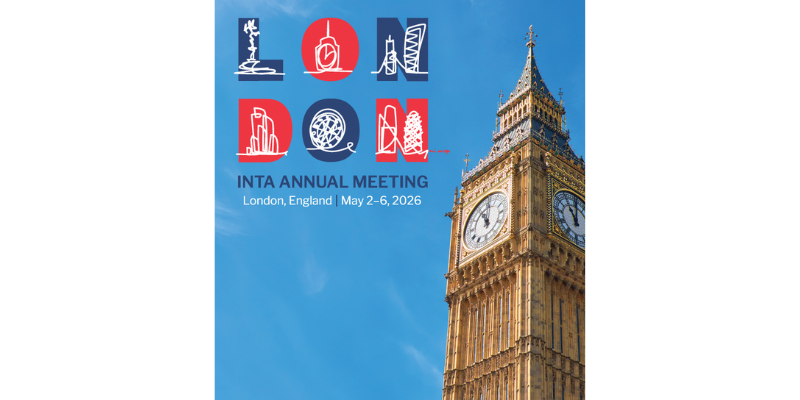
image source: INTA Events
The International Trademark Association’s 2026 Annual Meeting placed London at the center of the global trademark conversation this year. Hosted at ExCeL London from May 2–6, the event brought together more than 10,000 intellectual property professionals from over 100 jurisdictions, reflecting the increasingly international nature of trademark enforcement and brand management. (International Trademark Association)
Beyond the scale of the conference itself, many of the themes emerging from INTA 2026 highlighted how rapidly trademark law trends are evolving. Discussions focused heavily on AI-generated branding, online brand enforcement, cross-border disputes, counterfeit prevention, and the growing pressure on businesses to manage trademarks consistently across digital platforms and international markets.
This year’s London meeting also carried symbolic importance. Several speakers emphasized London’s historical role in shaping global intellectual property systems, particularly as the UK marks the 150th anniversary of the UK Trade Mark Registry. Industry conversations highlighted during INTA reflected a broader concern that modern trademark protection now extends far beyond registration strategy. Companies are increasingly expected to address reputation management, digital misuse, platform enforcement, and AI-related risks simultaneously.
London Hosted One of the Most International INTA Meetings in Recent Years
One of the most notable aspects of INTA 2026 was the meeting’s international scope. Panels and workshops focused extensively on international trademarks, reflecting the reality that even smaller businesses now operate in global digital marketplaces.
Sessions covered issues ranging from bad-faith trademark filings in Asia to enforcement coordination across the European Union and cross-border anti-counterfeiting campaigns. There was also considerable discussion surrounding enforcement challenges in Africa, India, and emerging digital economies where trademark systems are expanding rapidly but enforcement standards can vary significantly.
The London setting reinforced the global nature of those conversations. Unlike some prior meetings centered more heavily on North American enforcement priorities, this year’s discussions appeared particularly focused on harmonization, jurisdictional conflicts, and practical enforcement coordination between legal systems.
Several industry observers also noted the increased participation of in-house counsel. Many sessions emphasized how trademark professionals are now expected to contribute directly to broader business strategy rather than operating solely within legal departments.
AI and Trademarks Dominated Industry Discussions
No issue received more attention at INTA 2026 than AI and trademarks. Multiple sessions explored how generative AI is reshaping branding, advertising, trademark clearance, and intellectual property enforcement.
Topics receiving attention at this year’s INTA meeting included:
- AI-generated logos and branding
- Deepfake advertising and false endorsement risks
- Automated counterfeit listings
- AI-assisted trademark searches
- Data mining and copyright concerns tied to AI training
- Consumer deception involving “AI washing” marketing claims
One recurring concern involved the growing use of AI-generated brand assets without adequate legal review. Businesses increasingly rely on generative tools to create product names, slogans, and advertising campaigns, but those tools may generate content that closely resembles existing marks. Trademark attorneys are watching closely to see whether AI-generated similarities will increase trademark disputes and likelihood-of-confusion claims over the next several years.
Another major theme involved deepfakes and manipulated advertising content. Industry conversations highlighted during INTA 2026 reflected growing concern that AI-generated media can now imitate brands, executives, influencers, and products with increasing sophistication. Those developments create new forms of reputational risk that traditional trademark enforcement frameworks were not originally designed to address.
Online Brand Enforcement and Counterfeit Prevention Remain Major Priorities
Counterfeit prevention and online brand enforcement remained central topics throughout the annual meeting. Businesses continue to face escalating challenges tied to e-commerce marketplaces, social commerce platforms, and unauthorized online sellers operating across borders.
Several sessions focused on practical enforcement mechanisms, including customs coordination, domain recovery procedures, and platform takedown systems. Discussions surrounding INTA 2026 also reflected frustration among many brand owners regarding the speed at which counterfeit listings can reappear after removal.
Trademark monitoring strategies are becoming increasingly automated in response. Many companies are now using AI-assisted monitoring systems to identify suspicious listings, unauthorized marketplace activity, and fraudulent advertising campaigns more quickly than traditional manual review systems would allow.
There was also notable attention on “dupe culture” and the growing consumer normalization of imitation products. Some panels explored how social media trends promoting low-cost “dupes” may complicate traditional trademark enforcement narratives, particularly when younger consumers openly acknowledge buying imitation goods while still engaging positively with the original brand. This creates a more complicated environment for brand protection efforts. Businesses are no longer addressing infringement solely as a legal issue; they are also confronting evolving consumer attitudes toward authenticity and imitation.
Litigation Trends and Specialized IP Courts Drew Attention
Another highlight of the London meeting involved discussions on litigation efficiency and the role of specialized intellectual property courts. UK judges and practitioners participating in INTA sessions discussed procedural reforms designed to make trademark disputes more accessible and cost-effective
Particular attention was given to the UK’s Intellectual Property Enterprise Court (IPEC), which continues to receive international attention for its streamlined procedures and capped litigation costs. Industry conversations suggested growing interest in whether similar specialized models could improve trademark dispute resolution in other jurisdictions.
Recent developments involving AI litigation also surfaced repeatedly during conference programming. The ongoing Getty Images v. Stability AI dispute was frequently referenced as an example of how courts may soon confront broader questions involving AI training data, intellectual property ownership, and commercial exploitation of protected content.
For trademark attorneys, those discussions reinforced a broader point: intellectual property disputes are increasingly overlapping with technology regulation, data governance, advertising law, and platform liability issues.
Business Implications Emerging From INTA 2026
The themes emerging from INTA 2026 suggest that businesses should expect trademark enforcement to become more operationally demanding over the next several years. AI-generated content, global e-commerce expansion, and increasingly sophisticated counterfeiting operations are forcing companies to rethink how trademarks are monitored and protected.
Businesses with international growth plans may need earlier trademark filing strategies, more active online brand enforcement programs, and stronger internal review procedures for AI-generated marketing content. Trademark monitoring is also becoming less reactive and more data-driven, particularly for consumer-facing brands operating across multiple online platforms.
At the same time, discussions highlighted during INTA 2026 reinforced the importance of adaptability. Trademark law is evolving alongside technology, consumer behavior, and digital commerce infrastructure. Companies that integrate intellectual property enforcement into broader business planning will likely be better positioned than those relying on traditional registration-focused strategies alone.
As the London meeting demonstrated, trademark protection is no longer confined to filing applications and responding to isolated disputes. It increasingly involves continuous brand management across a rapidly changing global digital environment.