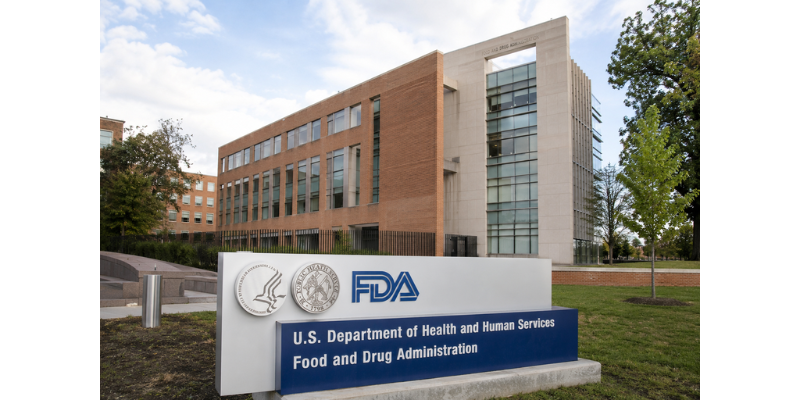
The U.S. Food and Drug Administration is proposing a major change to how food companies document the safety of ingredients brought to market under the Generally Recognized as Safe, or GRAS, standard. On August 11, 2026, FDA published its proposed “Substances Generally Recognized as Safe” rule, which would replace the current voluntary GRAS notification process with a mandatory notification requirement for covered substances used in human and animal food.
The proposal targets a longstanding feature of federal food law: companies can independently conclude that an ingredient is GRAS and introduce it into commerce without first notifying FDA. The new system would give FDA substantially greater visibility into those determinations, including ingredients that have already been sold for years based on private GRAS conclusions. Comments on the proposal are due December 9, 2026, and the rule could require food manufacturers and ingredient suppliers to begin reviewing their existing portfolios well before a final compliance date.
FDA’s Mandatory GRAS Notification Rule Changes the Self-GRAS Process
Under the current framework, substances that qualify as GRAS for their intended use are excluded from the statutory definition of a food additive under the Federal Food, Drug, and Cosmetic Act. That distinction matters because food additives generally require FDA authorization before use, while a company can independently determine that a substance is GRAS based on appropriate scientific evidence and general recognition among qualified experts.
FDA currently allows companies to voluntarily submit those conclusions through its GRAS notification program. A company may instead rely on a private GRAS determination without sending the supporting conclusion to FDA. The August 11 proposal would largely eliminate that option by requiring a person introducing a substance into interstate commerce based on a GRAS conclusion to notify the agency, unless an exception applies.
Mandatory notification, however, would not turn GRAS into an FDA preapproval system. Under the proposed procedure, FDA would initially have 45 days to determine whether a submission can be filed as a GRAS notice. Filing would satisfy the notification requirement, but it would not represent an FDA finding that the ingredient is safe or GRAS. FDA would generally have 180 days after filing to respond, subject to extensions.
That distinction also creates product representation risk. Companies should not treat a filed GRAS notice, placement in FDA’s public inventory, or even a no-questions letter as equivalent to an “FDA-approved” ingredient. Marketing language that overstates FDA’s role could create a separate advertising issue even where the underlying ingredient use complies with federal food law.
Existing Self-GRAS Ingredients Face a One-Year Reporting Window
The proposal gives companies with qualifying substances already in interstate commerce a limited transition mechanism. Rather than requiring a complete GRAS notice for every previously marketed self-GRAS ingredient, FDA proposes a streamlined submission process available for one year after the final rule becomes effective.
The streamlined submission would identify the substance, intended conditions of use and evidence showing that it was already in interstate commerce before the final rule’s effective date. FDA estimates approximately 2,418 streamlined submissions involving human food, illustrating the potential scope of previously undisclosed GRAS determinations.
That process places portfolio management at the center of preparation. Manufacturers and ingredient suppliers will need to determine which substances rely on private GRAS conclusions, which already have FDA no-questions letters, and whether the company’s actual use matches the use evaluated in an existing notice. Changes in manufacturing methods, specifications, food categories, concentration or technical function may place a current product outside the scope of an older GRAS notice.
The same analysis can extend into supplier relationships. A finished-food manufacturer may have relied for years on a supplier’s statement that an ingredient is GRAS without possessing the underlying safety file. Under a mandatory reporting structure, companies will have greater reason to establish whose GRAS determination covers the ingredient, what specifications it covers and whether subsequent manufacturing changes affect that conclusion. Supplier warranties, change-notification provisions and acquisition diligence may require closer attention as a result.
Mandatory GRAS Disclosure Creates New Enforcement and Confidentiality Exposure
One of the less visible consequences of the proposal involves information rather than approval. FDA’s current system leaves the agency without a complete record of privately determined GRAS uses. Mandatory notification would create a much broader inventory and make ingredient uses easier for FDA to identify and evaluate.
FDA also proposes rules addressing confidential information submitted with GRAS notices. Companies would need to identify information claimed to be protected from public disclosure. The issue can become complicated because GRAS status based on scientific procedures depends on safety information that is generally available and accepted among qualified experts. Heavy reliance on confidential evidence may therefore create tension between a company’s trade secret position and its assertion that safety is generally recognized.
Greater visibility could also affect enforcement. FDA states in the proposal that failure to satisfy the notification requirement could become a factor when prioritizing substances for post-market review. If FDA later concludes that a substance does not qualify as GRAS and no other authorization applies, food containing that substance may face treatment as containing an unsafe food additive, with corresponding adulteration exposure under the FD&C Act.
FDA would also have a clearer basis for reassessing old conclusions. New toxicology, changes in manufacturing, or evidence concerning cumulative dietary exposure could lead FDA to revisit a prior no-questions response. The agency proposes procedures that would allow it to publicly address those concerns and update or rescind an earlier response.
strategic by design: The Juris Law Group Perspective
The proposed GRAS rule requires more than an ingredient list review. At Juris Law Group, our food and beverage attorneys in California assess ingredient status, supplier documentation, labeling, advertising claims, confidential information, and contractual responsibility. Our approach reflects a principle that guides our practice: “Bigger is not better, better is better®.” Focused counsel starts with the specific product, supporting records, and path to market.
Existing GRAS documentation also requires close review. An ingredient’s appearance in FDA’s GRAS inventory does not establish that every manufacturing method, specification, use level, or product category is covered. The company’s actual ingredient and intended use must fit the determination on which it relies.
The proposal also raises a question about FDA’s statutory authority. The FD&C Act excludes GRAS substances from food-additive approval but does not expressly require companies to notify FDA of every GRAS determination. After the Supreme Court’s 2024 Loper Bright decision, FDA’s authority to impose mandatory notification without additional legislation could become a central issue if the rule is finalized.
FDA GRAS Reform Will Shift Ingredient Portfolio Decisions Over the Next 12 Months
The immediate deadline is December 9, 2026, when comments on the proposed rule are due. FDA has not announced when it will issue a final rule. As currently drafted, a final rule would become effective 60 days after publication, the streamlined pathway for qualifying existing substances would remain open for one year after that effective date, and the central mandatory notification requirements would have an 18-month compliance period.
Over the next 12 months, ingredient suppliers and food manufacturers are likely to focus increasingly on documenting the legal basis for existing ingredient uses rather than waiting for the final compliance date. Private GRAS files, supplier representations, manufacturing changes and old no-questions letters can take time to reconcile across a large portfolio. The broader direction is also clear even if FDA modifies the final rule: federal policy is moving toward greater visibility into GRAS determinations, while Congress is separately considering legislation that could expressly establish mandatory reporting. Companies that know exactly which GRAS conclusions support their products will be better positioned to respond to either route.
Common Legal Inquiries
Does FDA’s proposed GRAS rule require FDA approval before an ingredient can be sold?
No. The August 2026 proposal would require notification for covered GRAS conclusions, but FDA does not propose converting GRAS substances into conventional food additives requiring premarket approval. Filing a GRAS notice also would not constitute an FDA determination or endorsement that the substance is GRAS.
What happens to ingredients already marketed under a self-GRAS determination?
FDA proposes a streamlined submission pathway for eligible substances already in interstate commerce before the final rule’s effective date. That pathway would be available for one year after the effective date. Companies would need to provide specified information about the substance, its conditions of use and its prior presence in interstate commerce.
Could FDA’s mandatory GRAS notification rule face a legal challenge?
Yes. The FD&C Act does not expressly require companies to notify FDA whenever they independently reach a GRAS conclusion. FDA’s authority to create that obligation through regulation could therefore be challenged, particularly under the current approach to judicial review of agency statutory authority following the Supreme Court’s Loper Bright decision.