The trademark and trade dress dispute between Berkshire Hathaway-owned Jazwares and Build-A-Bear Workshop over plush toy designs has become one of the most closely watched brand enforcement cases in the toy industry. The litigation centers on whether the visual identity of Squishmallows — rounded plush characters with minimalist facial features and pillow-like construction — functions as legally protectable trade dress under the Lanham Act.
Jazwares and its Kelly Toys subsidiary sued Build-A-Bear in federal court after Build-A-Bear launched its “Skoosherz” plush toy collection in early 2024. Jazwares alleged that the product line copied the distinctive look and feel associated with Squishmallows, including the toys’ shape, softness, facial styling, and overall aesthetic presentation. Build-A-Bear denied infringement and argued that the features at issue belong to a broader plush toy category that predates Squishmallows.
The dispute gained additional attention after U.S. District Judge Josephine Staton refused to dismiss Jazwares’ claims, allowing the case to move forward. Reuters reported on May 27, 2026, that the parties later agreed to dismiss the litigation with prejudice following a settlement, though the terms were not disclosed publicly. The procedural history matters because product configuration trade dress claims frequently fail before discovery begins. The court’s willingness to allow Jazwares’ claims to proceed gave the toy industry an unusually detailed preview of how courts may evaluate viral product aesthetics as brand identifiers.
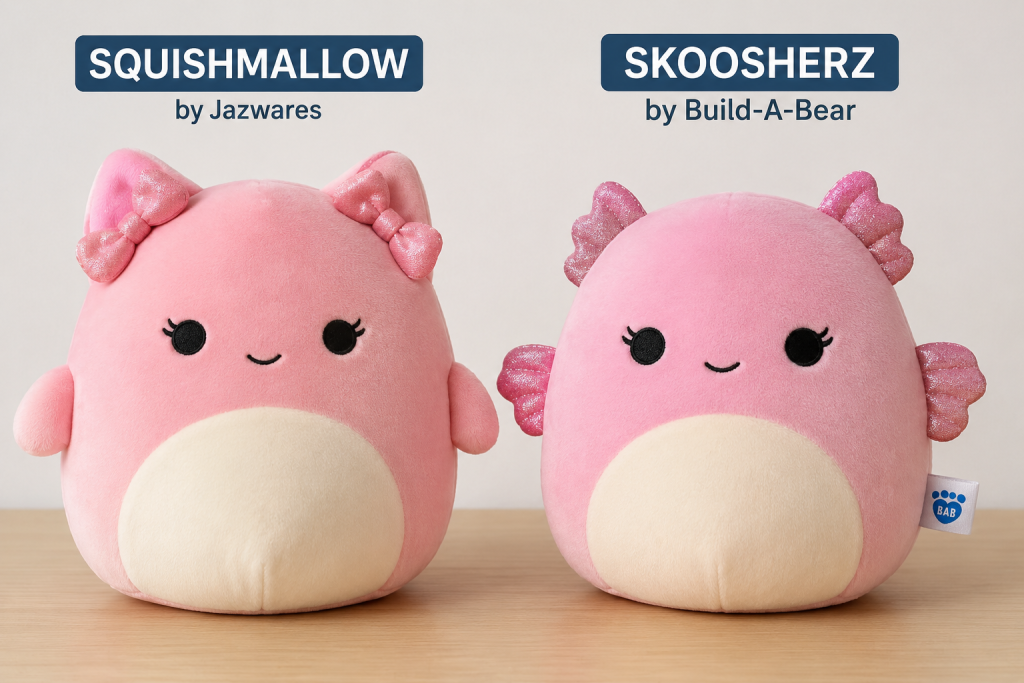
AI generated image
Squishmallows Trade Dress Claims Target Plush Toy “Look and Feel”
Jazwares framed the lawsuit around trade dress protection rather than traditional logo or word mark infringement. That distinction carries substantial legal consequences because product configuration claims face higher evidentiary burdens under federal trademark law. A company asserting trade dress rights in a product’s appearance must establish that the design is non-functional and that consumers associate the appearance itself with a single commercial source.
According to the complaint, Jazwares argued that Squishmallows developed recognizable source-identifying characteristics through extensive commercial exposure and consumer recognition. The company pointed to the brand’s explosive popularity during the pandemic era, social media visibility, licensing expansion, and billion-dollar sales performance. Jazwares alleged that Build-A-Bear intentionally mirrored those characteristics through the release of Skoosherz products that allegedly resembled Squishmallows in body shape, proportions, facial arrangement, and tactile presentation.
Build-A-Bear’s response focused heavily on functionality and genericity defenses. The company argued that soft, rounded plush toys represent a common aesthetic category within the stuffed toy market and that Jazwares sought overly broad exclusivity rights. Build-A-Bear also attacked the consistency of the claimed trade dress, noting that Squishmallows products exist in thousands of variations across animal types, colors, sizes, and accessories. That argument exposed one of the central legal tensions in modern trade dress litigation: whether rapidly expanding product portfolios weaken claims that consumers recognize a single cohesive commercial appearance.
Product Configuration Trademark Exposure in Viral Consumer Brands
The Squishmallows litigation reflects a broader shift in intellectual property enforcement strategy among consumer product companies. Increasingly, companies are attempting to protect aesthetic identity itself rather than relying exclusively on names, logos, or packaging. Viral consumer products often derive commercial value from instantly recognizable visual traits shared across social media, influencer marketing, and online resale communities.
That commercial reality creates a legal gap between consumer recognition and formal trademark doctrine. Courts historically approached product configuration protection cautiously because trademark law cannot be used to monopolize useful or aesthetically necessary product features. Yet modern consumer behavior increasingly ties purchasing decisions to visual familiarity, especially for lifestyle products and collectible merchandise.
The Squishmallows dispute illustrates how companies are attempting to bridge that gap. Jazwares effectively argued that consumer association with the brand extends beyond the “Squishmallows” name itself and reaches the products’ overall presentation. Build-A-Bear responded by emphasizing that consumer demand may stem from the general popularity of squishy plush toys rather than any source-identifying significance.
The litigation also raised an overlooked enforcement issue: whether the rapid pace of trend-based product development weakens long-term trade dress claims. Viral consumer products frequently evolve through licensing partnerships, seasonal editions, retailer exclusives, and collaborative releases. That expansion strategy can increase market recognition while simultaneously making it harder to define the precise boundaries of protected trade dress.
Discovery Disputes Highlight Risks in Large Product Portfolios
One of the most closely watched procedural disputes involved Build-A-Bear’s request to inspect approximately 3,000 Squishmallows products during discovery. Build-A-Bear argued that Jazwares placed the entire product family at issue by asserting a unified trade dress theory across the brand portfolio.
The court rejected the full inspection request as disproportionate, though the dispute exposed a recurring challenge for companies asserting expansive product configuration rights. Large-scale product variation can complicate arguments that a consistent commercial impression exists across an entire product line. That issue extends beyond plush toys and increasingly affects companies in fashion, cosmetics, food packaging, footwear, and drinkware categories.
Several industries are now confronting similar questions:
- Whether viral product silhouettes qualify as protectable trade dress
- How much variation a product line can tolerate before distinctiveness weakens
- Whether consumer confusion can arise from “trend participation” rather than direct copying
- How courts should distinguish aesthetic functionality from source identification
The case therefore became more than a dispute over stuffed animals. It developed into a test of how trademark law applies to algorithm-driven consumer recognition and highly visual digital commerce environments.
The Juris Law Group Perspective on Trade Dress Enforcement
Trade dress litigation involving product configuration requires a narrower enforcement strategy than many companies initially anticipate. Courts typically examine whether the claimed appearance can be articulated with precision and whether consumers genuinely associate those features with a single source rather than a broader market trend. As trade dress attorneys, we often see disputes become more difficult once product lines expand into hundreds or thousands of visual variations.
Courts evaluating product configuration claims often focus less on the size of a product portfolio and more on whether the claimed appearance remains consistently source-identifying across variations. For companies managing expansive consumer brands, bigger is not better, better is better® when it comes to maintaining coherent trade dress presentation.
Settlement Leaves Broader Trade Dress Questions Unresolved
Although the parties ultimately dismissed the litigation with prejudice, the settlement leaves several unresolved legal questions that continue to affect consumer brands. The court never reached a final determination on whether Squishmallows’ alleged trade dress qualifies for protection under federal trademark law. Even so, the survival of the claims through early motion practice likely encouraged other companies to evaluate broader trade dress enforcement strategies involving product aesthetics.
Over the next 12 months, companies operating in collectible and lifestyle product categories will likely increase focus on product configuration enforcement, particularly where visual identity drives resale demand and online consumer engagement. Plush toys, insulated drinkware, beauty products, and footwear remain especially active sectors because those categories increasingly rely on instantly recognizable visual presentation rather than purely functional differentiation.
The litigation may also encourage competitors to refine product development review procedures before launching trend-adjacent merchandise. Courts appear increasingly willing to examine how product styling, naming conventions, and marketing presentation interact when evaluating consumer confusion allegations. That creates heightened advertising liability exposure where companies intentionally design products that resemble culturally recognizable consumer brands while avoiding direct logo copying.
Common Legal Inquiries
Can a product shape qualify for trademark protection?
Yes. Product configuration can qualify as trade dress under the Lanham Act if the design is non-functional and consumers associate the appearance with a single source. Courts generally require substantial evidence of secondary meaning before granting protection over product shapes or aesthetic presentation.
Why are trade dress cases harder than logo trademark cases?
Trade dress claims involving product appearance face additional legal scrutiny because trademark law cannot restrict competitors from using functional or generic product features. Plaintiffs must define the claimed appearance precisely and prove that consumers recognize the design itself as a source identifier.
Does a settlement mean the trade dress claims were valid?
No. Settlements typically resolve litigation without judicial findings on the merits. The Squishmallows case ended before the court determined whether the alleged trade dress was legally protectable, though the refusal to dismiss the claims gave Jazwares procedural leverage during the litigation.