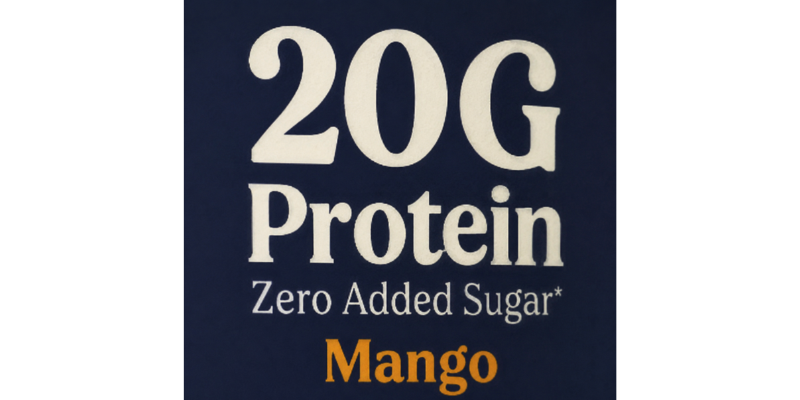
The battle for the high-protein yogurt market moved from grocery shelves to federal court on June 15, 2026, when Danone North America sued Chobani in the U.S. District Court for the Southern District of New York. The lawsuit challenges Chobani’s marketing of its “20G Protein” yogurt products and alleges that consumers are being misled into believing those products deliver the same nutritional value as Danone’s competing Oikos Pro line.
The dispute arrives at a time when protein content has become one of the most influential purchasing factors in the dairy aisle. Both companies have invested heavily in products marketed around protein intake, muscle recovery, satiety, and wellness benefits. Danone’s complaint focuses on a question that extends beyond yogurt: when two products display the same nutrient claim, does a larger serving size create a misleading impression about comparative nutritional performance?
That question places the case at the intersection of food labeling law, false advertising standards, and consumer perception evidence. The outcome may influence how food and beverage companies present nutrient-content claims across multiple categories.
Danone’s False Advertising Claims Target Chobani’s 20G Protein Labeling
According to the complaint, Danone’s Oikos Pro products contain 20 grams of protein in a 5.3-ounce serving, while Chobani’s single-serve 20G Protein products contain 20 grams of protein in a 6.7-ounce serving. Danone argues that consumers focus on the prominent “20G Protein” statement and reasonably interpret the products as nutritionally comparable.
The lawsuit alleges that Chobani achieves the same headline protein number by selling a larger portion rather than matching the protein concentration of Oikos Pro. Danone further claims that if Chobani’s product were measured using the same 5.3-ounce serving size, it would contain approximately 16 grams of protein rather than 20 grams.
Those allegations are central to Danone’s theory of competitive injury under the Lanham Act. The company is not claiming that Chobani’s stated protein content is mathematically inaccurate. Instead, it argues that the overall presentation of the claim creates a misleading marketplace comparison.
That distinction often determines whether a labeling dispute survives early dismissal. A technically accurate statement can still create advertising liability if consumers take away a misleading message from the product’s overall presentation.
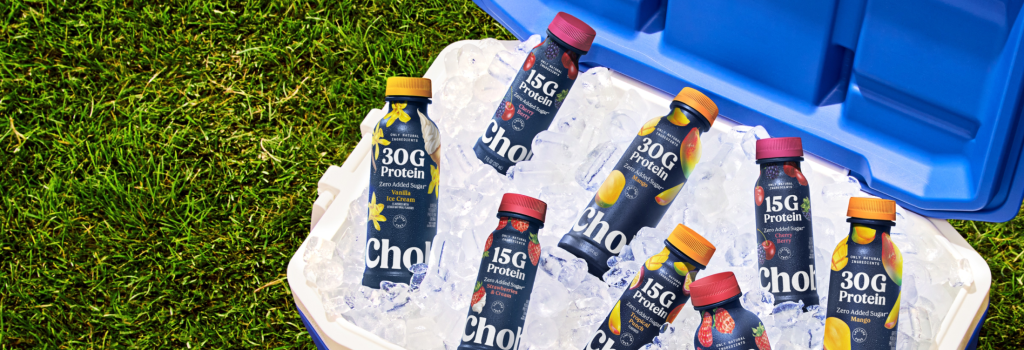
image source / Chobani
Protein Density and Serving Size Comparisons Create a New Front in Food Labeling Litigation
One of the more interesting aspects of the lawsuit is that it focuses on protein density rather than protein content alone.
Federal labeling regulations generally permit manufacturers to disclose nutrient amounts on a per-serving basis. The legal dispute arises when competing products use different serving sizes while presenting identical front-of-package nutrient claims.
Danone argues that consumers shopping for high-protein yogurt are unlikely to calculate protein concentration per ounce while standing in a grocery store. Instead, the complaint suggests that consumers view “20 grams of protein” as a shorthand measurement of nutritional strength and compare products accordingly.
The legal exposure emerges from that consumer perception. Courts evaluating false advertising claims often focus on the net impression conveyed to reasonable purchasers rather than whether each individual statement is literally true in isolation.
This may become the most closely watched aspect of the case. If Danone succeeds, food manufacturers could face greater scrutiny when using nutrient-content claims that depend on larger serving sizes than competing products.
FDA Serving Size Rules and the Expanding Scope of Nutrient-Content Advertising Claims
The lawsuit also challenges Chobani’s handling of serving sizes for certain multi-serve products.
Danone alleges that some products promoted as containing 20 grams of protein rely on serving calculations that differ from what consumers might expect when comparing products across the category. The complaint argues that alternative serving-size calculations could produce lower protein figures than those highlighted in advertising.
The dispute therefore extends beyond a simple comparison between Oikos and Chobani. It raises broader questions regarding the relationship between FDA nutrition labeling rules and competitor advertising claims under the Lanham Act.
Manufacturers often view nutrient-content claims as straightforward factual statements. Litigation involving protein, sugar, calories, fiber, and serving sizes demonstrates that the legal analysis rarely ends with the Nutrition Facts Panel. Courts frequently evaluate whether consumers interpret front-label messaging differently than regulatory definitions might suggest.
That gap between technical compliance and consumer understanding remains one of the most active sources of food and beverage litigation.
The Juris Law Group Perspective on Food Labeling and False Advertising
Competitor lawsuits often emerge when an entire category begins competing around a single measurable attribute. In yogurt, that attribute is protein. Similar disputes have appeared in products marketed around caffeine levels, sugar reduction, electrolyte content, and ingredient sourcing, where the advertising value of a claim can become just as important as the underlying science.
At Juris Law Group, one principle guides much of our work in this area: “Bigger is not better, better is better®.” The Danone-Chobani dispute reflects that concept. The case is not centered on which company sells the larger serving size. It focuses on whether consumers understand what the advertised protein number represents when comparing products side by side. Our food labeling attorneys in California regularly encounter matters where the legal question turns on consumer takeaway rather than the literal accuracy of a statement. Courts evaluating false advertising claims often examine the overall impression created by a product’s packaging, advertising, and market positioning, particularly when competing brands rely on the same headline metric to attract consumers.
What the Danone-Chobani Lawsuit Could Mean for High-Protein Food Marketing
The next phase of the case will likely focus on consumer surveys, expert testimony, and evidence regarding how shoppers understand protein claims when comparing yogurt products. Danone will need to demonstrate that the challenged marketing creates a misleading impression and causes competitive harm. Chobani is expected to argue that its protein disclosures are accurate and fully supported by product labeling.
Over the next twelve months, the litigation may influence how manufacturers market protein-forward products across dairy, beverages, snack foods, and nutritional supplements. Companies increasingly compete around quantifiable nutritional metrics, creating pressure to maximize front-label claims while remaining within regulatory boundaries.
The broader category may see increased emphasis on disclosures regarding serving size, protein concentration, and comparative nutrition messaging. As protein continues to function as a primary purchasing driver, competitor challenges under the Lanham Act are likely to remain an active enforcement tool in the food and beverage industry.
Common Legal Inquiries
Can a company be sued for a nutrient claim that is technically accurate?
Yes. A claim may create false advertising exposure if consumers receive a misleading overall impression from the packaging or advertising. Courts frequently examine the net takeaway conveyed by the product rather than evaluating individual statements in isolation.
What is a Lanham Act false advertising lawsuit?
The Lanham Act allows competitors to challenge advertising that allegedly misleads consumers and causes commercial injury. Unlike consumer class actions, these cases are brought by businesses claiming that a rival’s marketing practices divert sales or distort competition.
Why do serving sizes matter in food labeling disputes?
Serving size can affect how consumers compare products. Two products may display identical nutrient-content claims while delivering different nutrient concentrations per ounce. Litigation often focuses on whether those differences create a misleading comparative impression in the marketplace.