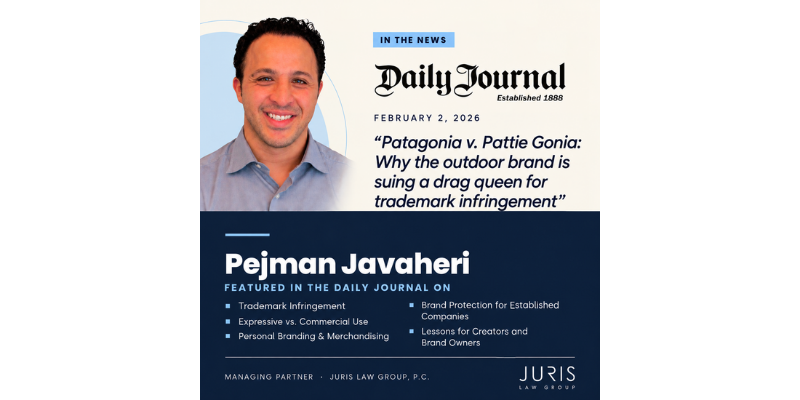
Pejman Javaheri, Managing Partner of Juris Law Group, P.C., authored an article published by the Daily Journal examining Patagonia’s trademark infringement lawsuit against drag performer and environmental activist Pattie Gonia and what the dispute means for brands navigating the line between expressive and commercial trademark use.
Published in the Daily Journal’s Intellectual Property and Constitutional Law section on February 2, 2026, “Patagonia v. Pattie Gonia: Why the outdoor brand is suing a drag queen for trademark infringement” examines a dispute where brand protection, commercial activity, advocacy, and expression intersect.
At the center of the case is a familiar trademark question with an unusual set of facts: when does the use of a name associated with a public persona move from expressive activity into commercial trademark use?
Patagonia’s Lawsuit Centers on the Commercial Use of Pattie Gonia
Pattie Gonia, the stage name used by environmental activist and drag performer Wyn Wiley, had operated publicly under the name for years before the dispute reached court. According to Patagonia, the parties had previously discussed how Pattie Gonia could continue environmental advocacy, brand partnerships, and other activities without infringing Patagonia’s trademark rights. The relationship changed as Pattie Gonia began selling branded apparel and sought federal trademark protection for the name.
That commercial expansion is central to the dispute. Patagonia alleges that Pattie Gonia-branded merchandise and certain uses of the name and logo create an improper association with its established brand. The case therefore reaches beyond the similarity between two names and into the goods, branding, marketplace context, and potential for consumers to believe the parties are connected.
Trademark Rights Can Change as a Brand Becomes Commercial
Javaheri’s Daily Journal analysis focuses on an important distinction for businesses and creators: trademark risk can change as the nature of the use changes. A name used for performance, commentary, advocacy, or another expressive purpose can present a different legal analysis once it becomes a source identifier for merchandise or other commercial services.
The Patagonia dispute illustrates why companies must evaluate trademark issues in context rather than focusing on a name alone. Commercial expansion, product overlap, visual branding, trademark applications, and the likelihood of consumer confusion can alter the legal analysis as a project develops into a business.
For established companies, the case also presents a familiar brand-protection problem. Trademark owners must consider when potentially conflicting uses warrant enforcement, particularly when another party begins operating in product categories or commercial channels that overlap with the owner’s existing rights.
Brand Protection Can Carry Business and Public Relations Consequences
Trademark enforcement does not occur in isolation from a company’s public identity. Patagonia and Pattie Gonia are both closely associated with environmental advocacy, adding a reputational dimension to a dispute that would otherwise center largely on trademark rights and consumer confusion. Patagonia has maintained that trademark enforcement cannot depend on whether it agrees with another party’s viewpoint.
For brand owners, that tension can make enforcement decisions more complicated. Allowing commercial use to continue may affect trademark rights and future enforcement strategy, while filing suit can generate public attention that extends well beyond the underlying legal claims. The decision therefore requires consideration of both the strength of the legal position and the broader commercial consequences of enforcing it.
Pejman Javaheri’s Daily Journal Analysis
In his Daily Journal article, Javaheri examines how the Patagonia v. Pattie Gonia dispute brings traditional trademark principles into a setting shaped by personal branding, advocacy, merchandise, and expressive activity. The case offers a useful example of how a relationship that may initially appear compatible can develop into a trademark dispute as commercial activity expands.
For businesses, creators, and brand owners, the broader lesson is practical: trademark strategy should evolve alongside the use of the brand. What begins as a name, persona, or creative project can raise different legal questions once merchandise, licensing, sponsorships, and federal trademark rights enter the picture.
Read Pejman Javaheri’s article in the Daily Journal