Liquid I.V.’s collaboration with Ring Pop, announced in April 2026, marks a deliberate expansion into nostalgia-driven licensing. The product—a cherry-flavored hydration powder inspired by the Ring Pop candy—blends electrolyte functionality with a recognizable confectionery identity. This pairing introduces specific trademark, advertising, and product positioning risks. Unlike a standard flavor launch, this product functions as a licensed identity that relies on an existing trademark while making performance claims in a competitive market.
April 2026 Launch Details and Product Composition of the Ring Pop Collaboration
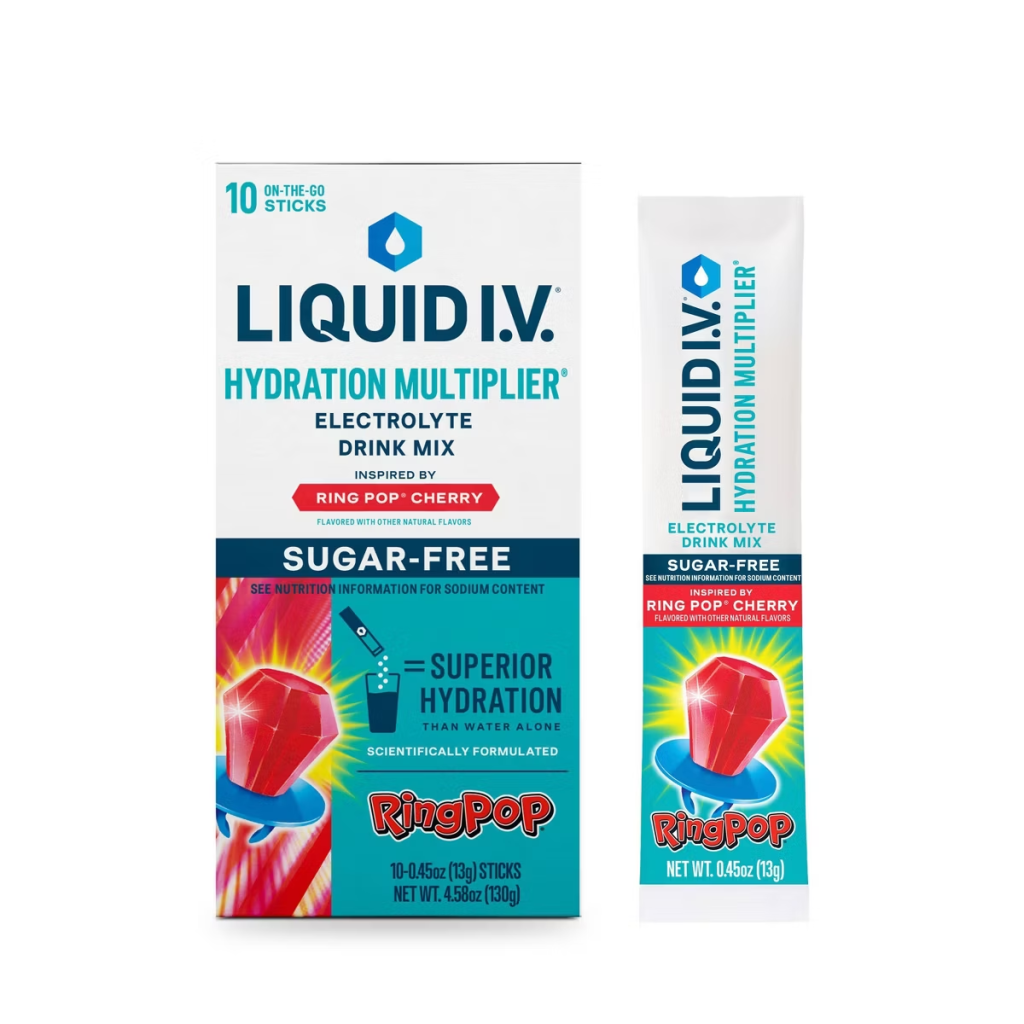
The product joined the Hydration Multiplier line as single-serve stick packs. It features a cherry Ring Pop flavor profile and an electrolyte content marketed as exceeding that of traditional sports drinks. The formulation also includes vitamins B3, B5, B6, and B12. In certain retail channels, the brand offers sugar-free versions using alternative sweeteners to maintain a candy-like taste while emphasizing health. These elements are legally significant because the ingredient profile must support the product’s functional claims, while the branding relies on licensed intellectual property with its own enforcement obligations.
Trademark Implications of Using the Ring Pop Brand
Liquid I.V. operates under a licensing agreement with Bazooka Candy Brands, the owner of the Ring Pop trademark. This is a formal arrangement requiring active management of the trademark within a new category. Historically, the Ring Pop mark has been tied to confectionery. Extending it into hydration raises questions about whether the mark’s distinctiveness remains intact. Trademark protection depends on consistent use; if the branding diverges too far from its original association, it risks dilution. Conversely, staying too close to candy imagery can confuse how consumers interpret the product’s functional purpose.
Candy Identity + Electrolyte Claims: Consumer Perception and False Advertising Risk
Liquid I.V. markets its products with performance-based claims, specifically referencing elevated electrolyte levels compared to traditional sports drinks. When these claims pair with a candy identity, the legal analysis changes. Courts evaluating false advertising often consider how an average consumer interprets the product as a whole. A product that looks and tastes like nostalgic candy may create expectations different from those of a conventional sports drink. This gap between consumer expectation and marketing claims is a frequent source of litigation risk.
The Licensing Agreement: Quality Control and Enforcement Obligations
The use of the Ring Pop trademark is governed by a licensing structure that requires ongoing oversight. Trademark law does not allow for passive licensing. A typical agreement requires the licensor to maintain control over the mark’s use in commerce, including oversight of product quality, packaging, and marketing materials. If these controls are not enforced, the trademark can be weakened. Courts have previously treated inadequate quality control as a failure that undermines the validity of a mark, particularly in cross-category expansions.
Ingredient Strategy and Labeling Exposure in Functional Hydration
The formulation of the Ring Pop hydration mix is central to the legal narrative. Liquid I.V. uses a combination of electrolytes, such as sodium and potassium, alongside B vitamins associated with energy metabolism. In sugar-free versions, alternative sweeteners are used to maintain flavor consistency. Each component must align with labeling standards and advertising claims. While the product may meet regulatory requirements, the combination of functional messaging and candy-inspired branding invites closer scrutiny from regulators and private litigants.
The Juris Law Group Perspective on CPG Trademark Protection
Licensing arrangements in the food and beverage sector introduce risk where branding meets performance claims. As CPG attorneys in California, we navigate enforcement challenges when companies expand into new categories using established marks.
These situations require coordination between trademark protection lawyers and product messaging teams. The Liquid I.V. collaboration reflects a broader trend of brands accelerating growth through licensing, a strategy that demands tight control over intellectual property in unfamiliar contexts.
Strategic Outlook: The Next Phase for Licensed Hydration Products
The partnership between Liquid I.V. and Ring Pop is likely the beginning of a larger trend. The commercial success of nostalgia-driven flavors suggests further licensing deals involving legacy candy or snack brands. This expansion will test the limits of how far functional products can lean on indulgent branding without triggering legal challenges. As these categories overlap, scrutiny will increase regarding comparative claims and consumer perception. For Liquid I.V., success over the next year will require disciplined trademark management and careful control over advertising language.
Common Legal Inquiries
Can a candy trademark be used for a hydration product?
Yes, this is possible through a licensing agreement that includes quality control provisions. The trademark owner must actively supervise the mark’s use to maintain its enforceability.
Do electrolyte comparison claims create legal risk?
These claims carry risk if the comparison lacks clarity or relies on inconsistent serving sizes. Courts evaluate whether the claim creates a misleading impression for the average consumer.
Does flavor licensing increase trademark enforcement obligations?
Yes. Licensing expands the scope of trademark use, necessitating closer monitoring to prevent dilution or misuse across new product categories.