When a federal court allows a trademark lawsuit to proceed, it does not determine who will ultimately win. It does, however, signal that the plaintiff has presented enough factual allegations to justify a closer examination. That is where the dispute between Danone US and Chobani now stands. On July 27, 2026, Judge Jennifer L. Rochon of the U.S. District Court for the Southern District of New York denied Chobani’s motion to dismiss Danone’s trademark and trade dress lawsuit over the redesign of La Colombe’s ready-to-drink cold brew coffee packaging.
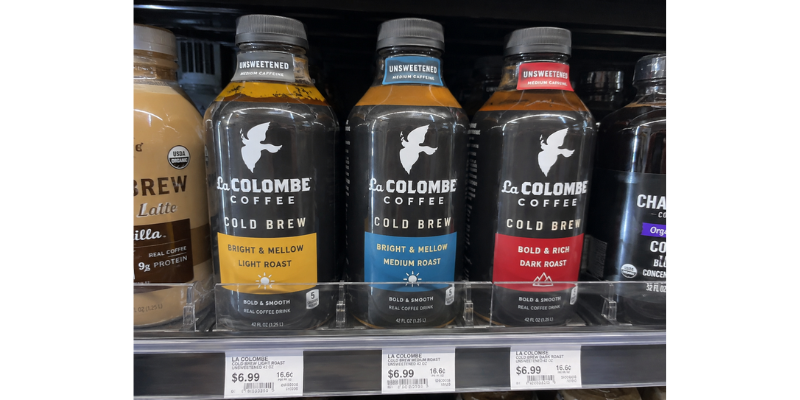
The dispute centers on Chobani’s redesign of La Colombe’s bottled cold brew products after acquiring the coffee brand in December 2023. Danone alleges that the new packaging moved closer to the appearance of its STōK Cold Brew Coffee products, including the use of the phrase “Bright & Mellow”, a slogan Danone claims consumers associate with STōK. While the court has not ruled on whether infringement occurred, the decision allows the case to enter discovery, where internal marketing documents, consumer research, and branding decisions may become central evidence.
Trademark and Trade Dress Claims Focus on More Than a Single Slogan
Danone filed the lawsuit on July 29, 2025, alleging trademark infringement, trade dress infringement, unfair competition, and related state law claims. The complaint argues that Chobani intentionally modified La Colombe’s packaging after its acquisition to resemble STōK’s established visual identity.
According to the complaint, the redesign introduced several changes that Danone believes increased the similarity between the competing products. Among the allegations are changes to the bottle’s color palette, the placement of graphic elements, and the replacement of La Colombe’s previous “Bright & Flavorful” wording with the phrase “Bright & Mellow.” Danone argues that consumers have come to recognize “Bright & Mellow” as identifying STōK rather than merely describing coffee flavor.
Trade dress law examines the overall appearance of a product rather than isolated design elements. Courts typically evaluate how consumers perceive the combined effect of colors, layouts, typography, packaging shapes, and other visual features. This means that even if individual components remain common within an industry, their combination may still create legal exposure if consumers associate that overall presentation with a single source.
For consumer packaged goods companies, this distinction matters because packaging redesigns often involve gradual changes rather than complete rebranding. A company refreshing an acquired product may unintentionally move closer to a competitor’s established market identity, creating questions that extend well beyond the use of individual trademarks.
Why the Court Refused to Dismiss the Case
Chobani asked the court to dismiss the complaint before discovery began. Among its principal arguments, it contended that “Bright & Mellow” simply describes coffee characteristics and therefore receives limited trademark protection. It also argued that consumers would recognize La Colombe because its own branding remains prominently displayed on the packaging.
The court concluded that Danone had plausibly alleged protectable trademark rights, trade dress rights, likelihood of consumer confusion, and intentional copying. At this early procedural stage, the judge was required to assume the factual allegations in the complaint were true. The ruling therefore does not determine liability. Instead, it confirms that Danone’s allegations deserve further factual examination through discovery.
That distinction is often misunderstood outside the legal profession. A denied motion to dismiss is not a finding that infringement occurred. It simply means the plaintiff has alleged enough facts to continue litigating the dispute. The next phase will likely include document production, depositions, expert testimony, and consumer survey evidence before the court considers whether confusion actually exists.
The Overlooked Legal Risk: When Descriptive Language Becomes Brand Identity
The legal question receiving the most attention has been whether “Bright & Mellow” functions as a trademark or merely describes coffee flavor. Yet another issue may ultimately have greater influence on the outcome.
Trademark law generally allows businesses to use descriptive words to explain their products. However, that defense becomes more complicated when descriptive wording appears alongside a broader package redesign that allegedly resembles a competitor’s established trade dress. If discovery reveals that the slogan was selected as part of a coordinated branding strategy intended to evoke STōK’s identity rather than simply describe taste, Chobani’s fair use arguments may become more difficult.
This illustrates an important legal gap that many discussions of the case have overlooked. Companies frequently evaluate slogans separately from packaging design. Courts often do not. Consumer perception is shaped by the entire presentation of the product, and the interaction between descriptive wording and visual branding may determine whether a court views the language as informational or source-identifying.
That broader analysis becomes particularly relevant following acquisitions. Portfolio integration often includes updated packaging, revised messaging, and refreshed advertising campaigns. Each individual decision may appear commercially reasonable, but together they may create Product Representation Risk if consumers begin associating the redesigned product with an established competitor.
strategic by design: The Juris Law Group Perspective
Trade dress disputes rarely begin with identical logos. More often, they develop through a series of incremental design decisions that gradually change how consumers perceive a product. Evaluating those decisions requires balancing marketing objectives with intellectual property risk before new packaging reaches retailers.
As trademark protection lawyers, our work in consumer products frequently involves reviewing packaging revisions as part of broader brand portfolio management. That review extends beyond trademark clearance to include advertising claims, visual identity, comparative marketplace positioning, and documentation supporting creative decisions. Bigger is not better, better is better®. A disciplined review process before a nationwide rollout often costs far less than defending years of litigation after products reach store shelves.
This case also demonstrates why acquisition-related rebranding deserves heightened legal attention. Integrating newly acquired brands may create efficiencies across a portfolio, but those efficiencies should be evaluated alongside potential trademark and trade dress exposure before packaging changes become permanent.
What the Next Year May Mean for Cold Brew Coffee Branding
Over the next twelve months, discovery is expected to shape the direction of this litigation. Internal emails, marketing presentations, consumer testing, competitive analyses, and design development materials may reveal why La Colombe’s packaging evolved after Chobani acquired the brand. Those materials could become more influential than the packaging itself because they may explain the intent behind the redesign. Depending on what discovery reveals, the parties may pursue settlement discussions, summary judgment, or prepare for trial.
The broader consumer packaged goods industry is likely to watch the case closely. Brand owners increasingly refresh packaging to modernize acquired products while maintaining consumer recognition. This lawsuit illustrates that packaging updates can create intellectual property exposure even when logos remain distinct. Companies introducing new packaging over the coming year may place greater emphasis on documenting independent design decisions, consumer research, and clearance reviews to reduce future advertising liability and trade dress disputes.
Common Legal Inquiries
Can descriptive phrases receive trademark protection?
Yes. Descriptive wording generally receives limited protection when first adopted. However, if consumers begin identifying that phrase with a single company through long-term marketplace use, it may acquire secondary meaning and qualify for trademark protection under the Lanham Act.
What is trade dress infringement?
Trade dress protects the overall appearance of a product or its packaging when consumers associate that appearance with a particular source. Courts evaluate the combined commercial impression created by colors, layouts, graphics, typography, and packaging design rather than focusing on any single feature.
Does losing a motion to dismiss mean a company infringed someone else’s trademark?
No. A court denying a motion to dismiss simply determines that the plaintiff has alleged enough facts for the lawsuit to continue. The parties must still present evidence during discovery before the court decides whether trademark infringement or trade dress infringement actually occurred.