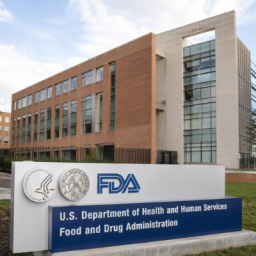
The FDA is continuing its effort to develop a federal definition for “ultra-processed foods” (UPFs), but agency officials now acknowledge that the task is more complicated than initially anticipated. During the 2026 Institute of Food Technologists (IFT FIRST) conference, FDA Acting Deputy Commissioner for Food Donald Prater explained that scientific uncertainty and the existence of multiple competing classification systems have slowed the agency’s progress. That statement follows earlier expectations from the U.S. Department of Health and Human Services that a proposed definition would be released by April 2026.
For food manufacturers, the delay extends a period of uncertainty that reaches well beyond nutrition policy. Once the FDA adopts a definition, it could influence labeling standards, advertising claims, product reformulation, procurement policies, and consumer litigation. The agency’s challenge is not simply deciding which foods belong in a category. It is determining whether that category can support consistent enforcement while reflecting current scientific evidence and consumer understanding.
Why FDA Still Cannot Define Ultra-Processed Foods
Unlike terms such as “organic” or “healthy,” “ultra-processed food” has no legally recognized federal definition. Researchers commonly rely on the NOVA classification system, which categorizes foods according to the extent and purpose of industrial processing. While NOVA has become widely used in public health research, critics argue that it groups products with very different nutritional characteristics under the same label.
FDA officials have acknowledged these concerns. During the IFT conference, Prater stated that the agency is evaluating multiple proposals while reviewing evolving scientific research. He also emphasized that the FDA is not seeking to prohibit foods simply because they fall within a particular processing category. Instead, the agency’s objective is to develop a definition that can support transparent labeling and provide consumers with meaningful information.
The federal government formally began this effort in July 2025, when the FDA, USDA, and HHS issued a joint Request for Information seeking public input on how ultra-processed foods should be defined. The agencies requested comments on ingredients, manufacturing methods, additives, and the degree of processing, recognizing that any future policy must begin with a consistent legal standard. The public comment period was later extended as stakeholders submitted additional scientific and industry feedback.
The Consumer Perception Gap Behind Ultra-Processed Food Claims
The legal consequences of a federal definition will likely extend well beyond nutrition labeling. Once the agency establishes a standard, companies may begin marketing products as “not ultra-processed” or “free from ultra-processed ingredients.” Those claims could become the subject of FDA scrutiny, competitor challenges under the Lanham Act, and consumer class action lawsuits if they are unsupported or misleading.
The largest unanswered legal question is what the FDA ultimately decides to measure. A definition based primarily on ingredients creates one set of compliance obligations. A definition based on manufacturing processes creates another. If the agency instead adopts a framework influenced by consumer perception, advertisers may face greater uncertainty because consumer understanding often evolves faster than regulatory language.
This distinction represents an overlooked legal issue. False advertising disputes frequently depend on how a reasonable consumer interprets a product claim rather than how a manufacturer intended the statement. If the phrase “ultra-processed” becomes part of marketing campaigns before the FDA establishes clear parameters, courts may be left evaluating competing interpretations without an established federal benchmark. That uncertainty could increase litigation even before formal regulations are finalized.
Federal Delays Leave States to Develop Their Own Standards
The FDA’s ongoing work also intersects with state-level initiatives that have already begun moving forward. California enacted Assembly Bill 1264, directing state agencies to identify ultra-processed foods of concern and develop recommendations for removing qualifying products from public school meals. Although California has not yet finalized the products affected, its legislation demonstrates that states are not waiting for federal action before pursuing their own policy objectives.
This creates additional portfolio management challenges for national food manufacturers. A company may eventually face one federal definition while individual states adopt different standards or timelines. Product labels, advertising materials, retailer communications, and school procurement strategies may all require separate review depending on where products are sold.
Meanwhile, many manufacturers have already accelerated reformulation efforts by removing artificial colors, preservatives, and emulsifiers from existing products. Those decisions are being driven by consumer demand and broader FDA initiatives, yet they also position companies for a future in which processing classifications may influence purchasing decisions. Reformulation alone, however, does not automatically support broader marketing claims. Every representation should remain consistent with ingredient lists, manufacturing practices, and available scientific support.
strategic by design: The Juris Law Group Perspective
The discussion surrounding ultra-processed foods demonstrates how regulatory definitions often become the starting point for broader business decisions. Once terminology enters federal policy, companies must evaluate how that language appears across product packaging, advertising campaigns, retailer communications, and digital marketing. The legal review extends well beyond the ingredient panel because consumers frequently interpret broad marketing statements differently than technical regulatory definitions.
As FDA compliance attorneys, our work often involves helping businesses evaluate how evolving federal standards affect existing claims before enforcement or litigation develops. Our trademark “Bigger is not better, better is better®” reflects the same practical approach. Careful claim development, disciplined portfolio management, and consistent product representation frequently provide stronger protection than aggressive marketing language that may later require revision.
What Food Companies Should Watch Over the Next 12 Months
Over the next twelve months, manufacturers will likely continue monitoring FDA announcements while preparing for multiple regulatory outcomes. Even if the agency does not immediately issue binding regulations after adopting a definition, the terminology itself could influence retailer expectations, investor disclosures, procurement standards, and consumer purchasing behavior. Companies considering new product launches or reformulation projects may increasingly evaluate how future processing classifications affect long-term branding strategies.
The broader food industry will also continue watching how federal and state initiatives develop together. California’s efforts demonstrate that individual states are prepared to establish their own approaches where federal policy remains incomplete. Whether those standards ultimately align with the FDA’s definition may determine the next generation of food labeling disputes, advertising challenges, and consumer litigation involving claims related to ultra-processed foods.
Common Legal Inquiries
Does the FDA currently have an official definition of ultra-processed foods?
No. The FDA is actively developing a federal definition and has gathered public comments from industry, researchers, and other stakeholders. Until a formal definition is adopted, there is no legally recognized federal standard governing the term.
Can companies advertise products as “not ultra-processed”?
Companies should proceed carefully. Without an official federal definition, these claims may be vulnerable to consumer challenges or competitor disputes if the underlying basis for the representation cannot be substantiated or differs from future FDA standards.
Why does a federal definition matter if ultra-processed foods are not being banned?
A federal definition can become the foundation for future labeling requirements, advertising standards, school meal policies, procurement decisions, and enforcement actions. It may also influence how courts evaluate false advertising claims involving statements about food processing and ingredient composition.