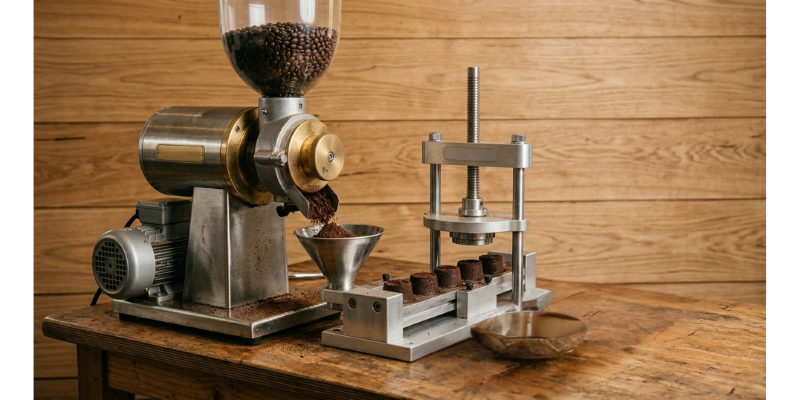
Lavazza is bringing its Tablì coffee system to the United States in August 2026, introducing a capsule-free alternative to the single-serve coffee products that have dominated the market for decades. First unveiled during Milan Design Week 2025 and initially launched in Italy, Tablì replaces the traditional coffee pod with a compressed coffee tab made entirely from coffee. The product is designed to work with a dedicated brewing machine developed specifically for the system.
The launch represents one of Lavazza’s largest investments in the U.S. market and arrives as consumer demand continues to shift toward premium at-home coffee experiences and reduced packaging waste. The company has described Tablì as the result of more than five years of research and development and has secured more than 15 patents associated with the technology. While sustainability has become the headline, the legal significance of the launch extends to patent ownership, product representation risk, and the creation of a new proprietary coffee ecosystem.
Lavazza’s Tablì Launch Introduces a New Capsule-Free Coffee Category
The August 2026 U.S. launch places Lavazza directly into competition with established single-serve systems from Keurig and Nespresso. Unlike traditional coffee pods that rely on plastic or aluminum capsules, Tablì uses a compressed coffee tab that serves as both the coffee dose and the brewing unit. According to Lavazza, the system was engineered to preserve coffee quality and brewing performance without requiring a separate capsule, coating, or binding material.
The product originated from Lavazza’s acquisition of Italian startup Caffemotive in 2020 and was later refined through years of development before being publicly introduced at Milan Design Week. Lavazza subsequently invested in dedicated manufacturing infrastructure in Italy to support production. The company is launching five coffee varieties in the United States, including Espresso, Double Espresso, Lungo, Super Crema, and Decaf, with broader retail distribution expected later in the year.
From a legal perspective, the launch is notable because Lavazza is not merely introducing a new coffee product. It is attempting to establish a new product format and consumer category. Those efforts often depend on the ability to protect underlying technology, defend marketing claims, and maintain exclusivity around the broader product ecosystem. As the company expands distribution in North America, its intellectual property portfolio may become as important as consumer acceptance of the product itself.
Packaging-Free Coffee Claims and Advertising Liability Exposure
The feature receiving the most public attention is Tablì’s elimination of individual coffee pod packaging. Lavazza has promoted the system as a coffee tab made entirely from coffee, removing the capsule component that has long attracted criticism from environmental advocates.
Those claims carry their own legal considerations. Environmental marketing remains an active area of enforcement by federal regulators, state agencies, and private plaintiffs. As sustainability messaging becomes more prominent, companies increasingly face scrutiny regarding the precise meaning of terms such as “packaging-free,” “waste-free,” and similar environmental representations.
The legal analysis extends beyond whether the coffee tab itself contains packaging. Consumer perception often becomes the controlling issue. If the brewing system requires specialized components, replacement parts, or secondary materials, questions may arise regarding how consumers interpret broader environmental claims. This creates a legal gap frequently overlooked in discussions of sustainable product innovation. The dispute may not center on the accuracy of the product design itself. Instead, it may focus on whether marketing communications create impressions that exceed what consumers actually experience.
For beverage and food companies, environmental differentiation increasingly requires the same evidentiary support traditionally associated with nutrition, health, and performance claims. Substantiation standards continue to evolve alongside consumer expectations.
Proprietary Brewing Systems and Competitive Positioning Against Keurig and Nespresso
Lavazza is entering a market dominated by established ecosystem models. Consumers purchasing a Tablì machine must also purchase Tablì coffee tabs, creating a closed-loop platform similar to other single-serve systems.
That business structure introduces additional intellectual property considerations. Proprietary systems often become targets for compatibility products, aftermarket accessories, and competing consumables. Historical disputes within the coffee industry have frequently involved questions surrounding patent exhaustion, interoperability, and product compatibility.
Should Tablì gain commercial traction, Lavazza may eventually confront legal questions similar to those faced by other single-serve coffee manufacturers:
- Third-party compatible products
- Patent infringement allegations
- Design-around technologies
- Comparative advertising claims regarding performance and sustainability
The company’s early emphasis on patent protection suggests it recognizes that competitive pressure may emerge quickly if the technology proves commercially successful.
The Juris Law Group Perspective on Patent and Product Innovation Protection
Patent disputes in the consumer packaged goods sector increasingly involve complete product ecosystems rather than standalone inventions. An innovation such as Tablì illustrates how intellectual property rights can intersect with manufacturing processes, sustainability initiatives, branding strategies, and long-term portfolio management.
Our IP attorneys observe that companies introducing new product categories often face two parallel challenges. The first involves protecting the underlying technology through patents and related intellectual property rights. The second involves maintaining consistency between technical capabilities and public-facing marketing claims. Patent and product innovation attorneys in California frequently encounter situations where a company’s most valuable asset is not merely the invention itself, but the collection of representations surrounding that invention.
The Tablì launch demonstrates how those issues can converge. The strength of Lavazza’s patent portfolio may determine how effectively it protects market exclusivity, while the precision of its sustainability messaging may influence how regulators, competitors, and consumers evaluate the product over time.
What the Next 12 Months May Hold for Lavazza and the Single-Serve Coffee Category
Over the next year, industry attention will likely focus on consumer adoption rates, pricing strategies, and the practical performance of the Tablì system. The company has characterized the launch as its largest U.S. investment to date, suggesting that market acceptance will play a substantial role in shaping future expansion decisions. Retail availability, machine adoption, and repeat purchases will ultimately determine whether the capsule-free concept can compete with entrenched alternatives.
The broader legal implications may extend beyond coffee. Consumer packaged goods manufacturers continue searching for methods to reduce packaging while maintaining convenience and product integrity. If Tablì gains commercial momentum, companies across food and beverage categories may pursue similar innovations. That could increase patent filings, competitive advertising disputes, and enforcement activity involving sustainability representations. The result may be a growing body of intellectual property and consumer protection issues centered on packaging elimination rather than packaging redesign.
Common Legal Inquiries
Can a company patent a food or beverage delivery system?
Yes. Patent protection may apply to manufacturing methods, product structures, brewing technologies, machine components, and related processes. In many consumer product categories, the delivery system itself becomes a primary source of intellectual property value.
Can sustainability claims create advertising liability even if technically accurate?
Yes. Enforcement often focuses on how reasonable consumers interpret marketing claims. A statement may be technically true while still generating scrutiny if consumers take away a broader environmental benefit than the product actually provides.
Why are proprietary coffee systems frequently involved in intellectual property disputes?
Single-serve systems combine hardware, consumables, and branding into a unified ecosystem. As market adoption grows, competitors may seek compatibility solutions or alternative products, creating potential disputes involving patents, trademarks, and advertising claims.