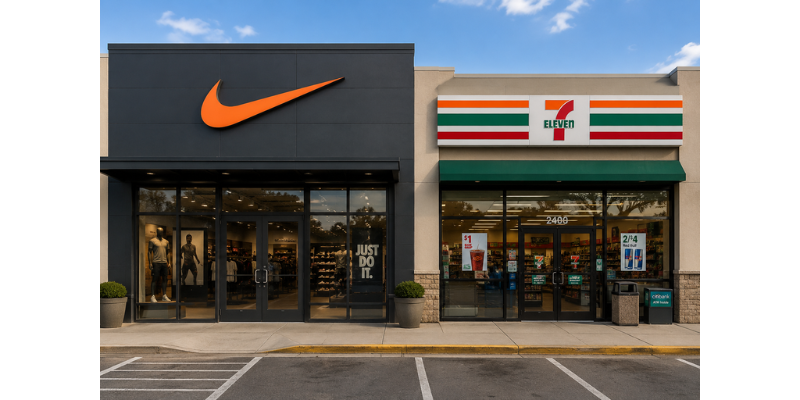
Nike’s upcoming release of a new Air Max 95 has led to an unusual trademark lawsuit that goes beyond logos and product names. On July 1, 2026, 7-Eleven filed suit against Nike in the U.S. District Court for the Northern District of Texas, alleging that the shoe copies the retailer’s well-known orange, green, and red branding and is likely to make consumers believe the companies collaborated on the product. The lawsuit was filed just days before the shoe’s scheduled July 11 launch, which also happens to be 7-Eleven Day and the retailer’s annual Free Slurpee Day promotion.
The dispute comes as more consumer brands seek to protect visual brand elements beyond traditional logos. As companies increasingly collaborate across industries, they are placing greater value on colors, packaging, and overall product appearance that consumers associate with a single source. The case will likely test how far trademark protection extends when a product references a brand without using its name.
Trademark Claims Against Nike Focus on Color Branding and Consumer Perception
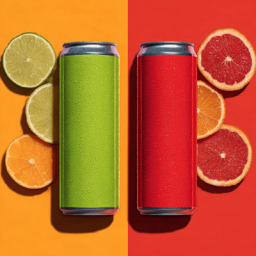
According to the complaint, 7-Eleven has used its orange, green, and red stripe design for nearly four decades across store signage, employee uniforms, advertising, merchandise, footwear, and promotional materials. It alleges that this “Tri-Colour Mark” has become a recognizable source identifier that consumers immediately associate with the company.
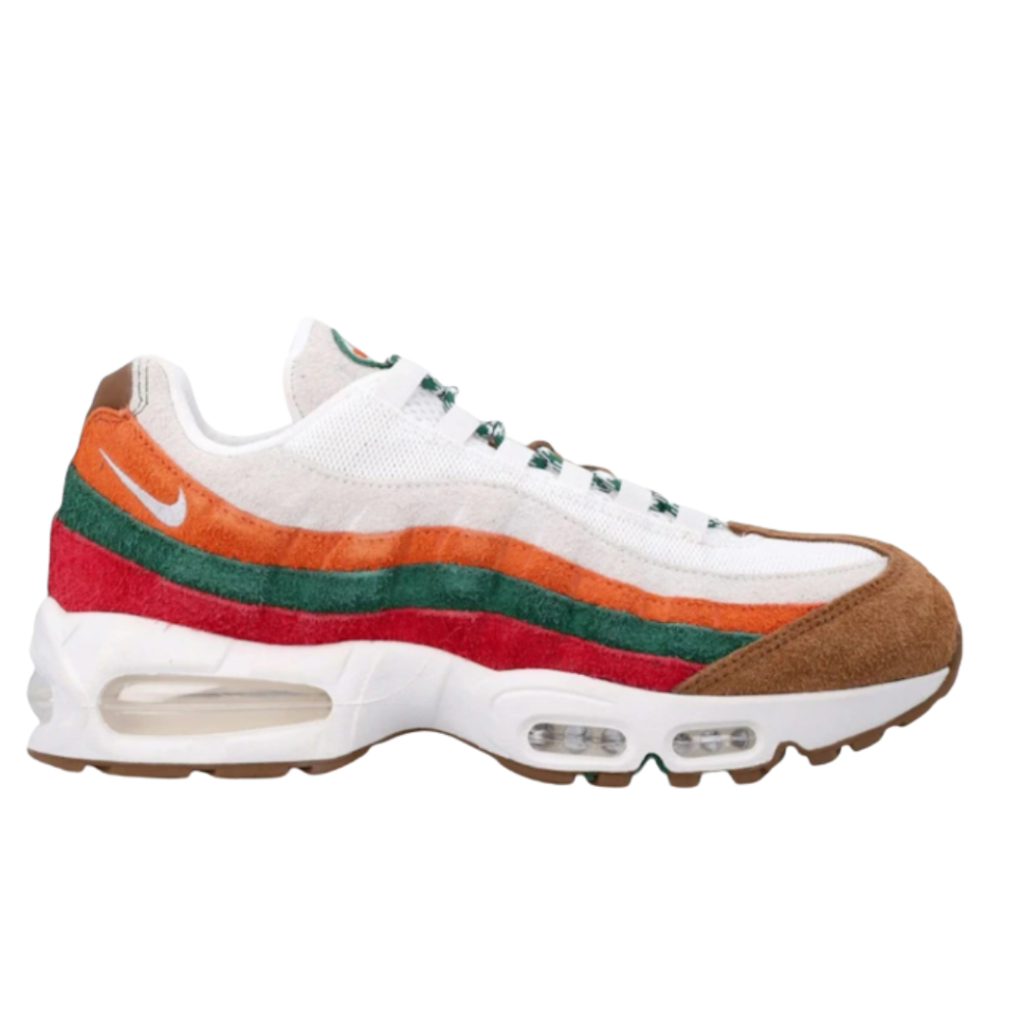
The lawsuit centers on Nike’s new Air Max 95 colorway, which features similar orange, green, and red striping. While Nike does not use the 7-Eleven name or logo, 7-Eleven argues that the overall presentation creates the same commercial impression. The retailer also points to several facts that, in its view, make confusion more likely.
The timeline forms an important part of the complaint. According to court filings, 7-Eleven became aware of the planned release in mid-June 2026 and attempted to resolve the issue before filing suit. When those discussions did not prevent the launch, the company filed its complaint on July 1. Nike’s release remains scheduled for July 11, the same date as the retailer’s annual promotional event.
7-Eleven also alleges that Nike’s marketing references convenience stores through terms such as “corner store” and includes store-themed graphics printed inside the shoe. The complaint further claims that sneaker publications and online listings had already begun referring to the product as the “7-Eleven Air Max” before its official release, leading some consumers to believe it was an authorized collaboration.
Under the Lanham Act, the central question is whether consumers are likely to be confused about the source, sponsorship, or approval of a product. The complaint argues that this confusion had already begun before the shoe reached store shelves.
Licensed Brand Collaborations May Shape the Trademark Analysis
One detail receiving less attention is 7-Eleven’s reliance on its history of legitimate licensing partnerships. The retailer has previously collaborated with brands including Crocs, DGK, Sunday Golf, Breezy Golf, and New Balance. Because consumers have seen official 7-Eleven products in categories beyond convenience stores, the company argues that buyers are more likely to assume Nike’s shoe is another authorized partnership.
This issue could play a central role as the case moves forward. Courts evaluating trademark infringement often consider the commercial context surrounding a product, including how consumers experience the marketplace. When a company regularly licenses its brand for apparel or footwear, customers may reasonably expect new products carrying familiar design elements to be officially approved.
An issue receiving relatively little attention involves how an established licensing program may influence consumer expectations. Most reporting has focused on whether Nike copied a color combination. The court may ultimately consider whether 7-Eleven’s licensing history changes consumer expectations enough to increase the likelihood of confusion. That analysis could influence future disputes involving fashion, food, beverage, and retail brands that frequently participate in cross-industry collaborations.
In addition to trademark infringement, 7-Eleven also asserts trademark dilution claims under federal and Texas law. Unlike infringement, dilution does not always require proof that consumers are confused. Instead, the focus is whether another company’s use weakens the distinctiveness of a famous mark over time. If the court concludes that 7-Eleven’s tri-color branding qualifies as famous, those claims could become an important part of the litigation.
strategic by design: Juris Law Group on Trademark Enforcement
Cases involving color combinations and trade dress require a broader analysis than disputes over identical names or logos. Businesses often spend years building consumer recognition through consistent packaging, store design, advertising, and licensed merchandise. When those visual elements become closely tied to a brand, they may provide valuable trademark rights even without displaying the company’s name.
Our trademark protection lawyers regularly advise companies on protecting these non-traditional brand assets before disputes arise. That includes evaluating whether colors, packaging, product appearance, or retail presentation have developed enough marketplace recognition to support enforcement efforts. As we often tell clients, Bigger is not better, better is better®. Building a recognizable brand identity and documenting consistent use over time frequently provides stronger long-term protection than simply expanding a portfolio of registrations.
The allegations also show that product launch timing and marketing themes may become part of the trademark analysis. Even if a company avoids another brand’s logo, references that encourage consumers to assume a collaboration may later become evidence supporting a likelihood-of-confusion claim. Marketing decisions that appear creative from a branding perspective may eventually be examined in trademark litigation.
What the 7-Eleven Trademark Lawsuit Could Mean for Consumer Brands
As the litigation progresses, companies that rely on trade dress, color branding, and licensed merchandise will be watching closely. If the case moves beyond the pleading stage, the court may provide guidance on how much protection color combinations receive when paired with marketing themes, release dates, and product presentation. That analysis could affect future collaborations involving food, beverage, apparel, and retail companies that increasingly operate outside their traditional product categories.
For Nike, the immediate issue will be defending against allegations that its product creates consumer confusion and dilutes 7-Eleven’s branding. For 7-Eleven, the lawsuit represents an effort to preserve the value of visual branding that extends beyond convenience stores and into licensed consumer products. Whether the parties reach an early settlement or continue through discovery, the case may offer additional guidance on how courts evaluate collaboration-based marketing and non-traditional trademark rights.
Common Legal Inquiries
Can a company trademark a combination of colors?
Yes, in some circumstances. A color or combination of colors may receive trademark protection if consumers recognize it as identifying a single source rather than serving only a decorative purpose. Businesses generally must show consistent use and strong marketplace recognition before those rights are established.
Does trademark infringement require copying a company’s name or logo?
No. Trademark infringement can arise when the overall appearance of a product, including colors, packaging, or design elements, is likely to make consumers believe the product comes from, is sponsored by, or is approved by another company.
Why do brand collaborations matter in trademark lawsuits?
Companies with a history of licensing their brands across different product categories may strengthen arguments that consumers would expect another product to be an authorized collaboration. Courts may consider that marketplace context when evaluating whether consumers are likely to be confused about a product’s origin or sponsorship.