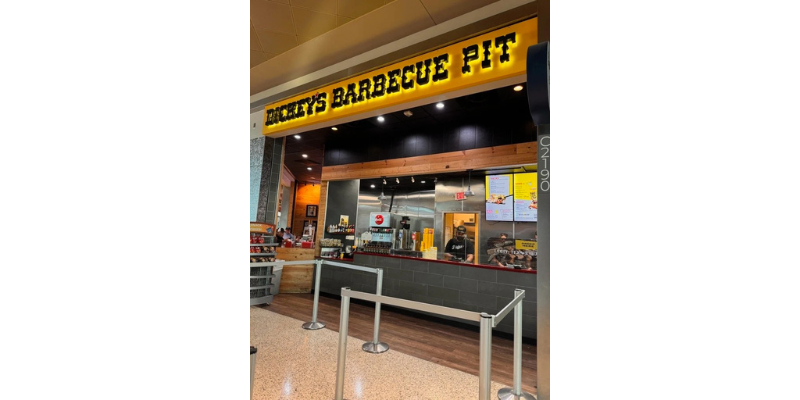
California franchise regulators have penalized Dickey’s Barbecue Restaurants, Inc. over inaccurate disclosures concerning restaurant closures, placing a familiar franchise-law obligation under closer examination: the information given to prospective franchisees must accurately reflect the system they are being asked to invest in.
On August 31, 2026, the California Department of Financial Protection and Innovation (DFPI) announced that it had penalized Dickey’s for violations of the California Franchise Investment Law. According to the agency, Dickey’s disclosed that 20 California franchise locations had ceased operations when the actual number was 36. The violations occurred between November 2023 and March 2026 and resulted in a $36,800 penalty and an order requiring Dickey’s to refrain from further violations.
Dickey’s characterized the discrepancy as stemming from clerical errors and described the California matter as a minor administrative issue that had been resolved. The DFPI viewed the inaccurate closure information differently, concluding that the underreporting misrepresented the apparent success of the franchise system.
The distinction matters well beyond Dickey’s. Franchise Disclosure Documents depend on information flowing from operations, development, finance, and franchise administration. When those internal records are inaccurate or fail to reach the people responsible for disclosure, what begins as an administrative mistake can become a franchise-law issue.
California Franchise Law Requires Accurate Franchise Disclosure Documents
The California Franchise Investment Law regulates the offer and sale of franchises in the state and requires franchisors to provide prospective investors with prescribed information about the franchise system. The Franchise Disclosure Document, commonly known as the FDD, is central to that process.
Among the information relevant to a prospective franchisee is the historical movement of outlets within the franchise system. Openings, closures, transfers, terminations, and other changes provide context that an investor may use when evaluating the stability of the franchise opportunity. That makes outlet information more than internal operating data once it is incorporated into a franchise disclosure.
The DFPI said it identified Dickey’s violations while examining franchisee termination notices, franchise agreements, and other documents. According to the agency, the company reported 20 California franchisees that had ceased operations rather than 36. Dickey’s attributed the missing 16 locations to clerical errors.
That explanation illustrates an important franchise compliance problem. An inaccurate number does not necessarily become immaterial because the underlying cause was clerical rather than intentional. The legal inquiry can instead turn on what was represented to prospective investors and whether the inaccurate information affected the picture of the franchise system presented to them.
The consequences also extend beyond the monetary penalty. The DFPI ordered Dickey’s to comply with applicable disclosure requirements and refrain from further violations. The agency stated that failure to comply with the order could result in revocation of the company’s California franchise registration.
Franchise Disclosure Violations Can Extend Beyond Outlet Closure Data
The California enforcement action comes against the backdrop of a separate dispute involving Dickey’s and former Illinois franchisee G Six Consulting, LLC. Although the proceedings involve different facts and different state laws, the Illinois case demonstrates how pre-sale franchise representations can develop into substantial liability after the franchise relationship fails.
G Six initiated arbitration against Dickey’s in October 2023 after its Illinois restaurant closed. Following an April 2025 arbitration hearing, the arbitrator found in favor of G Six on claims under the Illinois Franchise Disclosure Act and for negligent misrepresentation. The arbitrator declined to award relief on G Six’s separate fraud/misrepresentation and breach-of-contract claims. A final award entered in August 2025 awarded G Six $717,480.03 plus interest.
Dickey’s subsequently sought to vacate the award. On July 16, 2026, the U.S. District Court for the Northern District of Texas rejected that request and confirmed the arbitration award. The court emphasized the narrow grounds available for overturning arbitration awards under the Federal Arbitration Act and found that Dickey’s had not established a basis for vacatur.
The Illinois proceeding should not be treated as part of the California enforcement action. It does, however, illustrate the exposure surrounding information exchanged during the franchise sales process. Franchise disputes can move from FDD representations and development estimates into statutory claims, arbitration, enforcement proceedings, and substantial damages.
FDD Accuracy Requires More Than a Franchise Disclosure Review
The less obvious lesson from the Dickey’s enforcement action concerns how an FDD is produced.
Information about closed locations ordinarily originates outside the legal department. Operations personnel know when restaurants stop operating. Development teams track new units and transfers. Accounting systems contain fee and payment information. Franchise administration may separately maintain termination and ownership records.
A franchisor can therefore have a technically sound FDD review process and still create disclosure exposure if the underlying business information supplied for that review is incomplete.
For franchisors, this creates a reason to examine the internal controls behind the Franchise Disclosure Document, including:
- whether outlet openings, closures, transfers, and terminations are reconciled across departments before FDD updates;
- whether material changes trigger review between annual FDD updates;
- whether franchise development personnel are making representations that differ from or extend beyond the approved disclosure materials; and
- whether records supporting Item 7, Item 19, Item 20, and related disclosures can substantiate the figures provided to prospective franchisees.
The same issue changes the due-diligence analysis for franchisees. Reviewing the FDD is only one part of evaluating a franchise investment. Historical closure data, former franchisee contacts, estimated initial investment figures, litigation disclosures, transfer activity, and representations made during the sales process may warrant independent investigation before a franchise agreement is signed.
The legal gap is therefore an operational one: FDD accuracy is only as reliable as the systems supplying the information. A franchisor’s disclosure procedures should address not merely how lawyers draft the document, but how the business verifies the underlying data before prospective franchisees rely on it.
strategic by design: The Juris Law Group, p.c. Perspective on Franchise Law
Franchise law sits at the intersection of contract rights, disclosure obligations, intellectual property, and the continuing commercial relationship between franchisor and franchisee. Our franchise law attorneys assess these issues with the understanding that the agreement and FDD operate within a larger business system. A disclosure issue that appears limited at the drafting stage can later affect franchise sales, disputes, arbitration, and state enforcement.
For companies operating or expanding franchise systems in California, the Dickey’s matter reinforces the value of reviewing the processes behind the disclosure document as carefully as the document itself. Our franchise law attorneys in California can assess FDD disclosures, franchise agreements, development practices, and potential disputes before inconsistencies become harder to resolve.
That approach reflects Juris Law Group’s broader philosophy: Bigger is not better, better is better®. For franchisors and franchisees, careful review of the underlying business relationship often matters more than treating franchise documentation as a standardized transaction. Where brand licensing and trademarks are central to the franchise structure, an IP attorney and trademark protection lawyers may also need to coordinate with franchise counsel so that brand rights, operational controls, and contractual obligations work together.
California Franchise Enforcement Raises the Stakes for FDD Compliance
Over the next 12 months, the Dickey’s enforcement action is worth watching less for the amount of the penalty than for what it indicates about California’s approach to franchise oversight. The DFPI has stated that it intends to strengthen oversight of the franchise market, consider additional guidance or rule changes, and pursue enforcement remedies directed toward small-business owners harmed by unlawful franchise practices. Franchisors selling or renewing franchise opportunities in California should expect disclosure accuracy to remain an enforcement concern.
For the broader franchise industry, Dickey’s illustrates why FDD compliance cannot be separated from ordinary business operations. Closure data, investment estimates, franchisee turnover, development communications, and other information may originate as internal business records, but their legal character changes when they are used to sell a franchise. The practical question for franchisors is therefore not simply whether an FDD has been updated. It is whether the company can substantiate what the FDD says when a franchisee, arbitrator, court, or regulator examines the records behind it.
Common Legal Inquiries
What happens if a franchisor provides inaccurate information in an FDD?
The consequences depend on the applicable federal and state franchise laws, the nature and materiality of the inaccurate information, and the circumstances of the franchise sale. Potential consequences can include regulatory penalties, corrective orders, franchisee claims, rescission-related remedies, damages, or restrictions on future franchise offerings.
Does a clerical error in a Franchise Disclosure Document violate franchise law?
A clerical explanation does not automatically eliminate franchise-law exposure. Regulators and courts may consider whether the information was required, whether it was materially inaccurate or misleading, and whether prospective franchisees received or relied on the disclosure. Franchisors should maintain procedures for verifying information before an FDD is distributed.
What should a franchisor review before offering franchises in California?
A franchisor should assess its FDD, franchise agreements, applicable registration or exemption requirements, material changes, sales practices, and the records supporting its disclosures. Particular attention should be given to outlet history, fees and initial investment information, financial performance representations when made, litigation disclosures, and communications with prospective franchisees.