California Proposition 65 enforcement activity accelerated materially during April 2026, with 498 Notices of Violation issued across food products, supplements, household goods, thermal labels, cannabis products, and imported consumer merchandise. Lead-related filings continued to dominate overall notice activity, while PFAS, BPS, and phthalate-based claims remained concentrated in packaging, plastic components, and ecommerce-distributed products.
April filings also reflected continued plaintiff focus on retailer exposure, imported food products, and private-label distribution chains. Notices involving thermal labels, seafood products, wellness supplements, vinyl consumer goods, and cannabis-related items demonstrated continued enforcement concentration around chemicals lacking practical exposure defenses or clearly established safe harbor levels.
Monthly Violation Summary – April 2026
| Number of Violations | Listed Chemicals | Types of Products Targeted |
| 330+ | Lead and lead compounds; Cadmium compounds | Seafood, supplements, ceramic mugs, imported consumer goods |
| 51+ | DEHP and related phthalates | Vinyl products, cosmetic bags, plastic packaging |
| 24+ | PFOA, PFOS, PFAS compounds | Food packaging, cannabis products, waterproof materials |
| 16+ | BPS and BPA | Thermal labels, receipts, food-contact packaging |
| 14+ | Diethanolamine | Hair care products, grooming products, lotions |
Prop 65 Enforcement Observations — April 2026
April filings reflected continued enforcement concentration in imported food products, thermal paper applications, cannabis products, and flexible plastic packaging. Plaintiff activity remained heavily focused on chemicals lacking easily defensible exposure thresholds, particularly PFAS compounds and Bisphenol S.
Retailers and ecommerce sellers continued to appear regularly in notices involving third-party and private-label products. Multiple notices also targeted packaging migration pathways rather than product ingredients themselves, particularly for thermal labels, plastic wraps, coated papers, and food-contact applications.
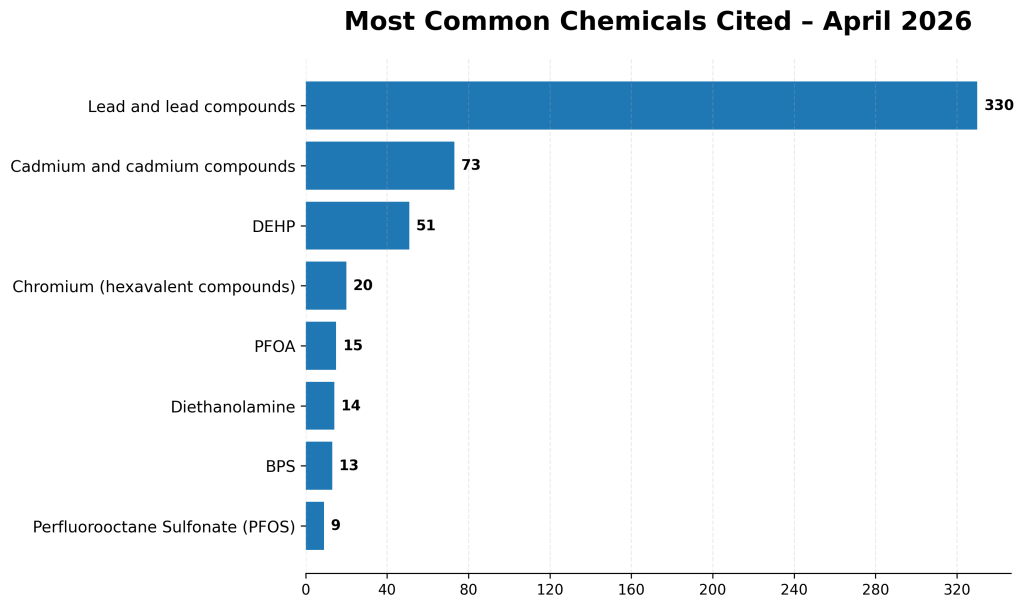
Most Common Chemicals Cited
| Chemical | Notices |
| Lead and lead compounds | 330 |
| Cadmium and cadmium compounds | 73 |
| DEHP | 51 |
| Chromium (hexavalent compounds) | 20 |
| PFOA | 15 |
| Diethanolamine | 14 |
| BPS | 13 |
| PFOS | 9 |
| delta-9-tetrahydrocannabinol | 5 |
| Nicotine | 4 |
Lead-related filings remained dominant across both food and hardgoods categories, while DEHP notices continued to concentrate in soft plastic consumer products. PFAS-related claims remained comparatively lower in total volume but carried elevated litigation leverage due to the absence of clear safe harbor levels and growing regulatory scrutiny.
Notable Chemical Trends
Lead Concentration in Imported Foods
Seafood products, seasoning blends, supplements, and imported pantry goods continued to generate substantial lead-based filings. Plaintiff activity remained particularly concentrated in imported canned and packaged food products distributed through grocery chains and ethnic food retailers.
BPS Exposure Through Thermal Labels
Thermal labels and receipt paper continued to generate BPS-related filings affecting retailers, ecommerce fulfillment operations, and shipping applications. Notices increasingly targeted exposure through packaging and handling rather than ingestion.
PFAS Migration in Packaging Applications
PFAS notices focused heavily on food packaging materials, cannabis packaging, and coated consumer-product applications. Enforcement activity suggests continued plaintiff interest in migration-based exposure theories.
DEHP in Flexible Plastic Components
DEHP remained heavily cited in vinyl bags, cosmetic accessories, coated materials, and flexible plastic consumer products. Imported products lacking supplier testing documentation appeared particularly vulnerable.
Diethanolamine in Grooming Products
Hair care products, body washes, and lotions continued to attract DEA-related notices, particularly in imported or lower-cost personal care lines distributed through discount retail channels.
Product Categories Most Frequently Targeted
Food & Beverage
• Seafood products and canned fish
• Supplements and powdered wellness products
• Imported sauces, spices, and packaged foods
Packaging & Thermal Labels
• Thermal receipt paper
• Adhesive labels and shipping labels
• Flexible food-contact packaging
Household & Consumer Products
• Ceramic mugs and kitchenware
• Vinyl accessories and coated plastics
• Decorative imported consumer goods
Beauty & Wellness
• Hair care products
• CBD oils and topical products
• Cosmetic accessories and grooming products
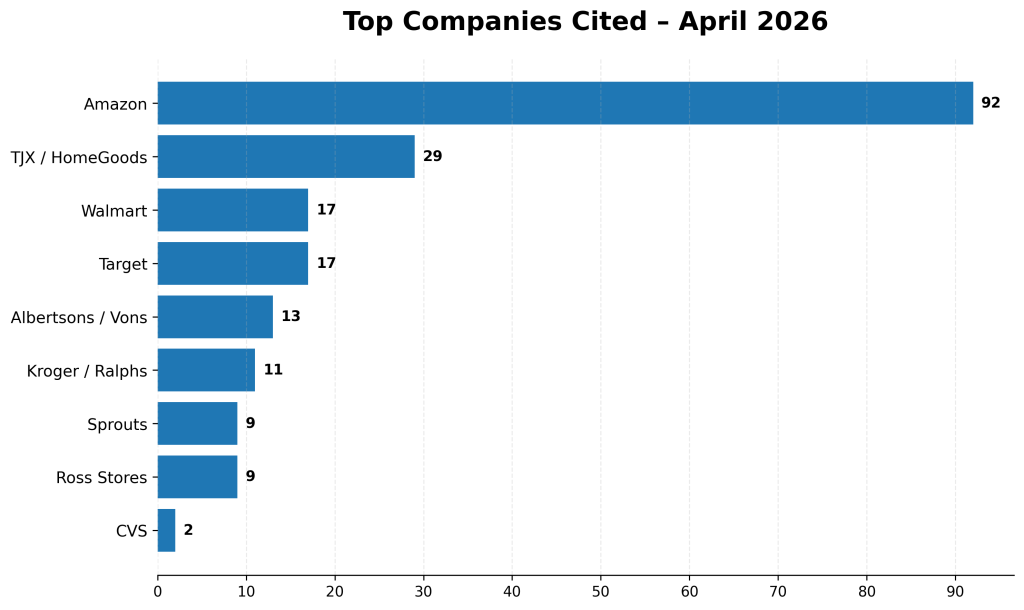
Top Companies Cited
| Company | Notice Count |
| Amazon | 92 |
| TJX / HomeGoods | 29 |
| Kroger / Ralphs / Food 4 Less | 18 |
| Target | 17 |
| Walmart | 17 |
| Albertsons / Vons | 13 |
| Ross Stores | 9 |
| Sprouts | 9 |
| CVS | 2 |
Retailers and marketplace operators continued to face repeated exposure in April filings, particularly where private-label sourcing, imported products, or third-party ecommerce fulfillment models were involved. Notices involving Amazon, TJX-affiliated retailers, Target, and grocery chains reflected ongoing plaintiff focus on broad-distribution channels with large California sales volumes.
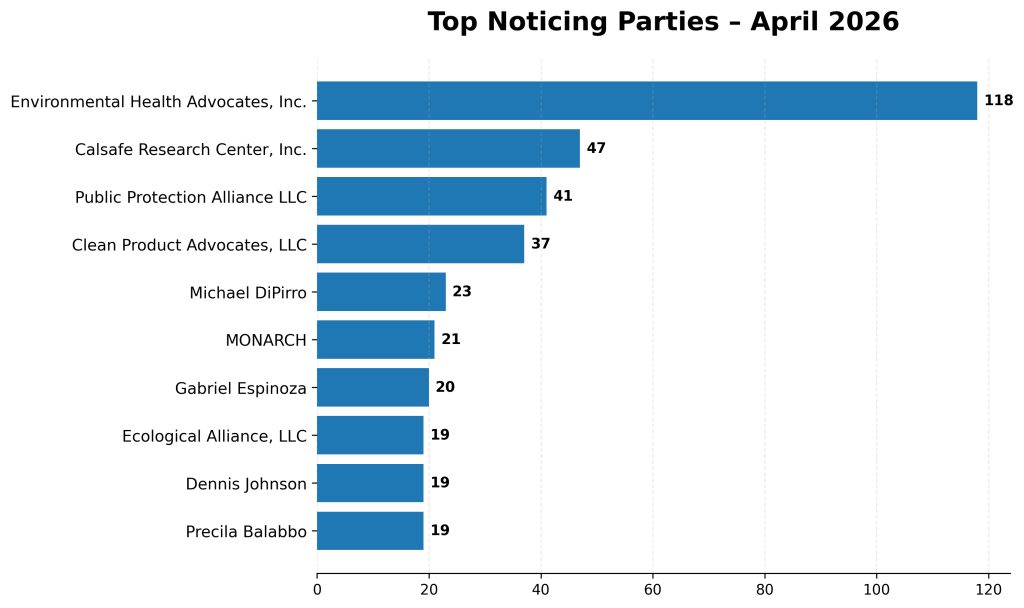
Top Noticing Parties
| Noticing Party | Filings |
| Environmental Health Advocates, Inc. | 118 |
| Calsafe Research Center, Inc. | 47 |
| Public Protection Alliance LLC | 41 |
| Clean Product Advocates, LLC | 37 |
| Michael DiPirro | 23 |
| Mothers Oversight Network for Actionable Response to Contaminant Harm [MONARCH], LLC | 21 |
| Gabriel Espinoza | 20 |
| Precila Balabbo | 19 |
| Dennis Johnson | 19 |
| Ecological Alliance, LLC | 19 |
Emerging Enforcement Areas
April 2026 filings continued to reinforce several long-term enforcement trends: expansion of PFAS theories, increasing BPS replacement claims, thermal label exposure theories, and growing scrutiny of cannabis and hemp-derived products. Ecommerce liability also remained a recurring theme, particularly where warning language was absent from online product listings presented to California consumers prior to purchase.
Packaging migration claims also continued expanding beyond traditional food-contact products. Notices increasingly alleged exposure arising from coatings, adhesives, plasticizers, and labeling materials rather than primary ingredients alone.
Licensor and Private-Label Liability Considerations
• Trademark licensors continued appearing in notices involving imported private-label products.
• Retailers relying on supplier certifications without independent testing remained exposed.
• Packaging redesigns frequently created warning-label inconsistencies.
• Ecommerce marketplaces continued shifting liability downstream to sellers and distributors.
• Indemnity provisions often failed to allocate testing obligations clearly.
Practical Risk Management Considerations
Testing protocols should extend beyond raw ingredients to packaging, coatings, inks, thermal labels, and finished goods. Several April notices appeared directed at migration-based exposure pathways rather than product contents alone.
Supplier agreements increasingly require precise allocation of testing responsibility, warning obligations, reformulation costs, and defense obligations. Companies operating multi-channel retail or ecommerce distribution models should also regularly audit California-facing online warnings for consistency across marketplaces and fulfillment platforms.
The Juris Law Group Perspective on Prop 65 Enforcement
Our Prop 65 attorneys frequently advise food, supplement, cosmetic, and consumer products companies facing recurring enforcement pressure tied to packaging migration, imported supply chains, and retailer exposure. As CPG attorneys in California, we regularly assess how plaintiff activity shifts across industries and product categories based on evolving testing methodologies and settlement economics.
April 2026 activity reinforced continued plaintiff concentration around high-volume retailers, imported products, and chemicals lacking clearly defensible exposure thresholds. Companies relying heavily on third-party sourcing or decentralized ecommerce distribution remain particularly vulnerable to repeated enforcement activity.
Common Enforcement Questions
Can ecommerce sellers face Prop 65 liability without a physical California presence?
Yes. Prop 65 applies to products sold into California regardless of where the seller operates. Online warning presentation remains a recurring enforcement issue.
Are trace contaminants enough to trigger notices?
Yes. Many notices involve trace-level exposure allegations where no safe harbor level exists or where exposure calculations remain disputed.
Can retailers be liable for private-label products?
Retailers frequently appear in notices involving private-label or imported products, particularly where their branding appears prominently on packaging.
Are cannabis and CBD products still being targeted?
Yes. Cannabis-related notices continue involving THC, heavy metals, and PFAS-related packaging concerns.
Strategic Outlook
Current enforcement patterns suggest continued expansion of packaging-based exposure theories, particularly involving PFAS compounds, thermal paper applications, adhesives, and food-contact materials. Plaintiff groups also appear increasingly willing to target ecommerce distribution chains and marketplace operators where warning implementation remains inconsistent across online listings.
Lead, cadmium, DEHP, and PFAS filings are likely to remain central enforcement drivers through the remainder of 2026, particularly within imported consumer products, supplements, seafood, and packaging-heavy retail categories. Companies operating national distribution channels into California should expect continued scrutiny around supply-chain testing documentation, warning language consistency, and private-label oversight.
Want to protect your brand from a Prop 65 lawsuit? Contact us at connect@jurislawgroup.com.