October 2026 Prop 65 Enforcement Report: Lead, Cannabis Products, and BPS in Apparel
California Proposition 65 enforcement generated 429 60-day notices in October 2026, compared with 428 in September. Overall filing volume was virtually unchanged, but the underlying allegations shifted. Lead remained the most frequently cited chemical, appearing in 263 notices, followed by cadmium in 63 and Delta-9 THC in 51. October also featured a distinct group of 17 notices alleging bisphenol S (BPS) exposure from apparel, including bras, socks, swimwear, and compression garments.
Food and beverage products remained a central enforcement target. Notices identified seafood, leafy vegetables, spices, sauces, protein products, cereals, supplements, and botanical ingredients. Cannabis and hemp-derived products also attracted sustained attention, particularly gummies, infused beverages, flower, and pre-rolls. Separate campaigns addressed leather goods, flexible PVC components, PFAS-associated materials, and products containing pulegone.
Retailers and ecommerce platforms continued to appear alongside manufacturers and suppliers.
Amazon was identified in 48 notices, followed by the TJX/HomeGoods/Marshalls group in 32. Whole Foods and Mrs. Gooch’s collectively appeared in 21, while Walmart and Sprouts each appeared in 15. These figures reflect appearances in notices, not findings of liability.
Monthly Violation Summary
| Number of Violations | Listed Chemicals | Types of Products Targeted |
| 263 | Lead and lead compounds | Food, supplements, protein products, seasonings, metal and consumer goods |
| 63 | Cadmium and cadmium compounds | Seafood, leafy vegetables, seaweed, sauces and other foods |
| 51 | Delta-9 THC | Hemp gummies, cannabis flower, beverages, tinctures and pre-rolls |
| 19 | DEHP | PVC bags, pouches, keychains, footwear, vinyl-coated products |
| 17 | BPS | Bras, socks, tights, shapewear, swimwear and compression garments |
| 17 | PFOA | Apparel, outdoor goods, household textiles, tapes and certain food products |
| 15 | Hexavalent chromium | Leather footwear, gloves, handbags, watch bands and accessories |
| 7 | Ochratoxin A | Bread, sauces, seasonings, dates and raisins |
| 7 | Pulegone | Breath fresheners, insect repellents, essential oils and topical products |
| 5 | Fumonisin B1 | Cornmeal, tortillas, cereal and other foods |
Prop 65 Enforcement Observations – October 2026
October’s filing volume increased by only one notice from September, a change of approximately 0.2%. The chemical distribution, however, showed a different enforcement emphasis. Cadmium increased from 33 to 63 notices, and Delta-9 THC increased from 36 to 51. Lead remained essentially unchanged at 263 notices, compared with 261 in September.
The most distinctive October development was BPS enforcement involving apparel. Seventeen notices identified products such as tights, sports bras, socks, shapewear, boxer briefs, and swimwear. This concentration warrants attention from apparel manufacturers and retailers because chemical testing programs often focus on fabrics and restricted substances without addressing every potential exposure pathway associated with treated materials.
Food enforcement continued to span both processed products and agricultural ingredients. The range of products suggests that plaintiffs are identifying targets across supply chains rather than concentrating exclusively on finished products from one industry.
Most Common Chemicals Cited
| Rank | Chemical | Notices |
| 1 | Lead | 263 |
| 2 | Cadmium | 63 |
| 3 | Delta-9 THC | 51 |
| 4 | DEHP | 19 |
| 5 | BPS | 17 |
| 6 | PFOA | 17 |
| 7 | Hexavalent chromium | 15 |
| 8 | Ochratoxin A | 7 |
| 9 | Pulegone | 7 |
| 10 | Fumonisin B1 | 5 |
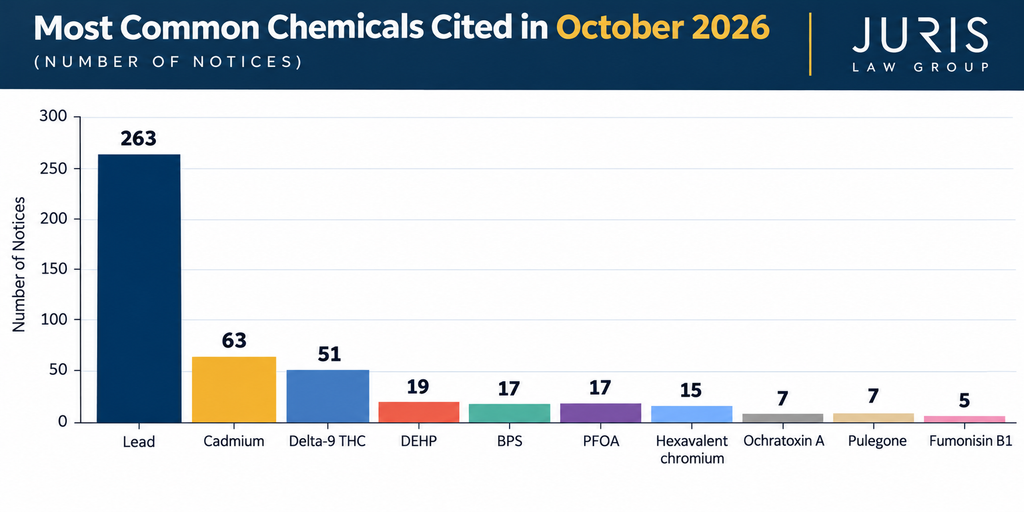
Lead accounted for approximately 61% of all notices. Its dominance remains important, but the next several categories reveal more targeted enforcement programs. Cadmium notices focused heavily on foods, Delta-9 THC allegations involved cannabis and hemp products, and BPS notices were concentrated in apparel.
For compliance teams, these distinctions matter more than the aggregate ranking alone. Each category requires different supplier information, testing methods, exposure analysis, and warning considerations.
Notable Chemical Trends
1. Lead and Cadmium in Food and Dietary Products
October notices targeted protein cookies, meal-replacement shakes, cereal, seafood, seaweed, spinach, sauces, spices, and other food products. Cadmium allegations frequently accompanied lead allegations, particularly in seafood and agricultural products.
Manufacturers should account for variability in raw materials and production lots. A compliance program built around a single historical laboratory report may not adequately address ingredients sourced from different suppliers, growing regions, or harvests.
2. Delta-9 THC in Hemp and Cannabis Products
Delta-9 THC appeared in 51 notices, up from 36 in September. Products included PureKana gummies, THC beverages, tinctures, THCa flower, and pre-rolls. Ten of these notices also identified marijuana smoke.
The allegations demonstrate that enforcement extends beyond conventional cannabis dispensaries. Hemp-derived products distributed through ecommerce and other retail channels may create warning obligations that require attention alongside cannabinoid labeling and state-specific sales restrictions.
3. BPS in Apparel and Textile Products
BPS appeared in 17 notices, including tights, bralettes, shapewear, socks, sports bras, bikini bottoms, and compression garments. The concentrated product selection suggests a targeted apparel enforcement program.
Apparel companies should review the chemical specifications for materials and treatments used in these products and determine whether their testing protocols address BPS. The presence of a listed chemical alone does not establish that an exposure exceeds an applicable regulatory threshold, but the notices demonstrate a potential source of litigation.
4. DEHP in PVC Components and Consumer Accessories
DEHP appeared in 19 notices involving clear PVC bags, keychains, wallets, vinyl-coated kettlebells, pouches, and other accessories. Several products contained PVC as a secondary component rather than their principal material.
The enforcement pattern illustrates the limitations of testing only the main product material. Brands should consider flexible plastic trims, straps, packaging, coatings, and detachable components when assessing chemical exposure.
5. Hexavalent Chromium in Leather Goods
Fifteen notices involved hexavalent chromium, with products including leather shoes, work gloves, handbags, watch bands, and camera straps. These allegations continue the leather-related enforcement observed in prior months.
Footwear and accessory companies should review tanning and finishing processes, supplier specifications, and finished-material testing. Chromium VI can be associated with particular processing conditions, making supplier oversight important even when products meet other quality standards.
6. PFOA in Apparel and Household Materials
PFOA appeared in 17 notices involving outdoor blankets, apparel, pillow protectors, gloves, tapes, shower curtain liners, and other products. Some notices also involved food and dietary products.
The range of materials makes a single testing approach insufficient for every category. Companies should evaluate coatings, finishes, treatments, and relevant exposure pathways, particularly where water-resistant or performance-related properties are involved.
7. Pulegone in Oils and Topical Products
Seven notices identified pulegone in breath fresheners, insect-repellent sprays, essential oil roll-ons, medicated oils, herbal pouches, and aromatherapy products.
This smaller group is worth monitoring because it targets products marketed for personal care, wellness, or topical use. Manufacturers should assess relevant formulations and exposure routes rather than assuming that plant-derived ingredients are outside Proposition 65 scrutiny.
Product Categories Most Frequently Targeted
Food & Beverage
- Seafood, including clams, mussels, oysters, and preserved fish
- Protein cookies, shakes, cereals, and nutritional products
- Sauces, seasonings, noodles, and prepared foods
- Spinach, seaweed, dried fruit, and agricultural ingredients
Cannabis & Hemp
- Delta-9 THC gummies and infused beverages
- THCa flower and pre-rolls
- Tinctures and cannabinoid combinations
- Products associated with marijuana smoke allegations
Apparel & Textiles
- Sports bras, bralettes, tights, and shapewear
- Socks and compression garments
- Swimwear and outdoor apparel
- Gloves, blankets, and household textiles
Leather, Footwear & Accessories
- Leather and suede footwear
- Handbags, wallets, and watch bands
- Leather gloves and camera straps
- PVC bags, clear pouches, and keychains
Beauty, Wellness & Household
- Essential oils and aromatherapy products
- Breath fresheners and topical roll-ons
- Insect repellents
- Garden sprayers, vinyl-coated accessories, and household goods
Product Category Table
| Product Category | Principal Chemicals | Enforcement Pattern |
| Food & Beverage | Lead, cadmium, ochratoxin A, fumonisin B1 | Broad recurring activity |
| Cannabis & Hemp | Delta-9 THC, marijuana smoke | Concentrated product campaign |
| Apparel & Textiles | BPS, PFOA | Distinct apparel and treated-material allegations |
| Bags & Accessories | DEHP, PFOA | Component and material-focused claims |
| Leather & Footwear | Hexavalent chromium | Continuing material-specific enforcement |
| Wellness & Topicals | Pulegone, lead | Targeted formulation-related claims |
Top Companies Cited
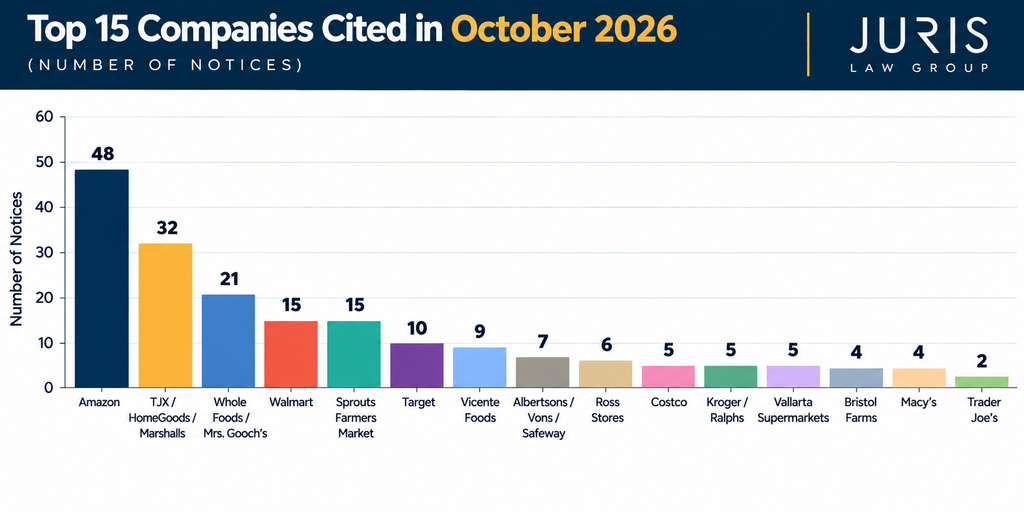
Amazon continued to lead retailer and marketplace appearances, with 48 notices. Its recurring presence reflects the importance of online product distribution in enforcement activity, including products supplied by third-party sellers.
TJX/HomeGoods/Marshalls appeared in 32 notices, consistent with the continued targeting of consumer accessories, household merchandise, and imported products. Grocery retailers also remained prominent, with Whole Foods/Mrs. Gooch’s, Sprouts, Vicente Foods, Albertsons/Vons/Safeway, and other food sellers appearing repeatedly.
The operational concern is the same across these channels: a retailer may face an enforcement notice even when the alleged chemical exposure originates with a supplier. Retailers should therefore maintain contractual testing rights, reliable product documentation, and procedures for reviewing California warnings.
Top Noticing Parties
| Rank | Noticing Party | Notices |
| 1 | Environmental Health Advocates, Inc. | 140 |
| 2 | Clean Product Advocates, LLC | 58 |
| 3 | CalSafe Research Center, Inc. | 49 |
| 4 | Center for Consumer Safety, LLC | 41 |
| 5 | Dennis Johnson | 21 |
| 6 | Gabriel Espinoza | 17 |
| 7 | Precila Balabbo | 17 |
| 8 | Ema Bell | 13 |
| 9 | Environmental Research Center, Inc. | 12 |
| 10 | Consumer Protection Group, LLC | 12 |
Environmental Health Advocates filed 140 notices, approximately one-third of October’s total. Clean Product Advocates followed with 58, CalSafe Research Center with 49, and Center for Consumer Safety with 41.
Together, these four noticing parties accounted for 288 of the 429 notices. This concentration supports a practical approach to enforcement monitoring: manufacturers and retailers should track the chemicals and products associated with recurring filers, rather than relying exclusively on overall notice volume.
Plaintiff-specific monitoring can help identify new product-testing programs, but it should not be treated as a prediction that a particular company will receive a notice.
Emerging Enforcement Areas
October’s enforcement data points to three areas deserving closer attention: BPS in apparel, cannabis products containing Delta-9 THC, and heavy metals in food products. These categories differ in their exposure pathways, manufacturing processes, and available compliance controls, but each presents opportunities for repeatable testing campaigns.
BPS allegations involving socks, bras, tights, and swimwear suggest that apparel businesses should evaluate whether their restricted-substance programs adequately address Proposition 65 exposure risks. The notices do not establish that all products in these categories require warnings, but they identify a category warranting closer review.
Cannabis and hemp businesses face a different issue. Products may contain Delta-9 THC as an intended ingredient, and the applicable warning analysis cannot be approached in the same manner as an unintended agricultural contaminant. Online sales, labeling, and product-specific exposure assessments should be considered together.
Legal Gap Analysis
Component-Level Testing Can Be Overlooked
A product may contain listed chemicals in a component that represents only a small portion of its overall construction. October’s DEHP notices involving clear bags, wallets, keychains, and PVC components demonstrate why manufacturers should examine the full bill of materials.
Apparel Compliance Programs May Not Address Every Prop 65 Chemical
Traditional apparel compliance testing may focus on product safety requirements or retailer-specific restricted-substance lists. October’s BPS notices show that a company should separately evaluate whether those protocols address relevant Proposition 65 exposure allegations.
Ecommerce Warnings Require Their Own Review
A compliant physical label does not necessarily resolve every issue involving internet sales. California’s warning regulations include requirements for internet purchases when warnings are required. Companies should coordinate product labels with online product listings and checkout procedures.
Agricultural Testing Requires Continuing Supplier Oversight
Heavy-metal and mycotoxin allegations involving food products may arise from variations in ingredients, sourcing, processing, and storage. A single laboratory result may not adequately represent later shipments or different suppliers.
Licensor and Private-Label Liability Considerations
Trademark licensors and private-label companies may have limited direct involvement in manufacturing but substantial influence over product specifications, packaging, labeling, and distribution.
October’s notices involving food products, apparel, accessories, and cannabis products demonstrate why liability allocation should be addressed before goods enter the California market. Depending on the parties’ conduct and applicable law, brand owners, manufacturers, distributors, and retailers may face different responsibilities.
Recommended contractual and operational protections include:
- Prop 65 compliance provisions: Require compliance with applicable California warning and exposure requirements.
- Testing obligations: Specify responsibility for product and component testing, including retesting when materials or suppliers change.
- Indemnification: Address defense costs, settlements, penalties, attorneys’ fees, and corrective measures, subject to applicable law.
- Warning approval: Allocate responsibility for physical and online warning content and placement.
- Supplier monitoring: Require documentation of relevant formulations, materials, coatings, and manufacturing processes.
These provisions do not automatically prevent an enforcement action, but they can improve the parties’ ability to respond and allocate costs.
Practical Risk Management Considerations
1. Testing Protocols
Develop testing programs based on product category, chemical allegations, supplier history, and relevant exposure pathways. Include component testing where appropriate.
2. Packaging Review
Evaluate packaging and secondary materials, including flexible plastics, coatings, handles, straps, and other components that may present separate exposure concerns.
3. Warning Language
Review physical labels and ecommerce warnings against applicable Proposition 65 regulations. Warning decisions should reflect the specific product and exposure assessment.
4. Supplier Agreements
Require appropriate representations, testing documentation, chemical restrictions, notice cooperation, and indemnification provisions.
5. Monitoring Enforcement Activity
Track notices by chemical, product category, noticing party, and retailer. October’s BPS apparel activity illustrates the value of identifying concentrated product campaigns early.
6. Counsel Involvement
Engage experienced Proposition 65 counsel to evaluate notices, testing results, exposure assessments, warning requirements, potential defenses, and settlement strategies.
Strategic By Design: The Juris Law Group, P.C. Perspective on Prop 65 Enforcement
October’s 429 notices demonstrate that a relatively stable monthly filing total can conceal meaningful changes in enforcement targets. The increased attention to cadmium, Delta-9 THC, and BPS illustrates how plaintiffs can pursue multiple product-specific testing programs simultaneously.
Our Prop 65 attorneys advise manufacturers, importers, retailers, and consumer-product companies on compliance programs and responses to enforcement notices. A defensible compliance approach requires more than a general supplier certification. Businesses should understand which materials and ingredients create potential exposure, who controls the relevant information, and how quickly that information can be obtained following a notice.
The most effective risk-management programs connect product testing, supplier contracts, warning procedures, and litigation response before an enforcement claim arises.
Common Enforcement Inquiries
1. Can apparel containing BPS trigger a Proposition 65 notice?
Yes. BPS is a Proposition 65-listed chemical, and October included 17 notices involving apparel such as socks, bras, tights, and swimwear. A notice does not establish a violation, however. Whether a warning is legally required depends on the circumstances of exposure, applicable regulatory provisions, and any available defenses or exemptions.
2. Are hemp-derived Delta-9 THC products subject to Prop 65?
Hemp-derived status does not automatically exempt a product from Proposition 65. October notices identified gummies, beverages, flower, tinctures, and pre-rolls. Businesses should assess the listed chemicals, exposure pathways, applicable warnings, and California sales practices. Products involving inhalation may also raise separate issues concerning marijuana smoke.
3. Can retailers be named even when they did not manufacture the product?
Yes. Retailers and other businesses in the distribution chain may be named in 60-day notices. California regulations allocate certain warning responsibilities between manufacturers, producers, packagers, importers, suppliers, and retail sellers. The applicable facts and regulatory requirements determine responsibility. Supplier agreements and testing records can help retailers respond.
4. Does detecting a trace amount of lead automatically require a warning?
No. Proposition 65 generally concerns exposures, not simply the presence of a listed chemical. The applicable exposure level, route, duration, and regulatory framework matter. Businesses should avoid assuming that any detectable amount automatically creates a violation, or that a low concentration necessarily eliminates warning obligations.
5. Can an online seller rely exclusively on a warning printed on the package?
Not necessarily. California’s regulations address warnings for internet purchases when a warning is required. Sellers should evaluate how warnings appear on product pages or through other permitted online methods, as well as on the physical product or packaging. Marketplace listing changes can create inconsistencies that should be monitored.
6. What should a company do after receiving a 60-day notice?
The company should promptly preserve relevant records, identify the products and alleged exposures, notify appropriate insurers and contractual counterparties, and obtain legal advice. Testing, exposure assessment, supplier communications, and warning practices should be reviewed before deciding whether to contest, settle, or implement corrective measures.
Strategic Outlook
October’s enforcement activity suggests that food and beverage companies will continue to face substantial scrutiny involving lead, cadmium, and other contaminants. The rise in cadmium notices is particularly relevant to businesses sourcing seafood, leafy vegetables, and agricultural ingredients. Supplier qualification, appropriate testing frequency, and documentation of ingredient origins remain important operational considerations.
Cannabis and hemp-derived products also warrant continued attention. Delta-9 THC appeared in 51 October notices, following 36 in September. The variety of gummies, beverages, flower, and pre-rolls identified in the spreadsheet supports continued monitoring of this category, especially where products are sold through ecommerce channels.
BPS enforcement involving apparel represents another area to watch. October’s concentrated group of notices may encourage additional testing of similar products, although the data alone cannot establish whether that activity will continue. Apparel manufacturers should assess whether their existing chemical compliance programs address the alleged exposures.
Retailers remain a recurring enforcement target across these categories. Businesses that maintain reliable testing records, clear supplier obligations, and consistent physical and online warning practices are better positioned to assess claims and manage litigation costs.
About Juris Law Group, P.C.
Juris Law Group, P.C. represents manufacturers, importers, distributors, retailers, brand owners, licensors, and consumer-product companies in Proposition 65 compliance and enforcement matters. The firm advises clients on compliance programs, product and packaging audits, warning-label strategy, supply-chain reviews, settlement negotiations, and defense of Proposition 65 litigation.
Want to Protect Your Brand from a Prop 65 Lawsuit?
For assistance with Proposition 65 compliance, 60-day notices, warning strategies, or enforcement defense, contact Juris Law Group, P.C. at connect@jurislawgroup.com.