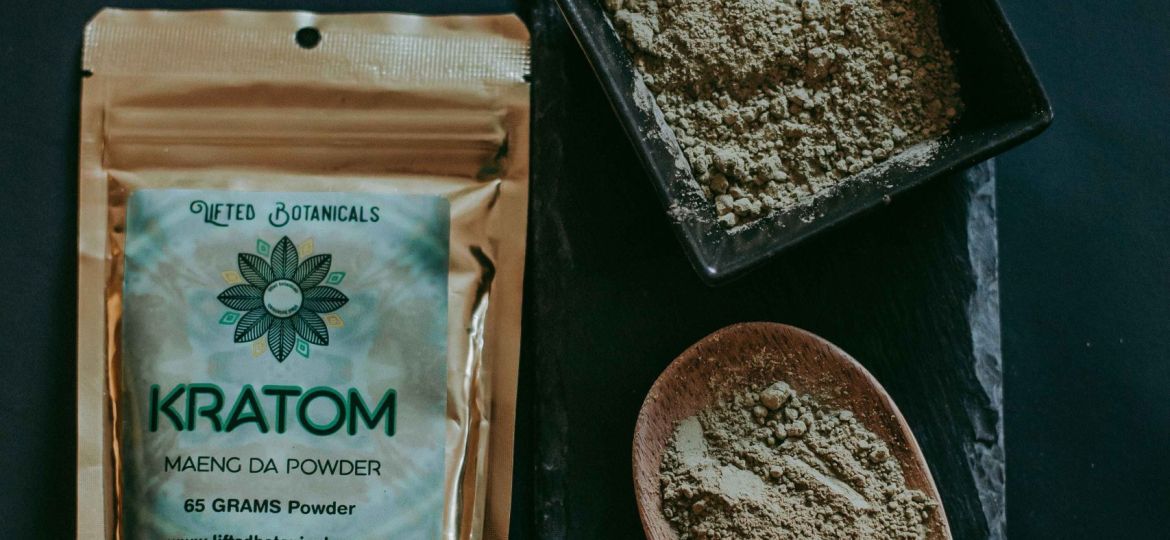
The Drug Enforcement Administration (DEA) is advancing federal restrictions on concentrated kratom-derived substances, targeting products commonly sold as gummies, tablets, liquid shots, and other consumer products. The agency’s latest action, announced in October 2026, focuses on 7-hydroxymitragynine (7-OH) and related compounds that federal authorities associate with opioid-like effects and potential health risks.
The proposed restrictions stop short of banning natural kratom nationwide. However, they create immediate concerns for manufacturers, retailers, and distributors already selling kratom-containing products. Companies must account for substances that are already federally controlled, additional restrictions that could take effect shortly, and existing Food and Drug Administration (FDA) requirements that independently limit how kratom products can be marketed.
DEA’s 2026 Kratom Restrictions Target Concentrated 7-OH Products
On October 9, 2026, the Department of Justice announced updated emergency scheduling actions involving 7-OH and three related substances: mitragynine pseudoindoxyl (MGPI), MGM-15, and MGM-16. The announcement followed new scientific recommendations from the Department of Health and Human Services (HHS), which sought to distinguish traditional botanical kratom from products containing elevated concentrations of these compounds.
The DEA had already placed MGPI, MGM-15, and MGM-16 into Schedule I under the Controlled Substances Act on August 26, 2026. Schedule I imposes strict federal controls because the substances are considered to have a high potential for abuse and no currently accepted medical use in the United States. The agency subsequently revised its approach to MGPI and 7-OH after HHS recommended concentration-based thresholds.
Under the DEA’s October 14, 2026 proposal, 7-OH and MGPI would become subject to Schedule I restrictions when their individual or combined concentrations exceed 1 milligram per gram in solid products or 1 milligram per milliliter in liquids. The proposal also establishes a separate test based on the ratio of mitragynine to these substances, meaning products could fall within the restrictions even when their concentrations remain below those limits.
The October notice established November 13, 2026, as the earliest date for a new temporary scheduling order. That date did not automatically activate the proposed restrictions. The DEA must publish the order for the revised controls to take effect, while the August restrictions remain applicable unless replaced or otherwise terminated.
Federal authorities have expressed concern about the increasing availability of concentrated 7-OH products, including those sold through convenience stores and online retailers. The FDA’s guidance on kratom addresses the potential health risks associated with these substances, as well as existing restrictions on kratom in foods and dietary supplements.
FDA Restrictions and Product Liability Claims Put Kratom Sales at Risk
The distinction between natural kratom and concentrated derivatives creates an important legal issue for businesses. A product that falls outside the DEA’s proposed controlled-substance thresholds is not necessarily lawful to sell, nor has the federal government determined that it is safe.
The FDA maintains that kratom cannot lawfully be marketed as a dietary supplement because available safety information does not establish that it meets the applicable requirements. The agency also considers kratom an unsafe food additive when included in conventional foods, including beverages. No kratom-containing drug has received FDA approval.
These existing restrictions affect companies even if their products contain only naturally occurring concentrations of 7-OH. A manufacturer cannot establish that a kratom beverage or supplement is legally marketable simply by demonstrating that it falls below the DEA’s proposed thresholds.
Product liability creates a separate concern. If consumers experience injuries allegedly associated with kratom products, manufacturers and other businesses in the distribution chain could face claims involving defective design, inadequate warnings, or negligence. Whether those claims succeed depends on the product, the evidence, and the applicable state law.
Warnings and marketing representations may become particularly important. A product advertised as natural, safe, or suitable for everyday wellness use could face additional scrutiny if those statements minimize known risks or create expectations that the available scientific evidence cannot support.
These concerns extend to broader wellness product advertising and health claims, where companies must consider how consumers interpret statements about safety and health benefits. Claims suggesting that kratom treats pain, anxiety, or opioid withdrawal may also cause the FDA to classify a product as an unapproved drug.
State consumer-protection laws create additional exposure for kratom manufacturers and retailers, particularly when product packaging emphasizes natural ingredients without adequately disclosing potential health risks. These concerns have already led to litigation. A lawsuit against 7Tabz, featured in the January 2026 Class Actions Newsletter, alleges that the company marketed kratom products using descriptions such as “pure extract” and “leaf extract” while failing to adequately warn consumers about their alleged addictive properties and opioid-like effects. The claims reflect how product safety disclosures and marketing representations can become the basis for consumer class actions, even apart from federal enforcement.
The legal concern is therefore broader than whether a particular ingredient becomes federally controlled. Manufacturers must evaluate the safety of their finished products, the accuracy of their representations, and whether they can lawfully distribute those products in the first place.
What Should Kratom Sellers Address Before New Restrictions Take Effect?
Companies with existing kratom inventory should begin by identifying the substances present in each formulation and determining which products are affected by current federal restrictions. Independent laboratory testing can help establish the concentrations of 7-OH, MGPI, and other relevant compounds, although testing alone cannot resolve whether a product is lawful under FDA requirements.
The DEA’s proposed concentration and ratio tests make accurate testing especially important. Manufacturers relying exclusively on supplier descriptions or outdated certificates of analysis may lack sufficient information to determine whether their finished products contain restricted substances.
Supplier and manufacturing agreements also deserve attention. Contracts should establish ingredient specifications, testing responsibilities, product withdrawal procedures, and how losses will be allocated if an ingredient becomes prohibited. Retailers and distributors should review whether existing agreements address regulatory changes and provide adequate access to product testing records.
Companies should separately examine product packaging, websites, retailer listings, and advertising. Statements suggesting that a kratom product is FDA-approved, federally authorized, or proven safe could be misleading. Appropriate warnings and accurate disclosures may help address certain liability concerns, but they cannot make an otherwise unlawful product legal.
A documented product review process can also become relevant if litigation develops. Records showing when the company received safety information, evaluated potential hazards, and made decisions about continued distribution may help establish how it responded to known concerns.
For businesses facing possible restrictions, these reviews should extend to products already shipped to retailers. Inventory ownership, return provisions, insurance coverage, and recall procedures can affect the financial consequences of removing products from distribution.
Strategic By Design: The Juris Law Group, P.C. Perspective
The DEA’s kratom restrictions illustrate how changes in federal ingredient classifications can affect product liability, labeling, and commercial relationships simultaneously. At Juris Law Group, P.C., our consumer products attorneys address matters involving product safety, manufacturing agreements, advertising representations, and disputes throughout the distribution chain. These issues are closely connected in regulated product categories, where a change affecting one ingredient can require businesses to reassess entire product lines.
The legal review for Kratom manufacturers should extend beyond the DEA’s proposed thresholds to the FDA’s existing restrictions and applicable state laws. The allocation of responsibility among manufacturers, suppliers, and distributors can become particularly important when products are withdrawn or consumers allege injuries. Addressing those contractual and liability issues before a dispute develops may reduce uncertainty over the company’s obligations and financial exposure.
The next development to watch is the DEA’s publication of a new temporary scheduling order, which could place additional concentrated kratom-derived products under Schedule I controls. Once effective, the order would impose restrictions on handling covered substances, potentially requiring affected businesses to discontinue distribution and address existing inventory. The timing and final scope of those controls will determine the immediate consequences for manufacturers and retailers.
Over the next twelve months, the broader kratom market may also face continued FDA enforcement, additional state restrictions, and consumer litigation involving product safety or marketing representations. Businesses considering reformulation or alternative ingredients will need to assess whether those changes resolve the underlying legal concerns. Falling outside federal controlled-substance scheduling does not establish that a consumer product can lawfully remain on the market.
Common Legal Inquiries
Is kratom banned in the United States in 2026?
Natural kratom is not subject to a nationwide federal controlled-substance ban. However, the DEA has already scheduled certain kratom-related compounds and is proposing additional restrictions on concentrated 7-OH products. State prohibitions may also apply. Separately, the FDA maintains that kratom cannot lawfully be marketed in conventional foods or dietary supplements.
Can manufacturers face product liability lawsuits over kratom products?
Yes. Manufacturers, distributors, and potentially retailers may face product liability claims if consumers allege injuries caused by defective products or inadequate warnings. The outcome depends on the circumstances and applicable law. FDA enforcement and state consumer-protection claims may create additional exposure, regardless of whether the product contains a federally controlled substance.
What should companies selling kratom products do before the DEA’s restrictions take effect?
Companies should review their product formulations, obtain reliable ingredient testing, and identify inventory containing substances already subject to federal controls. They should also evaluate FDA restrictions, state sales requirements, supplier agreements, and product liability exposure. Testing below the DEA’s proposed thresholds does not establish that a kratom product is lawful to market.