WHAT’S HAPPENING?
CBD products have operated in a legal gray area for years, especially in foods, beverages, and dietary supplements. That may be changing. The FDA has submitted a new CBD enforcement policy for White House review, signaling a shift toward more structured—and potentially broader—enforcement.
For companies selling CBD in ingestible or wellness products, this is less about new law and more about how aggressively existing rules may be enforced.
What is the FDA’s new CBD enforcement policy and why does it matter?
Short answer:
The FDA has drafted a CBD enforcement framework now under White House review, which could formalize how and where the agency takes action against products.
The agency submitted its proposed CBD Products Compliance and Enforcement Policy to the Office of Management and Budget (OMB). While the contents are not public yet, this step typically precedes official guidance or rulemaking.
What this likely means:
- The FDA may define priority targets for enforcement
- The agency could move toward more consistent action, not just isolated warning letters
- Businesses may get clearer signals on what triggers regulatory risk
This is significant because the CBD market has largely been shaped by uncertain and uneven enforcement, not clear rules.
Is CBD legal in foods and dietary supplements in the U.S.?
Short answer:
No. Under current federal law, CBD cannot be added to food or sold as a dietary supplement.
The restriction comes from the FD&C Act’s drug exclusion rule. Because CBD was first approved as a drug ingredient (Epidiolex), it generally cannot be used in:
- conventional foods
- dietary supplements
Despite this, the market includes:
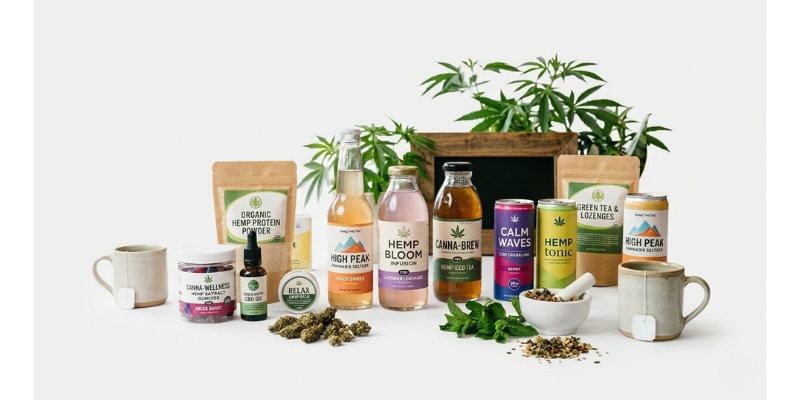
- CBD beverages
- gummies and ingestibles
- wellness supplements
The FDA has acknowledged the mismatch between the law and the marketplace but has not created a new regulatory pathway—leaving businesses exposed.
Which CBD products are most likely to face FDA enforcement?
Short answer:
Ingestible products and those making health-related claims are the highest-risk categories.
Based on past FDA and FTC activity, enforcement tends to focus on:
CBD in foods and beverages
Products like drinks, snacks, and edibles are directly at odds with current FDA rules.
CBD supplements
Even when labeled as “dietary supplements,” these products remain noncompliant under federal law.
Products with health or wellness claims
Statements like:
- “relieves pain”
- “reduces anxiety”
- “improves sleep”
can classify a product as an unapproved drug.
The new policy may not change the law—but it could make enforcement more predictable and more frequent.
Are “calm,” “recovery,” or “wellness” claims still risky for CBD products?
Short answer:
Yes. Even indirect or “soft” claims can trigger regulatory scrutiny depending on context.
Many CBD brands avoid explicit medical claims but rely on language like:
- “calm”
- “balance”
- “recovery”
- “stress support”
Regulators evaluate these claims based on:
- overall marketing context
- product format (especially ingestibles)
- consumer interpretation
For example, a CBD beverage marketed for “relaxation” may still be viewed as implying a physiological effect.
This is a key risk area that many businesses underestimate—and one the FDA has increasingly scrutinized.
How could this policy affect CBD beverages and functional products?
Short answer:
CBD beverages and functional wellness products could face the most disruption due to ingredient and claims issues.
CBD has become a popular ingredient in:
- functional drinks
- recovery beverages
- stress-relief products
But these products combine multiple regulatory risks:
- unapproved food ingredient
- implied health benefits
- consumer-facing wellness positioning
This puts them in the same category as other scrutinized products like:
- adaptogenic beverages
- nootropic supplements
- functional mushroom products
The FDA’s approach to CBD may reflect a broader crackdown on functional claims tied to unapproved ingredients.
Does this only affect CBD companies, or other wellness brands too?
Short answer:
The impact may extend beyond CBD to the broader functional product market.
The enforcement logic behind CBD scrutiny applies to:
- products with novel or unapproved ingredients
- supplements making lifestyle or performance claims
- beverages marketed for mental or physical effects
In other words, CBD is not an isolated issue—it is part of a larger regulatory trend.
Brands in adjacent categories should pay attention to how the FDA defines:
- acceptable claims
- ingredient boundaries
- enforcement priorities
How does federal CBD enforcement interact with state laws?
Short answer:
Federal and state rules often conflict, creating a patchwork of compliance obligations.
Some states allow CBD in food and beverages, while others align more closely with FDA restrictions.
This creates situations where:
- a product is allowed at the state level
- but still violates federal law
For companies selling nationally, this leads to:
- inconsistent compliance strategies
- increased legal risk
- challenges with distribution and retail partnerships
A federal enforcement policy could reduce uncertainty—but also increase exposure.
What business risks go beyond FDA enforcement?
Short answer:
Regulatory uncertainty affects not just compliance, but also distribution, investment, and long-term growth.
Companies often overlook how CBD risk impacts:
Retail and distribution
Retailers and platforms may restrict or remove CBD ingestibles if enforcement increases.
Insurance coverage
Policies may exclude or limit coverage for CBD-related products.
Investment and M&A
Investors and buyers often discount companies with unresolved regulatory exposure.
This means FDA action can influence not just legality—but market access and valuation.
What should CBD and wellness brands do now to reduce risk?
Short answer:
Review claims, product positioning, and regulatory exposure before enforcement becomes more structured.
Key steps include:
1. Audit all product claims
Remove or revise language that could imply medical or physiological effects.
2. Evaluate product formats
Ingestible CBD products carry higher risk than topicals.
3. Align branding with compliance
Ensure packaging, websites, and advertising tell a consistent, defensible story.
4. Monitor federal developments
This policy may coincide with broader changes to cannabis and hemp regulation.
At Juris Law Group, we advise companies across food, beverage, and supplement industries on FDA and FTC compliance, particularly in emerging product categories like CBD and functional ingredients.
FAQ: CBD Regulation and FDA Enforcement
Is CBD allowed in food products under FDA rules?
No. The FDA currently prohibits adding CBD to conventional foods under federal law.
Can CBD legally be marketed as a dietary supplement?
No. Because CBD was first approved as a drug ingredient, it cannot be sold as a dietary supplement.
What types of CBD products are most likely to be targeted?
Ingestible products (foods, beverages, supplements) and those making health or wellness claims face the highest risk.
Are indirect claims like “calm” or “relaxation” allowed?
Not always. Even indirect claims can be considered misleading depending on context and product type.
Will the FDA’s new policy legalize CBD products?
No. The policy is expected to clarify enforcement priorities, not change the underlying legality.