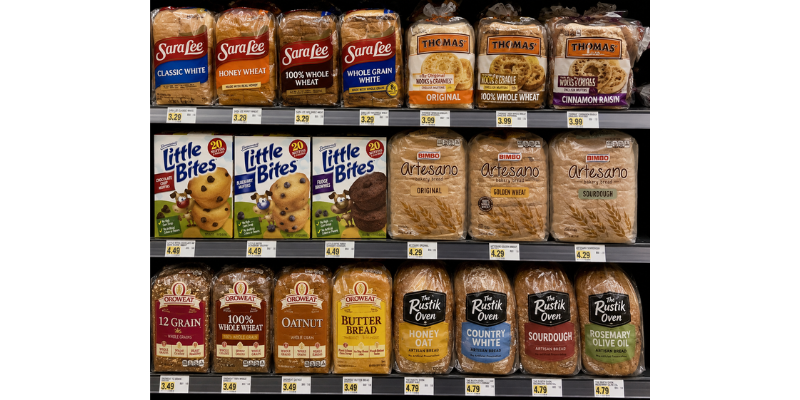
Bimbo Bakeries USA has announced a multi-year plan to remove artificial preservatives, artificial emulsifiers, artificial colors, and certain artificial flavors from major U.S. bakery brands, including Sara Lee, Thomas’, Little Bites, Artesano, Oroweat, and The Rustik Oven. The announcement places one of the country’s largest commercial bakery portfolios inside the broader clean label shift now reshaping packaged food.
The legal issue is not limited to whether the company can reformulate successfully. The more difficult question is how Bimbo Bakeries USA communicates the transition while different products, brands, and package inventories move at different speeds. A clean label commitment can support consumer trust, but it also creates product representation risk when a company speaks broadly about ingredients before every SKU has changed.
Bimbo Bakeries USA’s Artificial Ingredient Removal Timeline
The company’s timeline begins with artificial colors. Grupo Bimbo announced in July 2025 that it would remove artificial colorants from its global portfolio by the end of 2026. Bimbo Bakeries USA has now stated that its breads, buns, and rolls are already free from artificial colors and artificial flavors, and that it has removed Red No. 3 from its U.S. portfolio ahead of federal deadlines.
By the end of 2026, Bimbo Bakeries USA expects to complete the final phase of artificial color removal in occasional-consumption products, including sweet baked goods and snacks. That timing is important because these products are more likely to contain colors used for appearance, flavor association, or product identity. Reformulating a bread loaf is different from reformulating a snack cake or sweet baked product where color may affect consumer expectations.
The next phase focuses on artificial preservatives and emulsifiers. By the end of 2027, Artesano breads and buns, Oroweat breads and buns, and The Rustik Oven products are expected to be free from artificial preservatives and emulsifiers. By the end of 2028, Bimbo Bakeries USA plans to remove those ingredients from Sara Lee, Oroweat specialty varieties, Little Bites, and Thomas’ products.
Why Bimbo’s Clean Label Shift Is Happening Now
Bimbo Bakeries USA is responding to a market that increasingly associates shorter ingredient lists with quality, transparency, and family-oriented purchasing. The company’s statement frames the reformulation as a way to give consumers affordable baked goods with simpler recipes. That positioning is commercially useful, but it also raises the standard for accuracy in packaging, advertising, retailer materials, and brand-level claims.
The timing also reflects pressure beyond consumer preference. Artificial colors have drawn attention from the FDA, state lawmakers, school food discussions, and consumer advocacy groups. Preservatives and emulsifiers are now receiving closer scrutiny because consumers increasingly connect them with ultra-processed foods, even when those ingredients remain lawful and widely used.
For Bimbo Bakeries USA, the decision allows it to move before legal mandates become more restrictive. Voluntary reformulation gives the company more control over timing, supply chain testing, cost, and consumer messaging. Waiting for ingredient restrictions to become mandatory would place greater pressure on label revisions, product testing, and retailer coordination.
Labeling Exposure During a Multi-Year Reformulation
The main legal gap is the transition period. Bimbo Bakeries USA is not changing every product at once. Some products already meet the clean label standard, others will change in 2026, and others will not complete the transition until 2027 or 2028.
That staggered timeline creates risk if advertising language is too broad. A statement that a specific product is “free from artificial preservatives” can be evaluated against that product’s ingredient list. A broader statement suggesting that an entire brand, portfolio, or category has removed artificial ingredients may be more vulnerable if certain products have not yet been reformulated or if older inventory remains on shelves.
This distinction matters under state false advertising laws and the Lanham Act, which allows competitors to challenge misleading commercial statements. The issue is how a reasonable consumer, retailer, or competitor would understand the claim. If a package, website, or retail display creates the impression that a product has already changed when it has not, the company may face advertising liability even if its long-term reformulation plan is accurate.
Bimbo Bakeries USA will need careful coordination across several areas: ingredient statements, front-of-package claims, website language, sales sheets, retailer databases, and press materials. In a portfolio this large, the legal risk often comes from small inconsistencies. A package may be updated before a retailer page is revised, or a brand campaign may use language that fits one product line better than another.
Bimbo Bakeries USA’s Artificial Ingredient Removal Timeline
The company’s timeline begins with artificial colors. Grupo Bimbo announced in July 2025 that it would remove artificial colorants from its global portfolio by the end of 2026. Bimbo Bakeries USA has now stated that its breads, buns, and rolls are already free from artificial colors and artificial flavors, and that it has removed Red No. 3 from its U.S. portfolio ahead of federal deadlines.
By the end of 2026, Bimbo Bakeries USA expects to complete the final phase of artificial color removal in occasional-consumption products, including sweet baked goods and snacks. That timing is important because these products are more likely to contain colors used for appearance, flavor association, or product identity. Reformulating a bread loaf is different from reformulating a snack cake or sweet baked product where color may affect consumer expectations.
The next phase focuses on artificial preservatives and emulsifiers. By the end of 2027, Artesano breads and buns, Oroweat breads and buns, and The Rustik Oven products are expected to be free from artificial preservatives and emulsifiers. By the end of 2028, Bimbo Bakeries USA plans to remove those ingredients from Sara Lee, Oroweat specialty varieties, Little Bites, and Thomas’ products.
Labeling Exposure During a Multi-Year Reformulation
The main legal gap is the transition period. Bimbo Bakeries USA is not changing every product at once. Some products already meet the clean label standard, others will change in 2026, and others will not complete the transition until 2027 or 2028.
That staggered timeline creates risk if advertising language is too broad. A statement that a specific product is “free from artificial preservatives” can be evaluated against that product’s ingredient list. A broader statement suggesting that an entire brand, portfolio, or category has removed artificial ingredients may be more vulnerable if certain products have not yet been reformulated or if older inventory remains on shelves.
This distinction matters under state false advertising laws and the Lanham Act, which allows competitors to challenge misleading commercial statements. The issue is how a reasonable consumer, retailer, or competitor would understand the claim. If a package, website, or retail display creates the impression that a product has already changed when it has not, the company may face advertising liability even if its long-term reformulation plan is accurate.
Bimbo Bakeries USA will need careful coordination across several areas: ingredient statements, front-of-package claims, website language, sales sheets, retailer databases, and press materials. In a portfolio this large, the legal risk often comes from small inconsistencies. A package may be updated before a retailer page is revised, or a brand campaign may use language that fits one product line better than another.
STRATEGIC BY DESIGN: THE Juris Law Group PERSPECTIVE on Food Labeling and Advertising Liability
Our work on food labeling matters has shown that clean label reformulations require much more than changing an ingredient list. Each reformulation must be supported by a careful review of the claims that appear on packaging, websites, retailer listings, and marketing materials. The legal analysis also extends to determining when a claim can be made and whether it applies to a single SKU, an entire product line, or a broader brand portfolio.
From a risk management perspective, reformulation claims should be evaluated product by product. That includes confirming the final ingredient list, manufacturing status, packaging changeover dates, retailer information, and remaining inventory before using broad statements such as “no artificial preservatives” or “no artificial ingredients.” The same review should apply to emulsifier and preservative claims because consumers may interpret those terms as broader health-related messages, even when they are presented as ingredient statements.
At Juris Law Group, our Food and Beverage attorneys in California regularly advise food and beverage companies on product claims that accompany ingredient reformulations. Clear, product-specific language usually provides the strongest legal position. Bimbo Bakeries USA can communicate its long-term commitment, identify the products that have already been reformulated, and disclose the timeline for products still in transition. That approach helps reduce the likelihood that consumers or competitors will argue the company’s marketing overstates the current status of its portfolio.
Strategic Outlook for Bimbo and the Bakery Category
Over the next 12 months, Bimbo Bakeries USA will likely focus on execution rather than new claims. The company must complete artificial color removal in remaining sweet baked goods and snack products by the end of 2026 while preparing the 2027 phase for Artesano, Oroweat breads and buns, and The Rustik Oven. The legal work will follow the operational work closely because every reformulated product creates a new package, a new claim review, and a new record of substantiation.
The broader bakery category should expect more clean label announcements tied to preservatives, emulsifiers, and artificial colors. Once a category leader makes a public commitment, competitors may face pressure to explain their own ingredient strategies. That pressure may produce more lawsuits if brands use broad “clean,” “simple,” or “no artificial” language without clear product-level support.
Common Legal Inquiries
Can a food company advertise a product as having no artificial preservatives before reformulation is complete?
A company should avoid making that claim for any product that has not yet been reformulated. It may describe a future commitment if the timeline is clear. The safer approach is to identify which products already qualify and which products remain in transition.
Why are emulsifier claims legally sensitive?
Emulsifiers affect texture, freshness, and consistency in baked goods. If a company says it removed artificial emulsifiers, the claim must match the ingredient list and the product formula. Broad claims can create risk when only some products in a brand family have changed.
What is the main legal risk in Bimbo Bakeries USA’s clean label plan?
The main risk is portfolio-wide messaging during the transition. Because products will change at different times through 2028, Bimbo Bakeries USA must keep product claims, website statements, retailer listings, and packaging aligned with the actual formula of each product.