Five Below has formally pushed back against the trademark and design patent lawsuit brought by Stanley’s parent company, escalating a legal fight over viral “Stanley dupe” tumblers sold at discount retailers.
In its response, Five Below argues that the lawsuit is not about consumer confusion but an attempt to stretch intellectual property law beyond its intended limits and suppress lawful competition in a crowded consumer market. The filing reframes the dispute as a broader test of how far brand owners can go to control common product designs.
At issue is whether trademark and design patent law can be used to block “Stanley dupe” products—or whether those laws stop short of protecting functional design.
Is Five Below Responding to Stanley’s Trademark Lawsuit?
Yes. Five Below’s filing is its formal response to the lawsuit brought by Pacific Market International (PMI), the company behind Stanley drinkware.
Five Below’s filing is its formal response to the lawsuit brought by Pacific Market International (PMI), the company behind Stanley drinkware. Five Below’s formal response was filed as an Answer and Counterclaim in the federal case Pacific Market International, LLC v. Five Below, Inc. (Case No. 3:25-cv-09604).
The response goes beyond a simple denial. Five Below asserts affirmative defenses and counterclaims, asking the court to declare that its tumblers do not infringe Stanley’s trademarks, trade dress, or design patents—and that Stanley’s claims overreach the limits of intellectual property law.
What Is Stanley Claiming in the Lawsuit Against Five Below?
In its original complaint, Stanley claims that Five Below’s products infringe:
- Trademarks and trade dress, based on the overall appearance of Stanley tumblers
- Design patents, covering ornamental aspects of Stanley’s tumbler designs
- Federal and state unfair competition laws, alleging consumer confusion and free-riding on Stanley’s goodwill
Stanley argues that even without using the Stanley name, Five Below’s products mislead consumers and dilute the brand by mimicking its visual identity.
How Is Five Below Defending Itself in the Stanley Dupe Lawsuit?
Five Below’s response attacks the legal foundation of Stanley’s claims.
Rather than focusing on price or popularity, Five Below argues that the features Stanley points to—such as handles, lids, metal bands, and overall cup shape—are functional and widely used across the drinkware industry.
Under trademark and trade dress law, functional features cannot be protected. Five Below maintains that Stanley is attempting to claim exclusive rights over design elements competitors must be free to use.
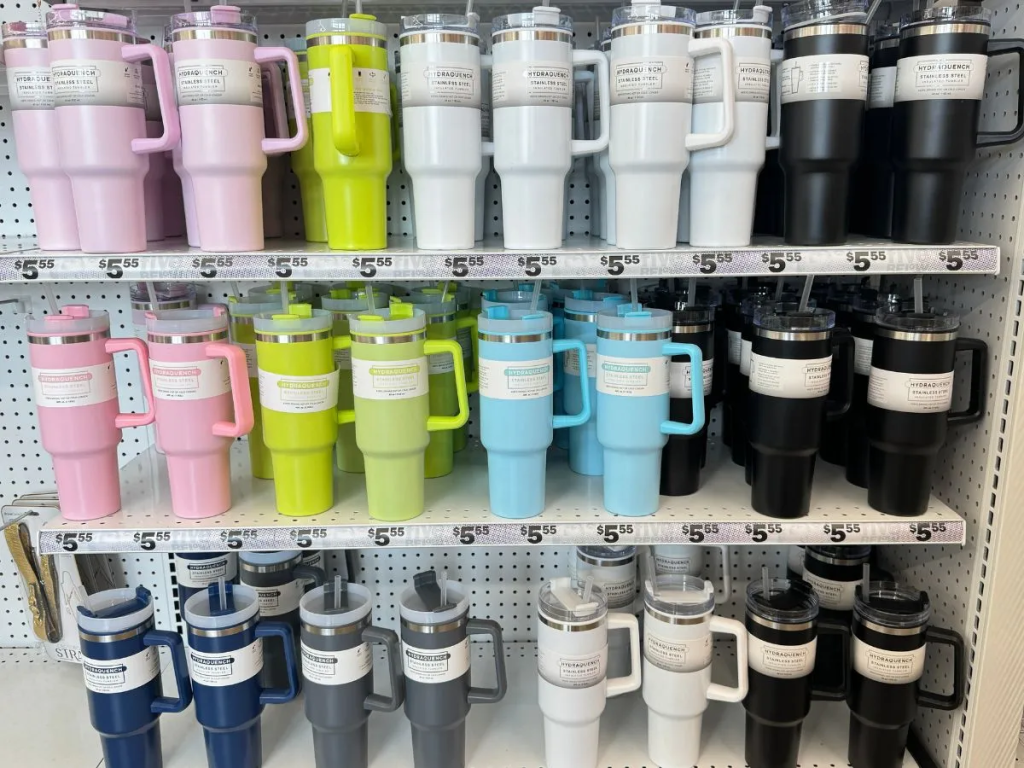
Five Below’s Tumblers image source
Is Stanley Using Intellectual Property Law to Suppress Competition?
Five Below goes further than denying infringement. It directly challenges the purpose of the lawsuit itself.
According to Five Below, the case represents an effort to stretch intellectual property law beyond its intended limits and to suppress lawful competition in a saturated consumer market. Trademark, trade dress, and design patent protections, Five Below argues, are designed to prevent consumer confusion—not to give one company control over functional, commonplace product designs.
Allowing such claims to proceed, Five Below contends, would convert intellectual property law into a competitive weapon, insulating market leaders from legitimate alternatives rather than protecting consumers.
This framing elevates the dispute beyond a fight over tumblers and places the court in the position of deciding where brand protection ends and market competition begins.
Can Stanley Legally Own the Design of a Tumbler?
That question is central to the case.
Five Below argues that Stanley is attempting to monopolize standard drinkware design features that are driven by utility and consumer preference, not source identification. Courts have consistently held that product features dictated by function—or commonly used within an industry—cannot serve as protected trade dress.
If the court agrees, Stanley’s trade dress claims could be significantly weakened or dismissed.
Are Stanley’s Design Patents Valid, According to Five Below?
Five Below also challenges the validity and scope of Stanley’s design patents.
Design patents protect ornamental appearance, not function. Five Below argues that Stanley’s patents improperly cover utilitarian features required for insulated tumblers to work as intended, making them invalid or, at minimum, too narrow to block competing products.
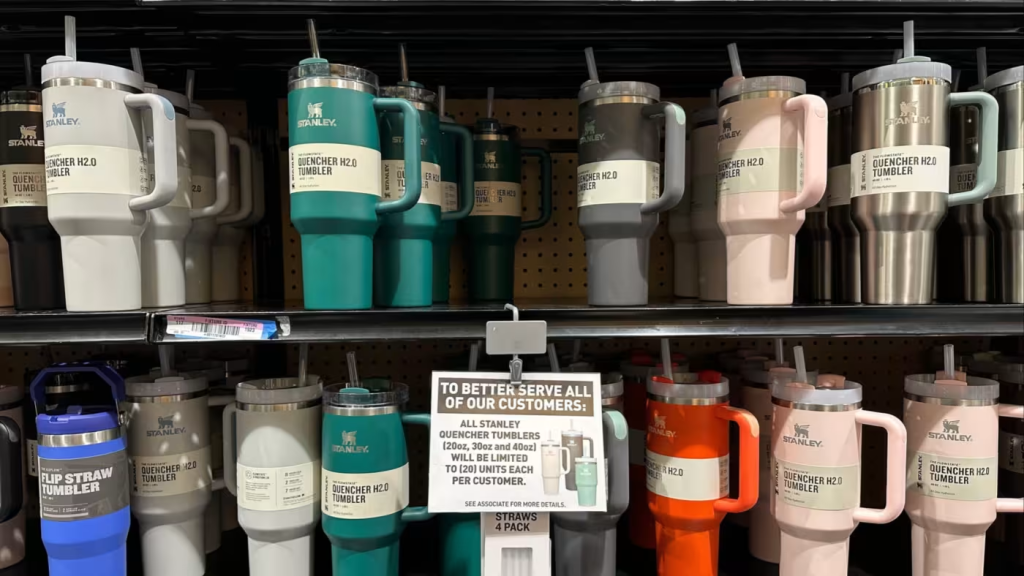
This issue matters because design patent disputes often turn on fine visual distinctions—and whether the patented elements are truly ornamental.
Does Calling a Product a “Stanley Dupe” Prove Consumer Confusion?
Five Below says no—and that the opposite may be true.
One of the most strategically significant arguments in Five Below’s response is that widespread use of the term “Stanley dupe” actually undermines Stanley’s confusion claims. According to Five Below, consumers understand these products are alternatives, not Stanley tumblers.
In other words, social media labeling may show market awareness rather than deception—raising new questions about how courts evaluate consumer confusion in the age of viral trends and online discourse.
What Is Five Below Asking the Court to Decide?
Five Below is seeking declaratory judgments that:
- Its products do not infringe Stanley’s trademarks or trade dress
- Stanley’s asserted design patents are invalid or unenforceable
- Stanley is not entitled to block Five Below from selling its tumblers
A ruling in Five Below’s favor could limit Stanley’s ability to bring similar lawsuits against other retailers selling so-called “Stanley dupes.”
Why This Phase of the Stanley Dupe Lawsuit Matters
Most coverage of the Stanley and Five Below trademark lawsuit focuses on the initial shock of a major brand suing over dupes. Five Below’s response shifts the narrative.
This phase of the case could determine:
- How far trademark and trade dress protection extends for popular consumer products
- Whether “dupe culture” inherently implies consumer confusion
- When intellectual property enforcement crosses into anticompetitive conduct
The outcome may influence how aggressively brands police look-alike products in trend-driven markets.
How Juris Law Group Helps Brands and Retailers Navigate IP Disputes
Juris Law Group advises businesses on trademark enforcement and defense, trade dress strategy, and design patent risk—particularly in consumer-facing industries where product aesthetics matter.
Our attorneys help clients evaluate when intellectual property rights protect genuine brand identity and when enforcement efforts risk overreach.
FAQs
Is Five Below selling Stanley products?
No. Five Below does not sell Stanley-branded tumblers. The lawsuit concerns Stanley-inspired designs.
Are “Stanley dupes” illegal?
Not automatically. Dupes are lawful unless they infringe valid trademarks, trade dress, or patents.
Can functional designs be protected by trademark law?
No. Functional features cannot be protected as trademarks or trade dress.
Does labeling a product a “dupe” avoid legal liability?
Not by itself, but Five Below argues it shows consumers are not confused about the product’s source.
Key Takeaway
The Stanley dupe lawsuit is no longer just about whether Five Below copied a tumbler. It is a test of whether intellectual property law can be used to control functional product design and limit competition in a crowded market.
Five Below’s response places that question squarely before the court.