A Narrow but Meaningful Shift in USDA Labeling Enforcement
The U.S. Department of Agriculture has finalized a rule that redefines when meat, poultry, and egg products may carry a “Product of USA” or “Made in the USA” label. While recent headlines suggest a sweeping change to America’s food system, the rule is far more targeted—and more legally significant—than much of the coverage implies.
Effective January 1, 2026, the USDA will allow these U.S. origin claims only when animals are born, raised, slaughtered, and processed entirely in the United States. For food brands, importers, and processors, the rule is not about banning imports, but about compliance, documentation, and the regulatory risk tied to voluntary labeling claims.
What the USDA Changed in Its “Product of USA” Rule
The USDA, through its Food Safety and Inspection Service (FSIS), has tightened the definition of “Product of USA” and “Made in the USA” when used on meat, poultry, and egg products.
Under the final rule, companies may only use these claims if every stage of production occurs in the United States, including:
- Birth of the animal
- Raising of the animal
- Slaughter
- Processing
Previously, products made from imported animals could still carry a “Product of USA” label if they were processed domestically. USDA concluded that this practice conflicted with consumer expectations and allowed labeling that many shoppers found misleading.
“Under USDA’s final rule, ‘Product of USA’ means the animal was born, raised, slaughtered, and processed entirely in the United States—not merely processed domestically.”
When Does the New USDA “Product of USA” Definition Take Effect?
The rule becomes enforceable on January 1, 2026.
This delayed effective date gives companies time to evaluate supply chains, reassess labeling strategies, and implement record-keeping systems needed to support U.S. origin claims. Despite some reporting suggesting an imminent change, there is no immediate labeling requirement or enforcement action tied to this rule.
Does the USDA Rule Reinstate Mandatory Country-of-Origin Labeling (COOL)?
No. This rule does not reinstate mandatory Country-of-Origin Labeling (COOL) for meat or poultry.
Mandatory COOL for certain meats was repealed in 2015 after World Trade Organization disputes involving Canada and Mexico. The current rule is limited to voluntary origin claims only. Companies are not required to label products with country-of-origin information, but if they choose to make a U.S. origin claim, it must meet the new definition.
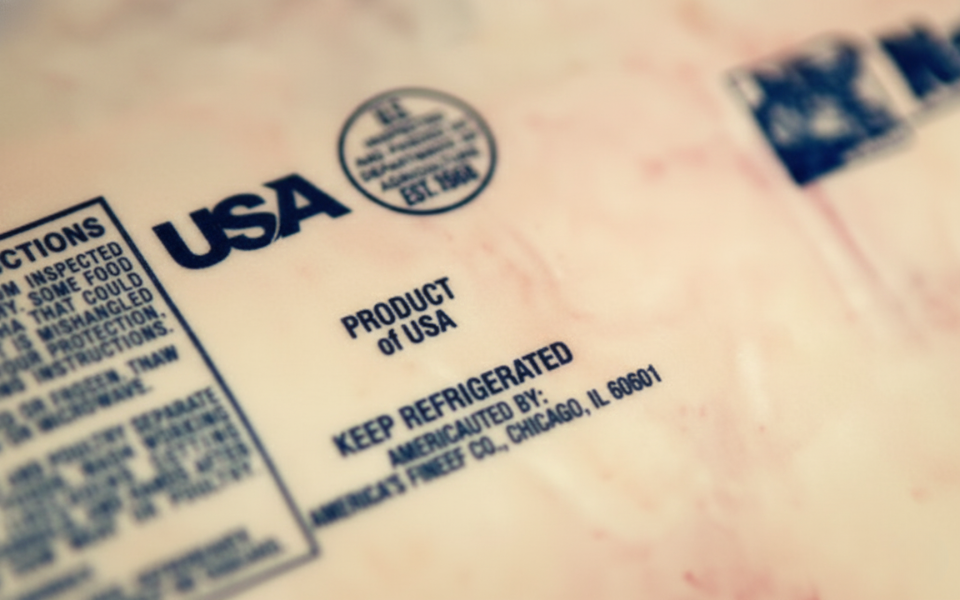
What Most Coverage Gets Wrong About the USDA Labeling Change
This Is a Labeling Standard, Not an Import Restriction
The rule does not restrict imports or limit foreign-sourced meat, poultry, or eggs from being sold in the United States. It regulates only the use of specific U.S. origin language on labels.
Documentation and Traceability Will Drive Enforcement
FSIS enforcement will focus on whether companies can substantiate their claims. Businesses using “Product of USA” should expect scrutiny of sourcing records, supply-chain traceability, and internal controls supporting the label language.
The Rule Forces Strategic Decisions About U.S. Origin Marketing
Some companies may choose to remove U.S. origin claims entirely rather than restructure sourcing or assume additional compliance obligations. For others, maintaining the label may be a valuable branding decision that justifies increased documentation and oversight.
What Food and Beverage Companies Should Expect Before 2026
Greater Scrutiny of Voluntary Origin and Sourcing Claims
This rule aligns with a broader regulatory trend toward closer review of voluntary labeling statements, particularly those that influence consumer perception about origin, quality, or production practices.
More Conservative Label Language and Internal Review
Companies may adopt narrower, more qualified label language or implement more robust pre-market review processes to reduce enforcement risk.
Potential Spillover Effects Beyond USDA-Regulated Products
While this rule applies only to USDA-regulated foods, similar consumer-expectation issues arise under FDA oversight. This approach mirrors broader federal scrutiny of food labeling, including FDA enforcement trends affecting nutrition, origin, and marketing statements.
Why the “Product of USA” Rule Matters from a Regulatory Risk Perspective
From a compliance standpoint, the rule reinforces a key principle: voluntary claims are still regulated claims. Once a company chooses to make an origin statement, it must be truthful, substantiated, and consistent with how regulators believe consumers interpret that language.
At Juris Law Group, we regularly advise food and beverage companies on labeling strategy, claim substantiation, and regulatory exposure under both USDA and FDA frameworks. The revised “Product of USA” definition is a reminder that labeling decisions carry legal consequences beyond marketing considerations.
USDA “Product of USA” Labeling Rule – FAQs
Can imported meat still be sold in the U.S.?
Yes. Imported meat, poultry, and eggs may still be sold legally. The rule only affects whether those products can be labeled “Product of USA.”
Are companies required to change labels now?
No. The rule takes effect January 1, 2026, and applies only if a company chooses to use a U.S. origin claim.
Does this apply to restaurants or food service?
The rule primarily applies to retail labeling, though misleading origin statements in food service settings may raise separate consumer-protection issues.
Will this affect pricing or supply chains?
USDA has not indicated that the rule will affect pricing or availability. Any changes would stem from individual business decisions, not the regulation itself.
Which agency enforces the rule?
USDA’s Food Safety and Inspection Service (FSIS) oversees enforcement and documentation requirements for covered products.
Key Takeaway
The USDA’s revised “Product of USA” rule does not overhaul food labeling or restrict imports. Instead, it narrows who can make a powerful origin claim and raises the compliance bar for those who do. Companies relying on U.S. origin labeling should begin reviewing sourcing, documentation, and label strategy well ahead of the 2026 enforcement date.