Nike’s recent $11 million jury verdict against an influencer-led counterfeit operation marks a definitive shift in trademark enforcement. This case signals that liability is no longer confined to offshore manufacturers; creators and social media sellers are now primary targets. For the “replica” subculture, the legal boundary between “inspiration” and “infringement” has officially collapsed.
The Case: Nike vs. Nicholas Tuinenburg (“Divide the Youth”)
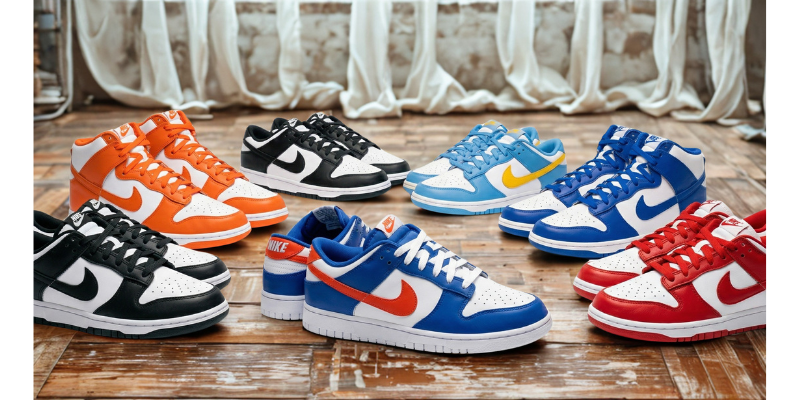
Nike secured the $11 million judgment against influencer Nicholas Tuinenburg and his brand, Divide the Youth, for the sale of counterfeit sneakers. The litigation centered on “Nike Dunk” style shoes marketed and sold directly through social media channels.
The jury found Tuinenburg liable for willful trademark counterfeiting and trade dress infringement under the Lanham Act. Despite the defendant selling a relatively low volume of product, the finding of intentional misconduct triggered massive statutory damages. This case illustrates a pivot in brand protection: enforcement is moving away from the factory floor and into the digital influencer ecosystem.
Can You Be Liable Without Using a Brand’s Logo?
Yes. Infringement does not require the unauthorized use of a “Swoosh” or a specific logo. Nike successfully argued that the sneakers violated its trade dress—the legal protection covering a product’s distinctive design, silhouette, and overall visual identity.
The jury concluded that the shoes were similar enough to the Nike Dunk to cause consumer confusion, regardless of the branding on the tongue or heel.
- Trade Dress Reality: It protects the shape, paneling, and color blocking of a product.
- The “No Logo” Myth: Removing a logo does not insulate a creator from infringement if the silhouette remains recognizable as a protected design.
Do “Replica” or “Inspired By” Disclaimers Provide Protection?
They do not. In fact, labeling a product as a “replica” or “UA” (unauthorized authentic) often serves as an admission of intent. In determining liability, courts ignore disclaimers and focus on:
- Likelihood of confusion among the general public.
- The defendant’s intent to capitalize on the original brand’s reputation.
- Physical similarity between the two products.
Why the $11M Award? The Math of Statutory Damages
A common misconception is that damages are limited to lost profits. Because the Lanham Act allows for statutory damages, the financial penalty can far exceed the actual revenue generated by the sales.
The $11 million award was driven by three factors:
- Willfulness: Evidence showed Tuinenburg continued operations despite receiving cease-and-desist notices.
- The Lanham Act (15 U.S.C. § 1117(c)): In cases of willful counterfeiting, courts can award up to $2 million per mark.
- Deterrence: Statutory damages are designed to be punitive, ensuring that the cost of infringement outweighs any potential profit.
The New Reality: Personal Liability for Influencers
Influencers are no longer viewed by the courts as passive conduits for promotion. If a creator controls the branding, profits from the transactions, or fosters a community specifically for the sale of “reps,” they face direct personal liability.
This creates a high-stakes environment for:
- Creators: Marketing content is now being used as “Exhibit A” to prove intent.
- Brands: Trade dress is becoming a more powerful tool for shutting down lookalike designs.
- Platforms: There is mounting pressure to de-platform influencers who facilitate these sales.
Risk Mitigation for Creators and Digital Brands
To navigate this evolving landscape, businesses must move beyond “common sense” and adopt strict compliance standards:
- Design Audits: If a product’s silhouette mimics a legacy brand (like a Dunk, Jordan 1, or Birkin), it requires a legal trade dress analysis.
- Avoid “Replica” Terminology: Using keywords associated with counterfeit culture creates a digital paper trail of willful infringement.
- Content Reviews: Archive and review social media history; old posts can be used to establish a pattern of intentional copying.
Why Work with Juris Law Group on Counterfeiting and Trade Dress Risk?
Counterfeiting risk now extends beyond manufacturers to influencers and digital sellers. Juris Law Group helps clients address these evolving exposures by combining IP, advertising, and product liability expertise.
We advise on:
- Product design and trade dress risk
- Influencer and marketing compliance
- Branding and labeling strategy
- Litigation defense and risk mitigation
Our approach focuses on how these cases are actually evaluated—consumer perception, product similarity, and marketing context—helping clients reduce risk before it turns into litigation.
FAQs
Can selling replicas ever be legal?
Rarely. Unless the product is a clear parody (which has a high legal bar) or is sufficiently “transformed” to avoid confusion, most replicas are inherently infringing.
What is trade dress in simple terms?
It is the “total image” of a product. For a sneaker, this includes the specific arrangement of leather panels, the sole shape, and the stitching patterns.
Are small-scale sellers safe?
No. As the Divide the Youth case proves, even low-volume sellers can be hit with million-dollar judgments if the court finds the infringement was intentional.