By Pejman Javaheri
California Proposition 65 Enforcement: march 2026 Update
California’s Proposition 65 enforcement remained highly active in March 2026, with 510 Notices of Violation (NOVs) issued across a wide range of consumer product categories. This represents a significant volume of enforcement activity, reflecting continued focus on heavy metals, plasticizers, and emerging chemical risks in both food and non-food products.
This month’s data highlights persistent enforcement against lead, cadmium, phthalates, and bisphenols, with growing attention on personal care products, packaging materials, and imported goods. For manufacturers, importers, and retailers, these trends reinforce the importance of proactive compliance strategies, particularly in high-risk product categories and supply chains.
Monthly Violation Summary (MARCH 1–31, 2026)
| Number of Violations | Listed Chemicals | Types of Products Targeted |
|---|---|---|
| 291 | Lead, Cadmium | Food products, supplements, ceramics, metal tools |
| 47 | DEHP, DBP | Plastic packaging, vinyl goods, accessories |
| 28 | BPS | Thermal receipt paper, labels, packaging |
| 39 | Diethanolamine | Shampoos, soaps, personal care products |
| 12 | PFOA / PFAS | Packaging, coatings, consumer goods |
What is Proposition 65 and Why Does it Matter?
Proposition 65 (the Safe Drinking Water and Toxic Enforcement Act of 1986) requires businesses to provide warnings about significant exposures to over 900 chemicals known to cause cancer, birth defects, or reproductive harm.
While intended to protect consumers, Prop 65 has created a highly active enforcement environment driven by private plaintiffs.
Companies found in violation may face:
- Civil penalties of up to $2,500 per violation per day
- Mandatory warning labels or product reformulation
- Costly settlements and litigation
- Injunctive relief impacting product sales
Notable Chemical Trends in March 2026
Lead Continues to Dominate Across Product Categories
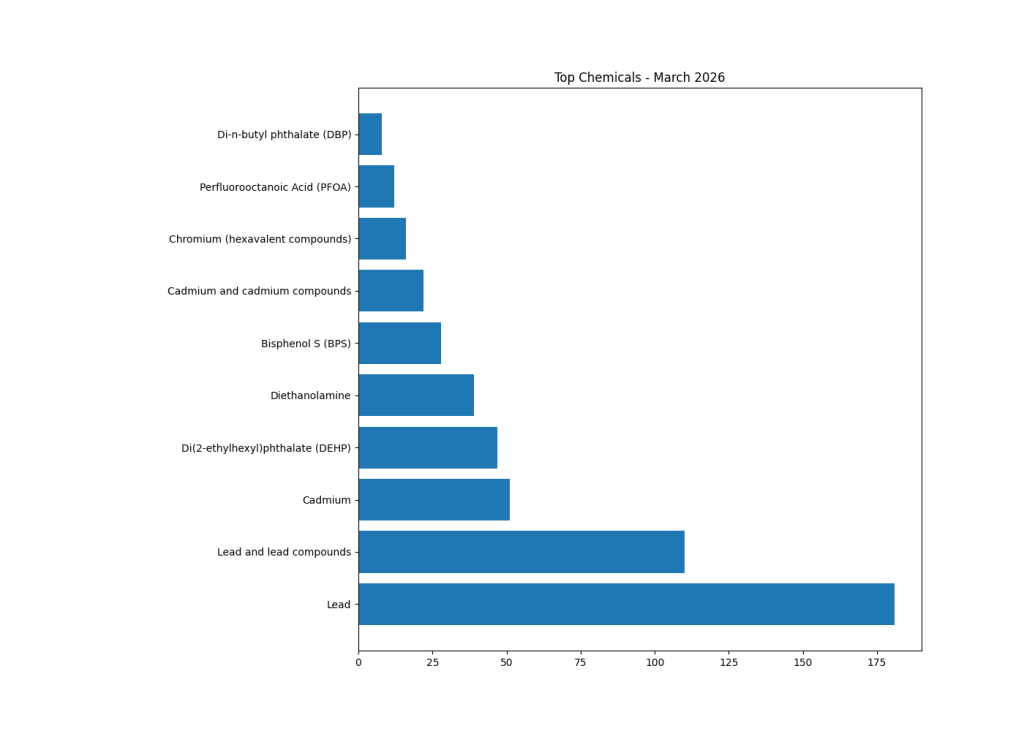
Lead remains the most frequently cited chemical, appearing in food products, ceramics, supplements, and metal goods. Enforcement continues to focus on both naturally occurring metals in food and leaching from product materials.
Cadmium in Imported Goods and Packaging
Cadmium violations were frequently tied to imported products, including food items, coatings, and packaging materials. Companies sourcing internationally should be especially vigilant with supplier testing.
Phthalates in Plastic and Vinyl Products
DEHP and DBP were cited in flexible plastics, including packaging, accessories, and vinyl materials. These chemicals remain a key enforcement target due to their widespread use and reproductive toxicity classification.
BPS in Thermal Paper and Labels
Bisphenol S (BPS) continues to replace BPA but remains heavily scrutinized. Notices focused on thermal receipt paper, shipping labels, and retail packaging—areas often overlooked in compliance programs.
Diethanolamine in Personal Care Products
Hair care products, soaps, and grooming items were repeatedly cited for diethanolamine. Even low concentrations can trigger enforcement due to its carcinogenic classification.
Product Categories Most Frequently Targeted
Food & Beverage
- Seafood and imported food items
- Supplements and powders
- Packaged and processed foods
Beauty & Wellness
- Shampoos and conditioners
- Body washes and soaps
- Cosmetic formulations
Household & Packaging
- Thermal receipt paper
- Adhesive labels and packaging
- Plastic and vinyl materials
Consumer Goods
- Ceramic kitchenware
- Metal tools and accessories
- Imported household items
Top Chemicals Cited Chart
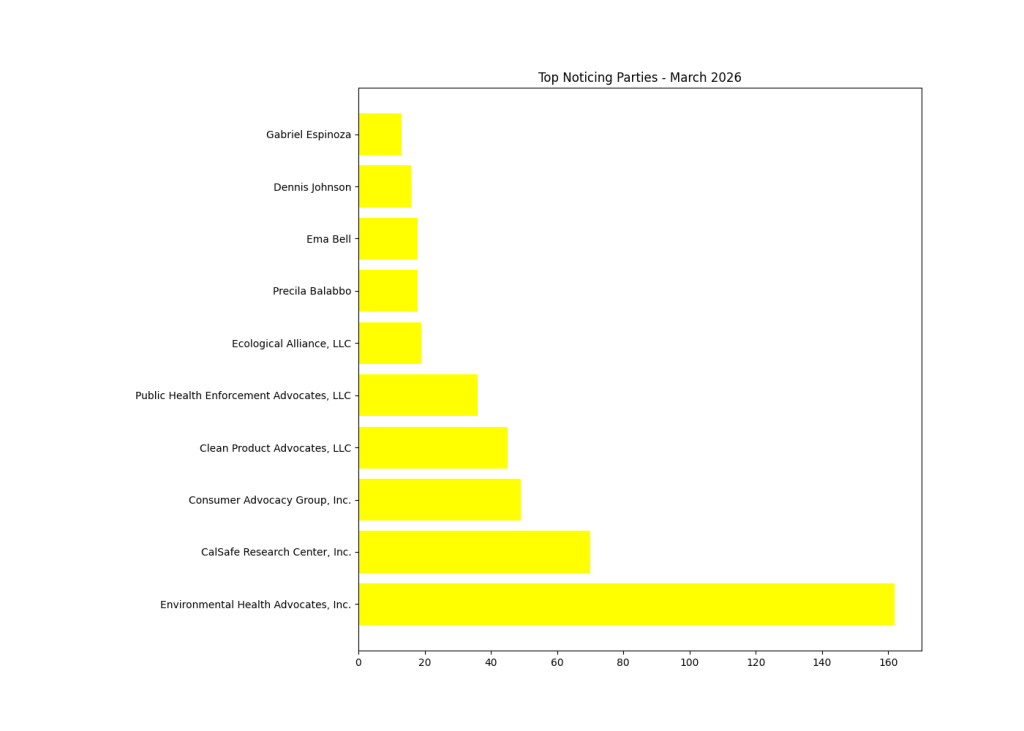
Top noticing parties
Top 10 Companies Cited
| Company Name | Notices |
|---|---|
| The Kroger Co., Food 4 Less of California, Inc. | 5 |
| Amazon.com Services LLC | 3 |
| Nestlé USA Entities | 3 |
| Capital Foods International Inc. | 3 |
| Walong Marketing Inc. / 99 Ranch Market | 3 |
| Amazon.com, Inc. | 3 |
| Whole Foods Market California, Inc. | 3 |
| Lucerne Foods / Albertsons Companies (Vons) | 3 |
| Envogue International / TJX / HomeGoods | 2 |
| The Kroger Co. / Ralphs Grocery Company | 2 |
What Risks Do Licensors Face When Licensees Trigger Prop 65 Violations?
Licensors may face liability even without direct involvement in manufacturing if their brand appears on the product.
Key Protective Measures:
- Require Prop 65 compliance certifications in licensing agreements
- Mandate third-party product testing
- Include indemnification and insurance provisions
- Monitor licensee product listings and sales channels
- Conduct periodic compliance audits
How Can My Company Avoid a Prop 65 Lawsuit?
1. Perform Ingredient and Packaging Testing
Test finished goods and raw materials for heavy metals, phthalates, and other listed chemicals.
2. Evaluate and Update Warning Labels
Ensure labels meet safe harbor requirements and are clearly displayed.
3. Strengthen Supplier Agreements
Include warranties, compliance obligations, and indemnification clauses.
4. Monitor New Notices and Industry Trends
Track enforcement patterns to identify emerging risks.
5. Engage Experienced Legal Counsel
Work with counsel to assess risk, respond to notices, and defend claims.
About Juris Law Group
Juris Law Group is a leading law firm advising food, beverage, supplement, and consumer product companies on Proposition 65 compliance and litigation.
We provide:
- Comprehensive compliance programs and audits
- Warning label strategy and implementation
- Supply chain and vendor agreement reviews
- Defense of 60-day notices and enforcement actions
Frequently Asked Questions (FAQ)
Do I need to comply if I only sell online?
Yes. Prop 65 applies to all products sold into California, including e-commerce.
Can trace amounts trigger a violation?
Yes. Most enforcement actions involve trace levels exceeding regulatory thresholds.
Am I liable for imported or private-label products?
Yes. Importers, distributors, and retailers can all be named.
What are plaintiffs targeting most in 2026?
Heavy metals, phthalates, PFAS, and bisphenols—especially where no safe harbor exists.
Are CBD or wellness products at risk?
Yes. These categories continue to face increased scrutiny.
Want to Protect Your Brand from a Prop 65 Lawsuit?
Contact us today:
[email protected]