February 2026 saw another significant wave of Proposition 65 enforcement activity, with 444 new 60-day Notices of Violation (NOVs) issued across a wide range of consumer products. The data reveals continued focus on heavy metals in food and supplements, phthalates in plastics, PFAS in packaging and wellness products, and bisphenols in retail materials.
For manufacturers, importers, distributors, and retailers selling into California, tracking these enforcement patterns is critical. Prop 65 actions are frequently initiated by private plaintiffs and can target trace chemical exposures in everyday goods—from dietary supplements and seafood to cosmetics, thermal labels, and plastic accessories.
February 1–28, 2026 Proposition 65 Notice of Violation Summary
| Number of Violations | Listed Chemicals | Types of Products Targeted |
| 343 | Lead and lead compounds, Cadmium and cadmium compounds | Seafood, dietary supplements, sunflower seeds, spices, metal kitchen tools |
| 47 | Phthalates (DEHP, DINP) | Vinyl bags, plastic packaging, accessories, household goods |
| 20 | Bisphenol A (BPA), Bisphenol S (BPS) | Thermal receipt paper, labels, food packaging |
| 18 | PFAS compounds (PFOA, PFOS) | Waterproof packaging, cosmetics containers, specialty coatings |
| 15 | Diethanolamine and cocamide DEA | Shampoos, lotions, body wash, grooming products |
| 21 | Delta-9-tetrahydrocannabinol (THC) | Cannabis products, edibles, oils |
What is Proposition 65 and Why Does It Matter?
Proposition 65 (the Safe Drinking Water and Toxic Enforcement Act of 1986) requires businesses to provide warnings when their products expose consumers to chemicals known to cause cancer, birth defects, or other reproductive harm. The law currently covers over 900 chemicals and applies to companies selling products in California.
Violations can result in serious consequences, including:
- Civil penalties up to $2,500 per violation per day
- Mandatory warning labels or product reformulation
- Enforcement lawsuits brought by private plaintiffs
- Significant legal costs and settlement payments
Because the law allows private enforcement actions, companies across the consumer goods industry—from food brands to household goods retailers—frequently face Prop 65 claims.
Most Common Chemicals Cited in February 2026
| Chemical | Notices of Violation |
| Lead and lead compounds | 251 |
| Cadmium and cadmium compounds | 92 |
| Di(2-ethylhexyl)phthalate (DEHP) | 40 |
| Delta-9-tetrahydrocannabinol | 21 |
| Bisphenol S (BPS) | 13 |
| Perfluorooctanoic Acid (PFOA) | 12 |
| Diethanolamine | 10 |
| Chromium (hexavalent compounds) | 8 |
| Bisphenol A (BPA) | 7 |
Notable Chemical Trends in February 2026
Lead and Cadmium in Foods and Supplements
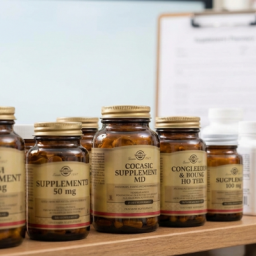
Heavy metals again dominated enforcement. Many notices targeted seafood products, sunflower seeds, spices, and dietary supplements, reflecting ongoing scrutiny of naturally occurring metals in food and botanical ingredients.
Phthalates in Plastic Packaging and Accessories
DEHP and DINP were frequently cited in vinyl packaging, plastic accessories, and consumer goods, continuing a longstanding enforcement focus on flexible plastics.
BPS and BPA in Thermal Labels and Packaging
Bisphenol S and BPA notices involved thermal receipt paper, labels, and certain food packaging materials. These chemicals remain high-risk because exposure limits are difficult to manage in retail environments.
PFAS in Consumer Goods and Packaging
PFAS compounds—including PFOA and PFOS—appeared in notices involving waterproof packaging, cosmetic containers, and specialty coatings, highlighting growing regulatory scrutiny of “forever chemicals.”
THC in Cannabis Products
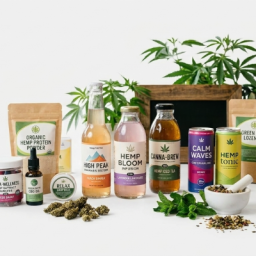
Delta-9-THC continues to generate Prop 65 enforcement. Notices cited cannabis oils, edibles, and other THC-containing products, emphasizing ongoing compliance challenges for the cannabis industry.
Product Categories Most Frequently Targeted
Food and Beverage
- Seafood such as squid and shellfish
- Sunflower seeds and snack foods
- Chili and prepared foods
- Spices and seasoning blends
Beauty and Wellness
- Shampoos and body washes
- Skin creams and lotions
- Grooming products
- Cannabis oils and edibles
Household and Packaging
- Thermal receipt paper and adhesive labels
- Plastic packaging and vinyl bags
- Waterproof packaging materials
Dietary Supplements
- Turmeric supplements
- Botanical capsules and powders
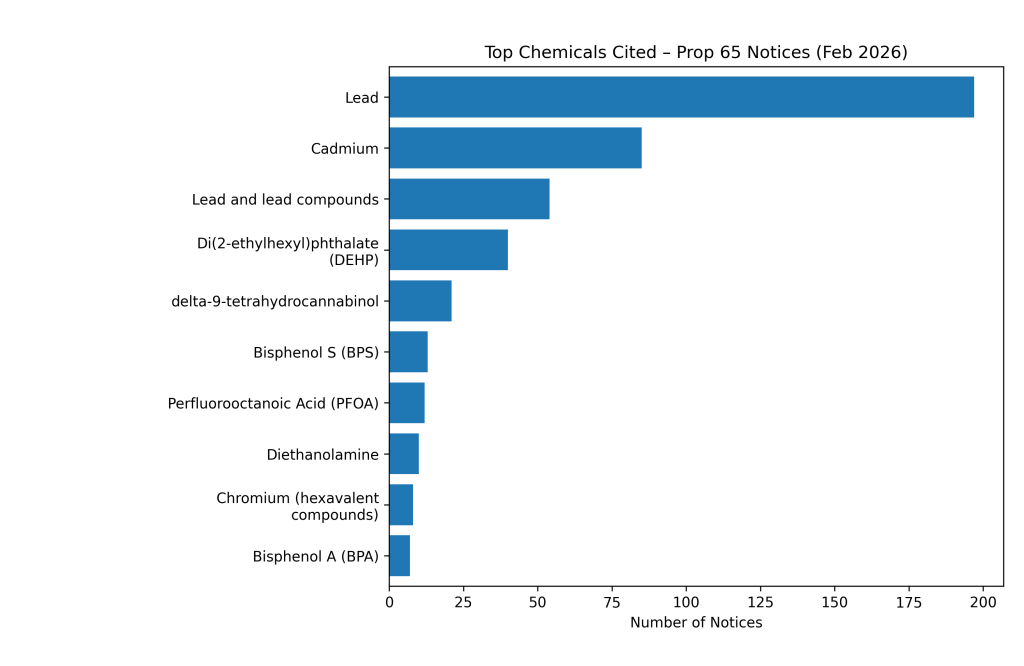
Top Chemicals Cited in february, 2026
The chart below summarizes the chemicals most frequently cited in February 2026 Proposition 65 enforcement actions.
| Chemical | Notices of Violation |
|---|---|
| Lead | 197 |
| Cadmium | 85 |
| Lead and lead compounds | 54 |
| Di(2-ethylhexyl)phthalate (DEHP) | 40 |
| Delta-9-tetrahydrocannabinol (THC) | 21 |
| Bisphenol S (BPS) | 13 |
| Perfluorooctanoic Acid (PFOA) | 12 |
| Diethanolamine | 10 |
| Chromium (hexavalent compounds) | 8 |
| Bisphenol A (BPA) | 7 |
| Cadmium and cadmium compounds | 7 |
| Diisononyl phthalate (DINP) | 7 |
| Perfluorooctane Sulfonate (PFOS) | 6 |
| Cocamide diethanolamine | 5 |
| Ethyl alcohol in alcoholic beverages | 3 |
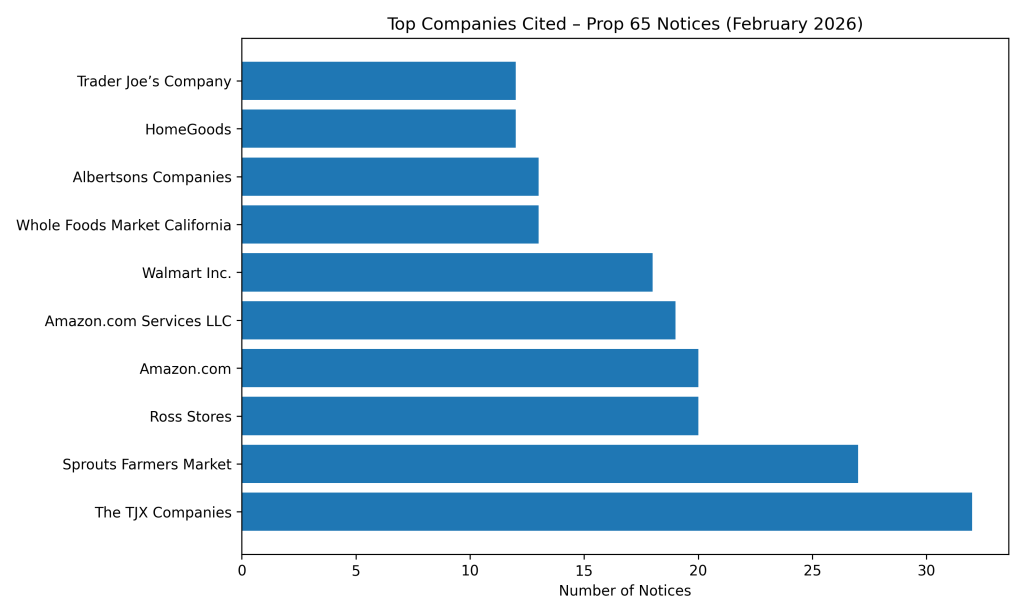
Top Companies Most Frequently Cited in february, 2026
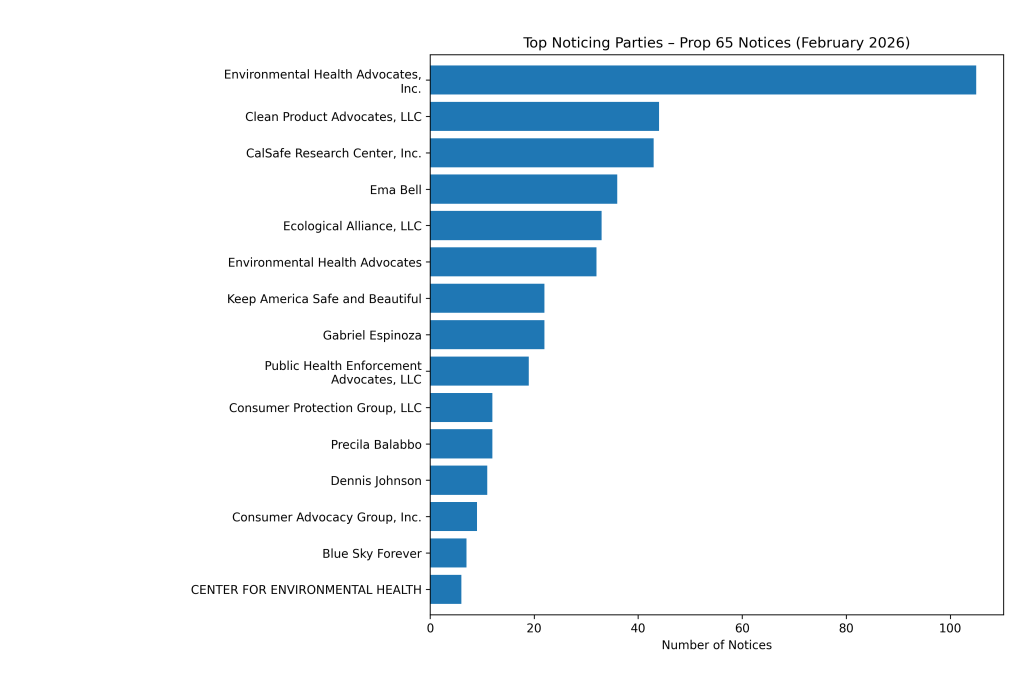
Top noticing parties in February, 2026
| Noticing Party | Notices Filed |
|---|---|
| Environmental Health Advocates, Inc. | 105 |
| Clean Product Advocates, LLC | 44 |
| CalSafe Research Center, Inc. | 43 |
| Ema Bell | 36 |
| Ecological Alliance, LLC | 33 |
| Environmental Health Advocates | 32 |
| Gabriel Espinoza | 22 |
| Keep America Safe and Beautiful | 22 |
| Public Health Enforcement Advocates, LLC | 19 |
| Precila Balabbo | 12 |
| Consumer Protection Group, LLC | 12 |
| Dennis Johnson | 11 |
| Consumer Advocacy Group, Inc. | 9 |
| Blue Sky Forever | 7 |
| Center for Environmental Health | 6 |
What Risks Do Licensors Face When Licensees Trigger Prop 65 Violations?
Brand owners and licensors can still face liability under Proposition 65—even if they did not manufacture the product—if their name or trademark appears on the packaging.
To mitigate risk, licensors should:
- Require Prop 65 compliance warranties in license agreements
- Mandate third-party product testing by licensees
- Include indemnity and insurance provisions
- Monitor licensee product listings and California distribution
How Can My Company Avoid a Prop 65 Lawsuit?
1. Perform Ingredient and Packaging Testing
Use accredited labs to test finished products and packaging for heavy metals, phthalates, and other listed chemicals.
2. Evaluate and Update Warning Labels
Ensure warnings meet Prop 65 safe harbor requirements and appear clearly on product packaging and online listings.
3. Strengthen Supplier Agreements
Include compliance certifications, testing obligations, and indemnification clauses in supplier contracts.
4. Monitor Enforcement Trends
Track Prop 65 notices in your industry to identify emerging chemical risks and product categories.
5. Engage Experienced Legal Counsel
If your company receives a 60-day notice, legal counsel can coordinate testing, evaluate exposure levels, and negotiate resolutions.
Juris Law Group: Trusted Counsel for Prop 65 Compliance and Defense
Juris Law Group represents national and international consumer product companies navigating California’s Proposition 65 regulatory landscape.
Our services include:
- Comprehensive Prop 65 compliance programs
- Chemical risk assessments and testing strategies
- Warning label development and review
- Supply chain compliance audits
- Defense of Prop 65 enforcement actions
Our attorneys regularly advise food, beverage, supplement, cosmetic, and consumer goods brands facing regulatory scrutiny in California.
Frequently Asked Questions
Do I have to comply if I only sell products online?
Yes. Proposition 65 applies to any product sold into California, including online sales through ecommerce platforms.
Can trace amounts of a chemical trigger a violation?
Yes. Many Prop 65 cases involve very small quantities of chemicals such as lead, cadmium, or phthalates.
Are imported or private-label products covered?
Yes. Importers, distributors, and retailers can be named in enforcement actions even if they did not manufacture the product.
What products are plaintiffs targeting most in 2026?
Recent notices show continued focus on:
- Heavy metals in foods and supplements
- Phthalates in plastic accessories
- PFAS in packaging and cosmetics
- Bisphenols in receipts and packaging
Are cannabis products subject to Prop 65?
Yes. THC and marijuana smoke are listed chemicals, and cannabis products frequently receive notices if warnings are missing.
Want to Protect Your Brand from a Prop 65 Lawsuit?
To speak with a regulatory attorney or schedule a compliance audit, contact us today.