California Proposition 65 Enforcement: December 2025 Update
California’s Proposition 65 enforcement remained intense through year-end. Based on California Attorney General 60-day notice filings, 402 Notices of Violation (NOVs) were served in December 2025, spanning food and dietary supplements, apparel and accessories, home goods, and retail receipts.
Heavy metals (particularly lead and cadmium), phthalates (DEHP and others), and PFAS (PFOA/PFOS) continued to drive the majority of notices, with additional focus on BPS in receipts, benzene in acne products, and diethanolamine in personal care items. For manufacturers, importers, licensors, and retailers selling into California, these patterns underscore the need for proactive testing, contract protections, and warning strategies to manage Prop 65 exposure risk.
December 1–31, 2025 Proposition 65 Notice of Violation Summary
Total Notices of Violation in December 2025: 402
| Number of Violations* | Listed Chemicals / Groups | Types of Products Commonly Targeted |
|---|---|---|
| 299 | Heavy metals (Lead, Cadmium, Mercury) | Protein powders and shakes, herbal powders, tuna and sardines, smoked mackerel, jerky, dried fruit, metal plant weights, fishing sinkers, solder, kitchen and serving boards, coasters |
| 53 | Phthalates (DEHP, DINP, DBP) | T-shirts and fashion tops (e.g., NASA shirts), jackets and outerwear, vinyl boots and gloves, lifting hooks and padded equipment, project bags, badge holders, dry bags, vinyl-handled tools |
| 28 | PFAS (PFOA, PFOS and related compounds) | Canned and pouched tuna and sardines, mushroom/coffee drink blends, protein drink mixes, jackets and outerwear, kinesiology tapes and similar athletic supports |
| 17 | Bisphenols (BPA, BPS) | Restaurant and retail receipts (quick service, coffee shops, apparel, supplement stores), thermal paper and POS receipts, some food-contact packaging |
| 7 | Benzene and Diethanolamine | Acne foaming washes, spot treatments, shaving gels, eyebrow tints, facial masks and related cosmetic products |
What Is Proposition 65 and Why Does It Matter?
Formally known as the Safe Drinking Water and Toxic Enforcement Act of 1986, Proposition 65 requires businesses to provide “clear and reasonable” warnings before exposing Californians to chemicals known to cause cancer, birth defects, or other reproductive harm. The list now covers 900+ chemicals, including heavy metals (lead, cadmium, arsenic), phthalates (DEHP, DINP, DBP), PFAS (PFOA/PFOS), benzene, BPA/BPS, and many others. Prop 65 Violations Newsletter, …
While intended to protect public health, Prop 65 has fostered an active private enforcement industry. Plaintiff groups and contingency-fee firms file hundreds of NOVs every month, frequently over trace contaminant levels in foods, supplements, cosmetics, home goods, and packaging—often where supply-chain testing and documentation are weak.
Key risks include:
- Civil penalties up to $2,500 per violation per day
- Mandatory warning labels, product reformulation, or market withdrawal
- Public enforcement lawsuits brought by private enforcers “in the public interest”
- Significant defense costs, settlement payments, and compliance remediation
For any brand selling into California—whether through brick-and-mortar, distributors, or online—Prop 65 must be treated as a core regulatory requirement, not an afterthought.
What Were the Most Common Chemicals Cited in December 2025?
Top Chemicals by Number of Notices
| Chemical | Notices of Violation |
|---|---|
| Lead and lead compounds | 269 |
| Cadmium and cadmium compounds | 54 |
| Di(2-ethylhexyl)phthalate (DEHP) | 47 |
| Perfluorooctanoic Acid (PFOA) | 27 |
| Bisphenol S (BPS) | 15 |
| Mercury and mercury compounds | 6 |
| Diisononyl phthalate (DINP) | 4 |
| Di-n-butyl phthalate (DBP) | 4 |
| Diethanolamine | 4 |
| Perfluorooctane Sulfonate (PFOS) | 3 |
| Benzene | 3 |
| Bisphenol A (BPA) | 2 |
These figures reflect notices where each chemical (or chemical group) was alleged individually or as part of a combination (e.g., lead and cadmium both alleged in the same product).
Notable Chemical Trends in December 2025
Heavy Metals in Supplements, Specialty Foods, and Hardware
Heavy metals—especially lead and cadmium—continued to dominate December enforcement. Notices targeted protein drinks and powdered supplements, moringa, ashwagandha, and other herbal powders, smoked mackerel and anchovies, shiitake jerky, crystallized ginger and olives, as well as dried mango and other fruit snacks. Separate notices focused on lead weights, plant weights, sinkers, solder, and shims, reinforcing that both ingestible products and small metal hardware items remain high-risk categories.
Phthalates in Apparel, Bags, and Vinyl-Handled Equipment
Phthalates such as DEHP, DINP, and DBP were widely cited in printed T-shirts (including NASA-branded apparel), jackets and outerwear, vinyl boots and gloves, and vinyl-handled tools and lifting hooks. Notices also covered dry bags, project bags, badge holders, and other PVC-containing accessories, consistent with ongoing scrutiny of flexible PVC and vinyl components in both apparel and general merchandise.
PFAS in Tuna, Outerwear, and Athletic Tapes
PFAS enforcement—primarily PFOA and PFOS—remained active. Notices alleged PFAS in canned and pouched tuna and sardines, complex protein/coffee drink mixes and mushroom coffee, as well as water-resistant jackets and outerwear. Several notices also targeted kinesiology tapes and similar sports supports, underscoring that “performance” textiles and adhesive products are increasingly viewed as PFAS-risk items regardless of industry.
BPS in Restaurant and Retail Receipts
December saw continuing focus on Bisphenol S (BPS) in thermal receipts from restaurants and retailers, including quick-service outlets, bakeries, coffee and beverage shops, and specialty chains. Notices specifically called out thermal POS receipts from both foodservice locations and national retailers, reinforcing that any business issuing printed receipts to California customers faces potential BPS/BPA exposure issues unless paper types are carefully controlled.
Benzene and Diethanolamine in Acne and Grooming Products
Although smaller in count, notices alleging benzene and diethanolamine carried heightened concern due to their toxicity profiles. Benzene NOVs involved acne foaming washes and spot treatments, while diethanolamine was cited in shaving gels, eyebrow tints, facial masks, and related grooming products. For cosmetic and personal-care brands, this reflects aggressive enforcement even at low concentrations, particularly where no robust testing or documentation exists.
Product Categories Most Frequently Targeted (December 2025)
Food & Beverage
- Canned and pouched tuna and sardines, including “sustainable” and premium brands.
- Smoked mackerel, anchovies in olive oil, and similar preserved seafood items.
- Herbal powders and functional ingredients (moringa, ashwagandha, mushroom blends).
- Crystallized ginger, olives, dried mango, and other packaged fruit and specialty snacks.
- Protein-fortified beverages and powdered drink mixes.
Dietary Supplements & Sports Nutrition
- Pre-workout and stimulant blends, including flavored performance powders.
- Sleep and recovery aids, fiber and detox products, and humic/fulvic formulations.
- Multi-ingredient “superfood” and greens blends with heavy metal content.
Beauty, Grooming & Wellness
- Acne treatment products (foaming washes, spot treatments).
- Shaving gels and creams, beard and men’s grooming items.
- Facial masks and eyebrow tint kits containing diethanolamine.
- Kinesiology tapes and athletic supports, especially where PFAS-coated or adhesive-intensive.
Household, Home Décor & General Merchandise
- Cheese boards, serving boards, and knife sets with metal and coated components.
- Coaster sets and decorative tabletop items.
- Dry bags, roll-top sling bags, and other water-resistant gear.
- Lead plant weights, sinkers, solder, and small metal hardware used in aquariums, gardening, or crafts.
Apparel, Footwear & Accessories
- Graphic T-shirts (including NASA-branded styles).
- Jackets and outerwear, including girls’ jackets and brand-name fashion outerwear.
- Vinyl boots, gloves, and padded strength-training equipment where soft PVC components are present.
Retail & Hospitality – Thermal Paper and Receipts
Any business issuing thermal receipts into California is potentially exposed, particularly for BPS, which lacks a clear safe harbor threshold
Restaurant and café receipts, including fast-casual and bakery concepts.
Retail and specialty store receipts (apparel, vitamin shops, and other brick-and-mortar retail).
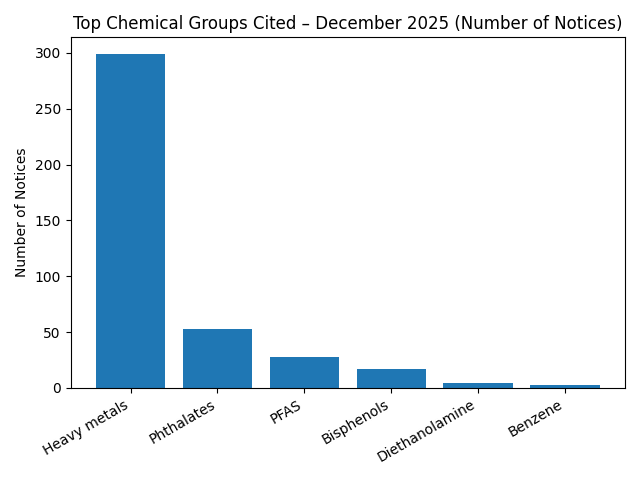
Top Chemical by Notices
| Chemical Group | Notices of Violation |
|---|---|
| Heavy metals (lead, cadmium, mercury) | 299 |
| Phthalates (DEHP, DINP, DBP) | 53 |
| PFAS (PFOA, PFOS) | 28 |
| Bisphenols (BPS, BPA) | 17 |
| Benzene | 3 |
| Diethanolamine | 4 |
Top Noticing Parties – December 2025
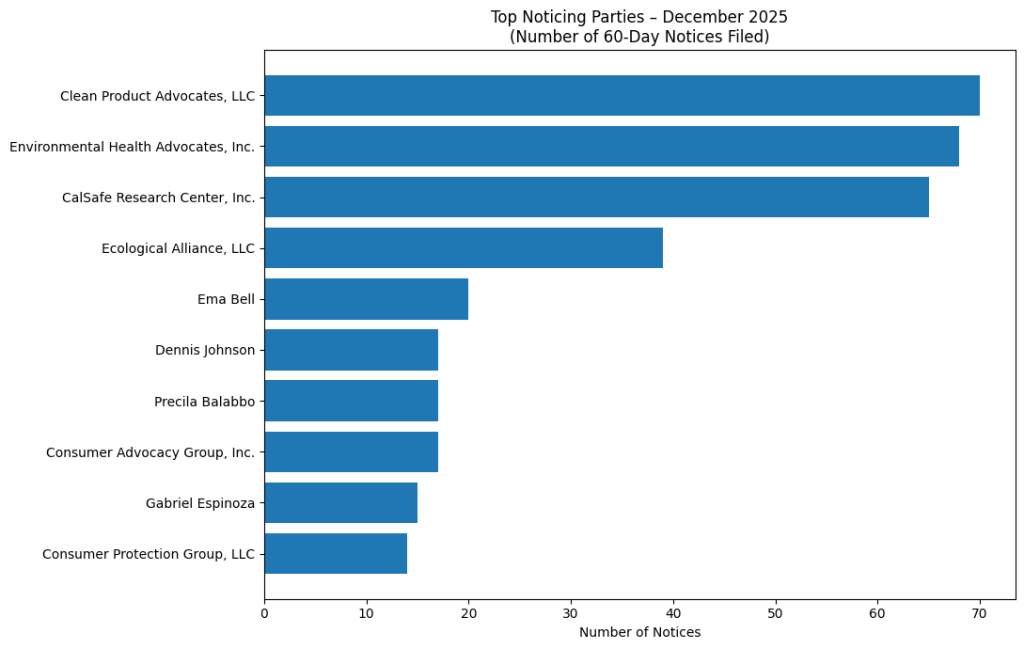
December’s notices were again dominated by a small set of repeat plaintiff organizations and individuals.
| Rank | Noticing Party | Notices Filed |
|---|---|---|
| 1 | Clean Product Advocates, LLC | 70 |
| 2 | Environmental Health Advocates, Inc. | 68 |
| 3 | CalSafe Research Center, Inc. | 65 |
| 4 | Ecological Alliance, LLC | 39 |
| 5 | Ema Bell | 20 |
| 6 | Dennis Johnson | 17 |
| 7 | Precila Balabbo | 17 |
| 8 | Consumer Advocacy Group, Inc. | 17 |
| 9 | Gabriel Espinoza | 15 |
| 10 | Consumer Protection Group, LLC | 14 |
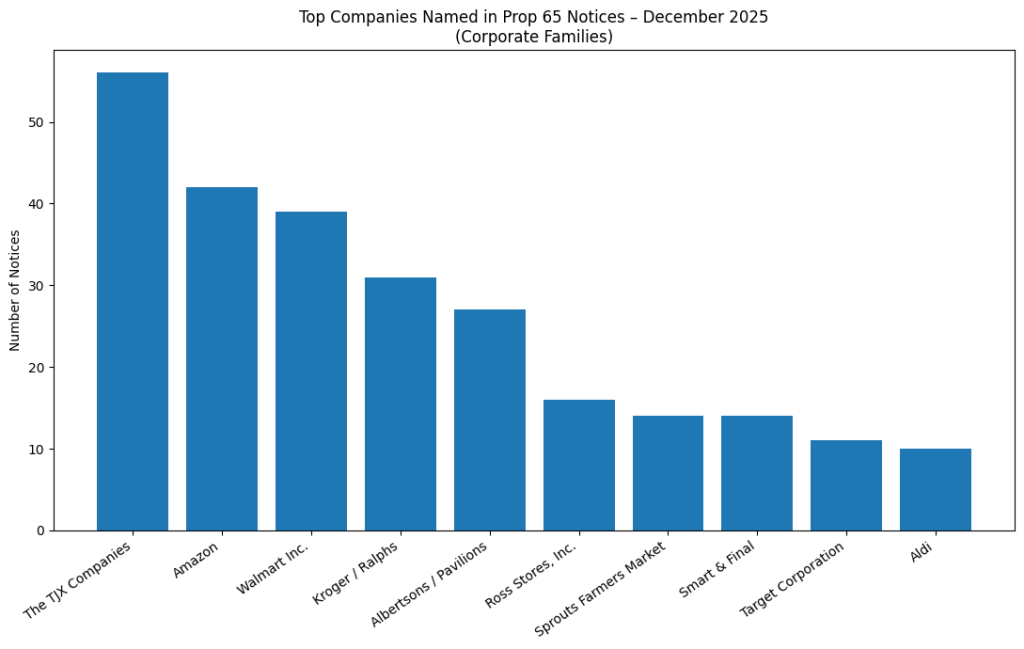
Top 10 Companies (By Number of Notices in Which They Are Named)
Using a corporate family approach (e.g., grouping Amazon.com, Inc. with Amazon.com Services, LLC), the following entities appeared most frequently as alleged violators in December notices:
| Rank | Company / Corporate Family | Notices Referencing Company* |
|---|---|---|
| 1 | The TJX Companies (TJ Maxx / Marshalls / HomeGoods) | 56 |
| 2 | Amazon (including Amazon.com Services) | 42 |
| 3 | Walmart Inc. | 39 |
| 4 | The Kroger Company / Ralphs | 31 |
| 5 | Albertsons Companies / Pavilions | 27 |
| 6 | Ross Stores, Inc. | 16 |
| 7 | Sprouts Farmers Market | 14 |
| 8 | Smart & Final | 14 |
| 9 | Target Corporation | 11 |
| 10 | Aldi | 10 |
Legal Advisory: What Risks Do Licensors Face When Licensees Trigger Prop 65 Violations?
Licensors—brand owners who license their trademarks or other IP to third parties—face direct Prop 65 exposure even when they do not manufacture, import, or distribute the product. If your brand, logo, or house label appears on product packaging, plaintiffs can and often do name you as a defendant alongside the licensee or contract manufacturer. Juris Law Group, P.C.
Key Risk Themes for Licensors
- Being drawn into enforcement actions for products you do not control day-to-day
- Reputational harm when non-compliant licensed products carry your brand into public Prop 65 disputes
- Indemnity and insurance gaps if license agreements do not clearly allocate Prop 65 responsibilities
Practical Contract and Compliance Tips for Licensors
- Prop 65 Warranties and Representations
- Require licensees to warrant compliance with Prop 65, including testing, formulation controls, and warning obligations.
- Tie compliance to OEHHA regulations, including current safe-harbor warning language and online disclosure requirements.
- Mandatory Third-Party Testing
- Build in third-party lab testing for high-risk categories (food, supplements, cosmetics, children’s products, vinyl/PVC goods, PFAS-sensitive items).
- Require pre-launch and periodic testing, and written test reports before California distribution.
- Indemnity and Insurance
- Include broad defense and indemnity clauses covering Prop 65 claims, penalties, and attorneys’ fees.
- Require licensees to carry sufficient CGL and product liability insurance, naming the licensor as an additional insured with coverage for Prop 65 enforcement.
- Ongoing Monitoring and Audit Rights
- Reserve rights to audit formulations, packaging, warnings, and online listings for California sales.
- Periodically review marketplace and retailer listings for licensed products to confirm warnings and formulations remain compliant.
How Can My Company Avoid a Prop 65 Lawsuit? (Five-Step Checklist)
1. Perform Ingredient, Finished Product, and Packaging Testing
Use reputable third-party labs to test finished goods, raw materials, and packaging for key chemicals (heavy metals, phthalates, PFAS, benzene, etc.). Re-test after any supplier, formula, packaging, or manufacturing changes.
2. Evaluate and Update Warning Labels
Determine whether warnings are required based on exposure levels and chemical types. Where needed:
- Track OEHHA safe harbor language
- Identify relevant chemical(s) and cancer/reproductive-harm endpoints
- Ensure warnings are conspicuous on physical packaging and e-commerce product pages
3. Strengthen Supplier, Co-Packer, and Licensee Agreements
- Add chemical-content warranties, audit rights, and indemnities to all vendor, co-packer, private-label, and license agreements
- Require prompt notice of formulation or material changes that may alter Prop 65 status
4. Monitor New Notices and Industry Trends
- Track monthly 60-day notices by chemical, product type, and retail channel
- Treat enforcement against competitors or analogous products as a signal to test and review your own portfolio
5. Engage Experienced Prop 65 Counsel Early
- If you receive a 60-day notice, contact counsel immediately
- A seasoned Prop 65 team can evaluate exposure, coordinate testing, manage settlement strategy, or litigate where necessary
Want to Protect Your Brand from a Prop 65 Lawsuit?
Juris Law Group is a Prop 65-focused law firm representing food, beverage, supplement, cosmetic, cannabis, and consumer product brands nationwide. We serve as outside regulatory and litigation counsel to national and global CPG companies and regularly defend them against Proposition 65, false advertising, and product-labeling claims.
Our Prop 65 services include:
- Designing and implementing proactive Prop 65 compliance programs and audits
- Developing customized warning label and online disclosure strategies
- Conducting supply-chain and contract reviews to prioritize indemnity and risk transfer
- Providing rapid response and defense to 60-day notices and Prop 65 litigation
Frequently Asked Questions (FAQ)
1. Do Prop 65 requirements apply if I only sell online?
Yes. Prop 65 applies to any product sold or shipped into California, regardless of channel. Online listings must display compliant warnings before checkout for California consumers, and marketplace platforms frequently shift compliance burdens to individual sellers.
2. Can my product be cited even if it contains only trace amounts of a listed chemical?
Yes. Many NOVs involve trace levels of lead, cadmium, phthalates, PFAS, or benzene. The key is exposure, not concentration alone—whether typical product use results in exposures above Prop 65 thresholds (if any) and whether a “clear and reasonable” warning is provided.
3. How does Prop 65 apply to imported, private-label, or white-label products?
Importers, distributors, private-label brand owners, and retailers can all be named as defendants—even if they did not manufacture the product. If your name or brand appears on packaging, or you bring the product into California, you should assume Prop 65 compliance responsibility (testing, warnings, contractual protections).
4. What are plaintiffs focusing on heading into 2026?
Recent months—including December—show continued targeting of:
- Heavy metals in seafood, snacks, supplements, and herbal/functional powders
- Phthalates in vinyl accessories, PVC-handled tools, footwear, and travel/cosmetic bags
- PFAS in textiles, waterproof goods, and certain foods and drink mixes
- BPS/BPA in thermal receipts and select packaging
- Benzene/diethanolamine in acne and grooming products
Categories with no clear safe harbor levels (e.g., many PFAS and BPS) remain particularly vulnerable.
5. Are cannabis and CBD brands still at Prop 65 risk?
Yes. Delta-9-THC and marijuana smoke are listed Prop 65 chemicals, and cannabis products—beverages, pre-rolls, vapes, and edibles—continue to attract enforcement attention. Even when products are sold via licensed dispensaries, Prop 65 warning obligations still apply, and brand owners, distributors, and retailers can all be named.