FDA’s October 2026 draft guidance “Action Levels for Cadmium in Processed Food Intended for Babies and Young Children” marks another important step toward reducing childhood dietary exposure to heavy metals in food. For food businesses, it provides proposed benchmarks for evaluating products and strengthening ingredient sourcing and testing. These proposed action levels can help inform cadmium hazard evaluations and appropriate controls within a food safety or, where applicable, a HACCP plan. The document is draft guidance, however, and is expressly marked “not for implementation.” 1 3
What FDA is proposing
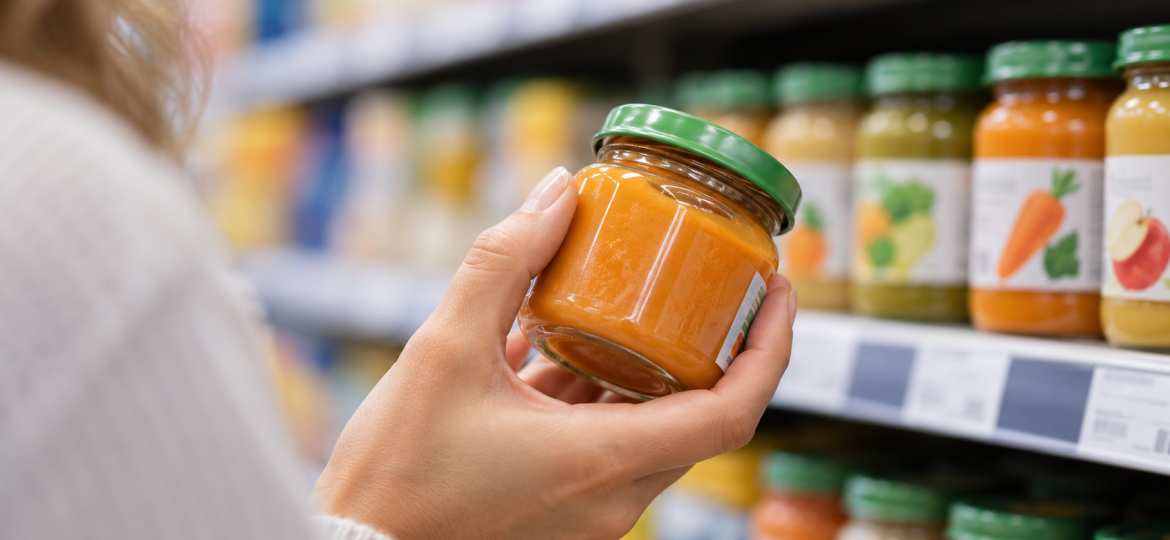
The draft covers packaged foods represented or purported to be for children younger than two, including purees and dry infant cereals. It proposes the following cadmium action levels, expressed in parts per billion (ppb): 1 2
| Food category | Proposed cadmium level |
|---|---|
| Fruits, vegetables other than single-ingredient carrots, and mixtures (any combination of fruits, vegetables, grain, and meat) | 10 ppb |
| Single-ingredient carrots and single-ingredient meats | 25 ppb |
| Dry infant cereals (e.g., rice, wheat, and multi-grain cereals) | 45 ppb |
| Yogurts, puddings, and custards | 20 ppb |
The scope excludes infant formula, beverages including toddler drinks, raw agricultural commodities, homemade foods, and snack foods, including grain-based and freeze-dried snacks. These exclusions do not exempt products from otherwise applicable food safety laws. 1
Why cadmium and Closer to Zero matter
Cadmium enters food through environmental sources, including soil and water, and can accumulate in the body. Long-term dietary exposure can harm the kidneys and bones. Reducing exposure early in life matters because young children have smaller bodies and are developing rapidly. 1
Launched in April 2021, FDA’s Closer to Zero initiative addresses lead, arsenic, cadmium, and mercury in foods for babies and young children. Its approach combines research, exposure assessment, stakeholder input, and action levels that can be revisited as science and manufacturing practices improve. The objective is continued reduction while preserving access to nutritious foods; “closer to zero” does not mean that every food can be entirely free of these elements. 3
A patchwork of benchmarks rather than comprehensive limits
- FDA draft cadmium guidance October 2026
- Federal Register notice
- FDA Closer to Zero action plan April 2021
U.S. regulation of heavy metals in food extends beyond these numerical benchmarks. Federal law prohibits adulterated food, and FDA can evaluate contamination even without a food-specific action level. Some products also have numerical standards in regulations, including bottled water under 21 CFR 165.110. What remains incomplete is a comprehensive set of binding, food-specific limits across the food supply. 1 4
FDA has instead addressed several priority combinations through guidance. Its January 2025 final guidance sets lead action levels of 10 ppb for specified baby-food categories and 20 ppb for single-ingredient root vegetables and dry infant cereals. Final guidance also sets inorganic arsenic action levels of 10 ppb in apple juice and 100 ppb in infant rice cereal. 5 6 7
Action levels are not binding regulatory limits. They identify contamination levels at which FDA may regard food as adulterated under section 402(a)(1) of the Federal Food, Drug, and Cosmetic Act (21 U.S.C. § 342(a)(1) and help inform enforcement decisions alongside other factors. A result below an action level is not a blanket assurance of compliance or a reason to stop reducing contamination. The proposed cadmium levels would add to this framework if finalized. 1 2 4 8
Other jurisdictions have adopted binding maximum levels for specified contaminants and food categories. For example, in the European Union, Commission Regulation (EU) 2023/915, as amended, establishes maximum levels for metals including lead and cadmium across numerous foods, including certain foods for infants and young children. This illustrates a key difference in regulatory approach: the EU places these numerical limits in legislation, while the FDA benchmarks discussed here are set through nonbinding guidance. Businesses selling internationally must assess each market’s requirements because food categories, covered contaminants, and applicable limits differ. 9
What food businesses should do now
Businesses should identify covered products, compare existing cadmium data with the proposed levels, and assess ingredient specifications, supplier controls, and risk-based testing. Where results are elevated or variable, companies should investigate sources and document corrective measures. These are practical preparation steps, not new testing obligations imposed by this draft. FDA requests comments by December 22, 2026, under docket FDA-2025-D-4023, to inform its work on final guidance. 1 2
4. FDA cadmium overview and bottled water regulation
5. FDA final lead guidance January 2025
6. FDA final inorganic arsenic guidance for apple juice June 2023
7. FDA final inorganic arsenic guidance for infant rice cereal August 2020
8. Federal Food, Drug and Cosmetic Act
9. Commission Regulation (EU) 2023/915 of 25 April 2023