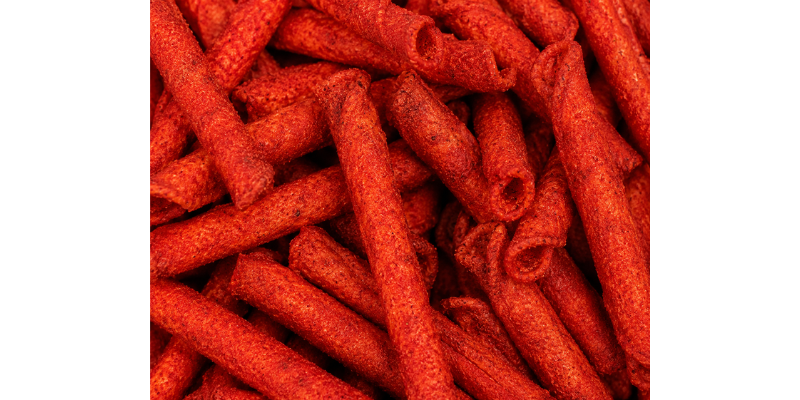
Takis has become the latest major snack brand to remove artificial colors from its U.S. products, but the legal questions surrounding the announcement extend beyond ingredient reformulation. As manufacturers replace petroleum-based dyes with naturally derived alternatives, many are introducing front-of-package statements such as “No Artificial Colors Added.” Those claims may fit within evolving FDA policy, yet they may still be challenged under state consumer protection laws and false advertising claims.
On June 25, 2026, Barcel USA, the U.S. subsidiary of Grupo Bimbo, announced that Takis will eliminate artificial colors and TBHQ across its U.S. portfolio by the end of 2026. The company stated that reformulated products are already reaching retailers, while existing inventory will continue to be sold during the transition. Consumers can identify the new formulations through a “No Artificial Colors Added” statement on the front of the package. The announcement follows similar commitments from several major food manufacturers responding to changing federal policy, state legislation, and consumer demand. For food companies, replacing ingredients may ultimately present fewer legal questions than the claims made about the new formula.
FDA Color Reformulation Policy Is Reshaping Snack Food Labeling
Takis’ announcement reflects a broader shift taking place across the food industry. The brand entered the U.S. market in 2001 and has grown into one of the country’s leading rolled tortilla chip products. Beginning in 2025, FDA actions and public statements accelerated efforts to move away from petroleum-based food dyes, including the agency’s decision to revoke authorization for Red No. 3 and its request that manufacturers voluntarily eliminate several remaining synthetic color additives by the end of 2027.
At the same time, several states adopted or proposed restrictions affecting artificial colors in food products. Rather than producing different versions for different markets, many national manufacturers have chosen to reformulate products nationwide. Takis’ announcement also supports Grupo Bimbo’s broader commitment to remove artificial colors from its global portfolio by the end of 2026.
The removal of TBHQ deserves equal attention. Although FDA allows its use as a preservative, the ingredient has increasingly been criticized by consumer advocacy groups alongside synthetic dyes. Removing both ingredients allows Takis to present a broader clean-label initiative while reducing the need for additional reformulations if ingredient standards continue to evolve.
“No Artificial Colors Added” May Become the Next Wave of Food Labeling Litigation
The most overlooked legal issue is not whether artificial colors are being removed. It is whether the new label says exactly what consumers believe it says.
FDA’s current enforcement approach generally allows products colored with naturally derived additives to carry “No Artificial Colors” claims because those colors are no longer petroleum-based. That federal position does not determine how state courts evaluate advertising claims under consumer protection laws. Plaintiffs frequently argue that consumers understand front-of-package statements differently than regulators define them.
That distinction creates a developing legal gap. A product may fit within FDA’s current enforcement policy while still facing claims that consumers were led to believe no added coloring agents are present at all. Courts reviewing deceptive advertising cases typically consider the entire presentation of the product, including its packaging, marketing, and the overall message conveyed to consumers, rather than relying solely on technical regulatory definitions.
The issue extends well beyond Takis. Every manufacturer introducing similar claims during reformulation may face comparable advertising exposure if consumers interpret those statements more broadly than the company intended.
Strategic by Design: The Juris Law Group Perspective
Food labeling disputes increasingly arise after companies complete ingredient reformulations rather than during the reformulation process itself. Once revised packaging reaches store shelves, every statement on the front label becomes part of the product’s advertising. Claims about artificial colors, preservatives, natural ingredients, or product composition should be reviewed alongside ingredient lists, websites, retailer product pages, and other marketing materials so that consumers receive the same message wherever they encounter the product.
Our food and beverage attorneys in California advise businesses updating established products while protecting the value of their brands. As our registered trademark reminds clients, “Bigger is not better, better is better®.” Reformulating a product may improve its ingredients, but the way those changes are described deserves the same level of attention. Label revisions often affect advertising liability, intellectual property strategy, retailer communications, and long-term brand management.
Reformulation Extends Beyond Ingredients to Product Representation Risk
Removing artificial colors involves much more than replacing one ingredient with another. Natural color systems often behave differently during manufacturing, affecting appearance, shelf life, heat stability, and consistency from one production run to the next. Those changes frequently require updates to ingredient lists, packaging, digital advertising, retailer product pages, product photography, and promotional materials.
Each update creates another opportunity for inconsistent messaging. Retail websites may continue displaying older packaging after new products reach stores. Marketing materials may refer to ingredients that are no longer used. Consumers may compare products made under different formulations even though the packaging looks almost identical. Any of those situations can become part of a false advertising claim if consumers argue they received conflicting information.
During the next twelve months, Takis will likely complete its nationwide reformulation while monitoring consumer response to the updated products. Assuming the rollout proceeds as planned, attention may gradually move away from the ingredient changes themselves and toward how the revised labeling is interpreted by consumers and courts. Competitors introducing similar claims will likely encounter many of the same questions as reformulated products become more common across the snack food category.
The broader food industry appears to be entering another period of labeling disputes centered on the language companies use after synthetic ingredients are removed. As more manufacturers adopt “No Artificial Colors” claims, courts will continue defining how reasonable consumers interpret those statements under state false advertising laws. FDA policy provides one standard, but litigation often turns on consumer perception rather than regulatory terminology.
Common Legal Inquiries
Can a food company legally claim “No Artificial Colors” if it uses natural color additives?
FDA’s current enforcement policy generally allows that claim when the color additives come from natural sources instead of petroleum-based ingredients. That does not prevent lawsuits under state consumer protection laws if consumers argue the label suggests no added coloring agents are present.
Does FDA approval prevent false advertising lawsuits over food labeling?
No. FDA approval or an agency enforcement policy does not automatically shield a company from false advertising claims. Courts often examine how a reasonable consumer would understand the product’s overall presentation, including its packaging, advertising, and marketing.
Why are so many food manufacturers removing artificial colors now?
The recent wave of reformulations reflects a combination of FDA policy changes, new state laws, and growing consumer demand for products without synthetic dyes. Many national manufacturers have concluded that one nationwide formula is more practical than maintaining different products for different states.