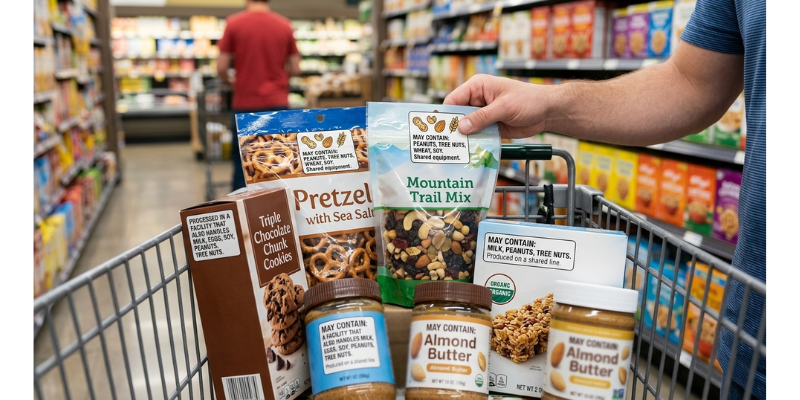
Undeclared allergens are one of the most frequent triggers of FDA food recalls in the United States. At the same time, precautionary labels like “may contain peanuts” appear on thousands of products with little regulatory guidance behind them.
The discussions could eventually reshape how allergen risks are evaluated, how cross-contact warnings are used, and how food companies manage labeling compliance. While the initiative does not immediately change regulations, it signals a possible shift toward science-based allergen risk standards.
The FDA’s 2026 Allergen Initiative: What the Agency Is Evaluating
The FDA is examining whether scientific allergen exposure thresholds should guide food labeling decisions and precautionary allergen warnings.
In February 2026, the agency hosted a virtual public meeting and stakeholder listening sessions focused on allergen risk assessment. Scientists, food manufacturers, allergy specialists, and consumer advocates discussed whether defined allergen thresholds could improve labeling consistency.
Public comments remain open through May 19, 2026, and the FDA will use the input to evaluate potential regulatory actions or guidance.
The central issue is whether the U.S. should move toward a risk-based allergen labeling framework, similar to approaches already discussed by international regulatory bodies.
Key questions under consideration include:
- Should the FDA adopt reference doses for major allergens?
- When should precautionary allergen labeling be required?
- How should cross-contact risks be evaluated during manufacturing?
The answers could affect how companies manage allergen control programs and labeling decisions across the food industry.
Allergen Thresholds Explained: The Science Behind Trace Exposure
Allergen thresholds represent the smallest quantity of an allergenic protein capable of triggering reactions in sensitive individuals.
Researchers have spent years analyzing reaction data from allergic populations to estimate exposure levels that trigger symptoms. These studies allow scientists to calculate reference doses, which represent allergen amounts that cause reactions in only a small percentage of individuals.
For example:
- Extremely small trace exposures may trigger reactions in very few individuals
- Higher exposure levels increase the likelihood of allergic responses
Regulators can use this information to determine when allergen warnings are necessary.
Internationally, organizations such as the Food and Agriculture Organization (FAO) and the World Health Organization (WHO) have recommended reference doses for major allergens through the Codex Alimentarius Commission.
The FDA is now evaluating whether similar thresholds should influence U.S. regulatory policy.
The Nine Allergens U.S. Food Labels Must Disclose
Federal law requires clear labeling of nine major allergens responsible for most allergic reactions.
Under the Food Allergen Labeling and Consumer Protection Act (FALCPA) and the FASTER Act, food labels must disclose the presence of:
- Milk
- Eggs
- Fish
- Crustacean shellfish
- Tree nuts
- Peanuts
- Wheat
- Soybeans
- Sesame
Manufacturers must identify these allergens within the ingredient list or in a separate “Contains” statement on the label.
If a product contains one of these allergens but fails to disclose it, the product may be considered:
- Misbranded
- Adulterated
under the Federal Food, Drug, and Cosmetic Act.
This regulatory framework is why allergen mislabeling frequently results in FDA recalls and enforcement actions.
The Regulatory Gray Area Around “May Contain” Allergen Warnings
Precautionary allergen labeling — such as “may contain,” “manufactured in a facility with,” or “processed on shared equipment” — is currently unregulated in the United States.
These statements are meant to warn consumers about cross-contact, which occurs when allergens unintentionally enter a product during manufacturing, processing, or packaging.
However, because the FDA has never established formal rules governing these warnings, companies use them inconsistently.
Common issues include:
- Overuse of precautionary labels to reduce legal risk
- Lack of clarity about actual allergen exposure levels
- Consumer confusion about whether warnings reflect real danger
For individuals with food allergies, this can significantly limit available food choices.
A scientifically defined allergen threshold could help regulators determine when precautionary labeling is appropriate and when it is unnecessary.
Threshold-Based Allergen Rules Could Change Compliance Strategy
If the FDA adopts allergen thresholds, companies may need to support labeling decisions with documented allergen risk assessments.
A threshold-based system would likely affect several areas of food compliance.
Allergen risk analysis
Manufacturers may need to evaluate whether cross-contact exposure exceeds a defined allergen threshold.
Precautionary labeling decisions
Companies may only be able to use “may contain” warnings when exposure risks meet or exceed regulatory thresholds.
Manufacturing controls
Facilities may need stronger programs addressing:
- Allergen segregation
- Equipment cleaning validation
- Ingredient verification
- Cross-contact monitoring
Supplier risk management
Ingredient sourcing and supplier disclosures could become more important if allergen trace levels affect labeling decisions.
For many companies, these changes could require updating allergen control plans and internal compliance procedures.
Why Allergen Labeling Is a Major Recall and Litigation Risk
Short answer:
Undeclared allergens are consistently among the top causes of FDA food recalls, creating regulatory and legal exposure for food companies.
If allergens are discovered in a product without proper labeling, the FDA may:
- Initiate or request a product recall
- Issue warning letters
- Pursue enforcement under the Food, Drug, and Cosmetic Act
At the same time, companies may face civil litigation, including:
- Consumer injury lawsuits
- Product liability claims
- Class actions alleging misleading labeling
Because allergen reactions can be severe or life-threatening, courts often treat these cases seriously.
Clearer regulatory thresholds could eventually influence how regulators, courts, and plaintiffs evaluate allergen risk and labeling decisions.
How Juris Law Group Helps Food Companies Manage FDA Allergen Compliance
Food labeling compliance requires careful alignment between regulatory rules, manufacturing practices, and marketing statements. As FDA allergen policies evolve, companies must ensure their allergen control programs and labeling strategies reflect current regulatory expectations.
Juris Law Group advises food and beverage companies on:
- FDA food labeling and ingredient disclosure requirements
- Allergen compliance and risk management programs
- Product recalls and FDA enforcement actions
- Advertising and marketing compliance for food products
Regulatory audits and compliance strategy for manufacturers and distributors
Our attorneys have extensive experience navigating FDA regulatory law, food labeling disputes, and consumer protection litigation, helping companies identify potential risks before they escalate into recalls or lawsuits.
FAQs
Does the FDA regulate “may contain” allergen statements?
No. Precautionary allergen labeling such as “may contain” or “manufactured in a facility with” is currently voluntary and not specifically regulated by the FDA.
What is the FDA evaluating with allergen thresholds?
The FDA is considering whether scientific allergen exposure thresholds should guide precautionary labeling decisions and allergen risk management.
Which U.S. laws require allergen labeling?
Allergen labeling requirements come primarily from the Food Allergen Labeling and Consumer Protection Act (FALCPA) and the FASTER Act, which added sesame as a major allergen in 2023.
Why are undeclared allergens a major cause of FDA recalls?
When allergens are present but not disclosed on the label, the product may be considered misbranded or adulterated under federal law, which frequently leads to recalls.