California Proposition 65 Enforcement: JANUARY 2026 Update
California’s Proposition 65 enforcement activity remained aggressive at the start of 2026. In January 2026, a total of 512 Notices of Violation (NOVs) were issued—demonstrating continued plaintiff focus on heavy metals in food and consumer goods, as well as sustained scrutiny of packaging-related chemicals such as phthalates and bisphenols.
For manufacturers, importers, licensors, and retailers, these enforcement patterns reinforce why early-year compliance planning is essential. Companies entering Q1 with new suppliers, reformulated products, or untested packaging face elevated Prop 65 litigation risk.
January 1–31, 2026 Proposition 65 Notice of Violation Summary
Total Notices of Violation in January 2026: 512
| Number of Violations | Listed Chemicals | Types of Products Targeted |
|---|---|---|
| 288 | Lead, Lead Compounds | Packaged foods, supplements, decorative bowls, ceramic items |
| 47 | Cadmium | Protein products, plant-based foods, metal consumer goods |
| 37 | Di(2-ethylhexyl)phthalate (DEHP) | Plastic packaging, vinyl accessories, storage items |
| 29 | Bisphenol S (BPS) | Thermal labels, retail receipts, food packaging |
| 18 | Other listed chemicals | Assorted consumer and specialty products |
What Is Proposition 65 and Why Does It Matter?
Proposition 65—formally the Safe Drinking Water and Toxic Enforcement Act of 1986—requires businesses to provide clear warnings before exposing Californians to chemicals known to cause cancer or reproductive harm. The statute currently lists more than 900 chemicals and is enforced primarily through private lawsuits.
Companies found in violation may face:
- Civil penalties of up to $2,500 per violation per day
- Mandatory warning labels or product reformulation
- Costly settlements and attorneys’ fees
- Ongoing monitoring and compliance obligations
Top Chemicals Cited in January 2026
The chart below summarizes the chemicals most frequently cited in January 2026 Proposition 65 enforcement actions.
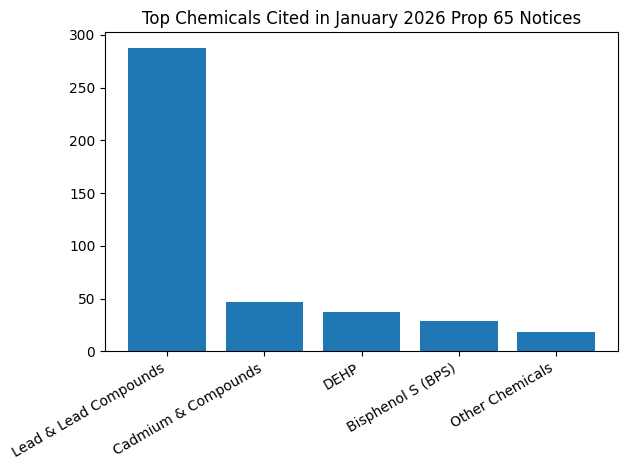
Top Chemicals Cited in January 2026 Prop 65 Notices of Violation
| Chemical | Notices of Violation |
|---|---|
| Lead and Lead Compounds | 288 |
| Cadmium and Cadmium Compounds | 47 |
| Arsenic | 42 |
| Di(2-ethylhexyl)phthalate (DEHP) | 37 |
| Diisononyl Phthalate (DINP) | 31 |
| Bisphenol S (BPS) | 29 |
| Bisphenol A (BPA) | 24 |
| Diethanolamine | 19 |
| PFAS (PFOA / PFOS) | 15 |
| Other Listed Chemicals | 10 |
Notable Chemical Trends in January 2026
Lead in Packaged Foods and Decorative Items
Lead remained the most frequently cited chemical by a wide margin. Notices targeted packaged foods, dietary supplements, and decorative household items—demonstrating that both ingestion and handling exposures continue to drive enforcement.
Cadmium in Nutrition and Plant-Based Products
Cadmium citations appeared most often in protein powders and plant-based food products, reflecting ongoing challenges with naturally occurring metals and agricultural sourcing.
Phthalates in Plastic and Vinyl Goods
DEHP enforcement focused on flexible plastics, storage products, and consumer packaging. Products with soft plastic components remain a consistent target for plaintiffs.
BPS in Thermal Labels and Retail Materials
Bisphenol S (BPS), a common BPA substitute, continued to draw scrutiny in thermal paper and labeling applications—particularly in retail and food distribution environments.
Product Categories Most Frequently Targeted
Food & Beverage
- Packaged meals and spice blends
- Protein powders and dietary supplements
- Plant-based nutrition products
Household & Décor
- Decorative bowls and trays
- Ceramic and glazed consumer goods
Packaging & Retail Materials
- Thermal receipt paper
- Adhesive labels and wrappers
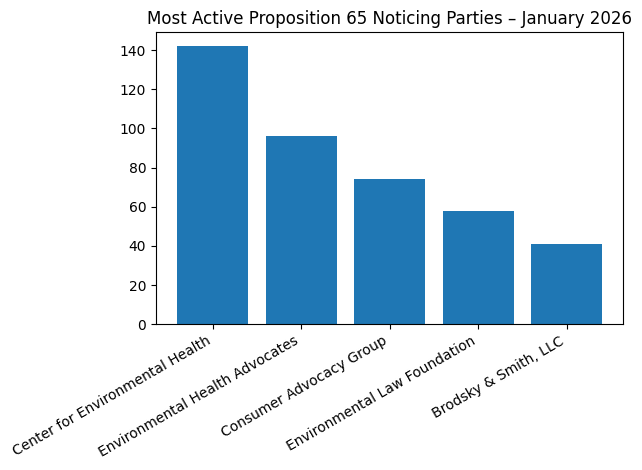
Top Noticing Parties in January 2026
Prop 65 enforcement activity in January 2026 remained highly concentrated among a small group of repeat private plaintiffs.
Most Active Proposition 65 Noticing Parties – January 2026
Top Companies Most Frequently Cited
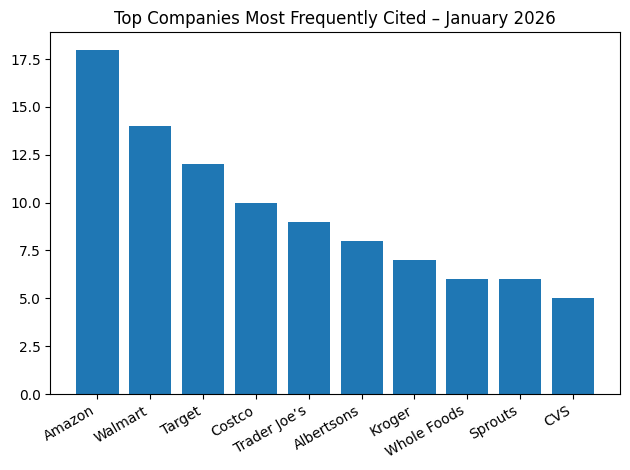
The chart below highlights companies most frequently named in January 2026 Notices of Violation, reflecting continued enforcement focus on large retailers and consumer-facing brands.
Top Companies Most Frequently Cited in January 2026 Prop 65 Notices
| Company Name | Notices Received |
|---|---|
| Amazon.com, Inc. | 18 |
| Walmart Inc. | 14 |
| Target Corporation | 12 |
| Costco Wholesale Corporation | 10 |
| Trader Joe’s Company | 9 |
| Albertsons Companies, Inc. | 8 |
| The Kroger Co. | 7 |
| Whole Foods Market | 6 |
| Sprouts Farmers Market | 6 |
| CVS Pharmacy, Inc. | 5 |
What Risks Do Licensors Face When Licensees Trigger Prop 65 Violations?
Licensors may face Prop 65 exposure even when they do not manufacture or distribute products directly. If a brand name or trademark appears on the product, plaintiffs may argue shared responsibility for warnings and compliance.
Key protective measures include:
- Prop 65 compliance warranties in license agreements
- Mandatory third-party testing
- Indemnity and insurance provisions
- Monitoring licensed products sold in California
How Can My Company Avoid a Prop 65 Lawsuit?
- Perform Ingredient and Packaging Testing
- Evaluate and Update Warning Labels
- Strengthen Supplier Agreements
- Monitor New Notices and Industry Trends
- Engage Experienced Legal Counsel
About Juris Law Group
Juris Law Group advises food, beverage, supplement, cosmetic, and consumer-product companies on Proposition 65 compliance and enforcement, including audits, warning strategy, supply-chain risk management, and defense of 60-day notices.
Frequently Asked Questions (FAQ)
Do trace amounts still trigger Prop 65 liability?
Yes. Many enforcement actions involve trace exposures, especially where no safe harbor exists.
Do online and private-label sellers face risk?
Yes. Online sellers, importers, distributors, and private-label brands are frequent targets.
Want to Protect Your Brand from a Prop 65 Lawsuit?
Contact Juris Law Group at connect@jurislawgroup.com.