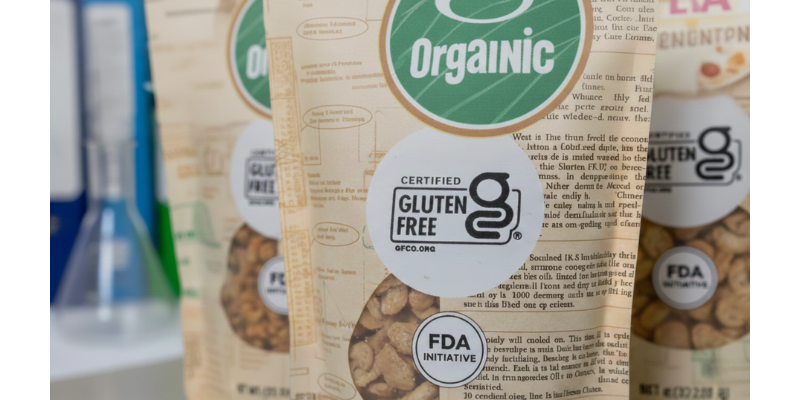
The FDA is taking a closer look at how gluten is disclosed and controlled in packaged foods—particularly when gluten comes from sources other than wheat.
In January 2026, the agency issued a Request for Information (RFI) that could influence future labeling rules and manufacturing expectations for food brands, ingredient suppliers, and co-packers.
While the RFI does not change the law, it signals growing regulatory attention to gaps that have long concerned consumers with celiac disease—and that increasingly show up in enforcement actions and class-action complaints.
Why Did the FDA Issue This RFI?
The RFI was prompted by a citizen petition submitted by Celiac Journey, which asked FDA to require clearer disclosure of all gluten-containing ingredients and to adopt formal controls to prevent gluten cross-contact during manufacturing.
Rather than immediately proposing new rules, FDA is gathering data. The agency also tied the effort to broader federal health initiatives emphasizing transparency for ingredients linked to chronic health conditions, including celiac disease.
For regulated companies, this is an early warning: gluten disclosure beyond wheat is back on FDA’s radar.
What Ingredients Is the FDA Focusing On?
FDA’s inquiry is narrowly focused on what it calls “ingredients of interest,” including:
- Barley and rye, which contain gluten but are not major allergens under U.S. law; and
- Oats, due to frequent cross-contact with gluten-containing grains during farming and processing.
This distinction matters. Wheat must be declared as an allergen. Barley and rye generally do not—despite being unsafe for people with celiac disease. That regulatory gap is at the center of the RFI.
What Information Is the FDA Asking For?
The agency is building a factual record in four main areas:
Adverse Health Effects
FDA is seeking data on reactions associated with barley, rye, and gluten-contaminated oats, including severity, frequency, and real-world outcomes.
Labeling Practices
FDA wants examples of how gluten-containing ingredients are disclosed today, including cases where the source of gluten may not be clear to consumers—such as malt ingredients or broadly described flavorings.
Cross-Contact Controls
The RFI asks how often gluten cross-contact occurs, particularly with oats, and what controls manufacturers currently use to prevent it. FDA is also interested in the feasibility of stronger controls.
Consumer Experience
FDA is soliciting firsthand accounts from individuals who avoid gluten, including difficulty interpreting labels and experiences with adverse reactions despite apparent compliance.
How This Fits Into Current Gluten Labeling Rules
Under existing FDA regulations:
- Wheat must be disclosed as a major allergen.
- Gluten itself is not classified as a major allergen.
- “Gluten-free” labeling is voluntary but must meet strict criteria if used.
What the rules do not require is consistent disclosure of all gluten sources. The RFI suggests FDA is reassessing whether that framework still makes sense.
What Could Change as a Result?
The RFI does not mandate new requirements. But it could lead to:
- Clearer disclosure expectations for barley- and rye-derived ingredients;
- More formal guidance—or regulation—around gluten cross-contact controls;
- Increased scrutiny of “gluten-free” claims tied to oat sourcing; and
- A higher standard that plaintiffs may cite in future litigation.
Even without new rules, FDA commentary often shapes enforcement priorities and risk exposure.
Why Food Companies Should Pay Attention Now
Consider an oat-based product that does not claim to be gluten-free but is marketed to health-conscious consumers. If FDA later determines that oat cross-contact is a known, preventable risk, the absence of controls—or clear disclosure—could become a problem.
Similarly, products using barley-derived malt may technically comply with current rules but still face challenges if disclosure expectations shift.
This is not theoretical. These are common fact patterns in recent food labeling disputes.
What Happens Next?
The public comment period runs through March 23, 2026. After reviewing submissions, FDA may issue guidance, pursue rulemaking, or take no further action.
Regardless of the outcome, the RFI itself reflects increasing pressure on how gluten is handled in packaged foods.
Frequently Asked Questions (FAQ)
Does this RFI change gluten labeling rules right now?
No. The RFI does not impose new requirements. It is an information-gathering step that could inform future guidance or regulations.
Are barley and rye currently required to be disclosed as allergens?
No. Only wheat is classified as a major food allergen under U.S. law. Barley and rye are not, even though they contain gluten.
Is FDA proposing to ban oats or oat-based products?
No. FDA is focused on cross-contact risks and transparency, not prohibiting oats.
Should food companies change their labels now?
Not necessarily—but companies should review ingredient sourcing, supplier controls, and disclosure practices in light of potential regulatory and litigation trends.
Can this lead to increased class-action risk?
Yes. FDA inquiries often influence how plaintiffs frame claims, even before any formal rule changes occur.
Key Takeaway
FDA’s gluten RFI does not change the law—but it signals renewed scrutiny of how gluten is disclosed and controlled, particularly beyond wheat.
Food companies that understand their exposure now will be better positioned if FDA moves from questions to requirements.