“Clean beauty” is one of the cosmetics industry’s most powerful marketing labels. But as the category grows, so does litigation. Without a legal definition for “clean,” plaintiffs and regulators are increasingly challenging whether these claims mislead consumers.
Here’s what cosmetic brands need to know about the governing legal standards, recent lawsuits involving recognizable companies, and how to reduce exposure.
Is “Clean Beauty” Defined Under U.S. Law?
Short answer: No. Neither the FDA nor the FTC formally defines “clean beauty,” which makes the term legally vulnerable.
Under the Federal Food, Drug, and Cosmetic Act (FDCA), as amended by the Modernization of Cosmetics Regulation Act of 2022 (MoCRA), cosmetics must be safe and properly labeled. However, the statute does not define marketing terms such as “clean,” “non-toxic,” or “natural.”
Courts instead evaluate these claims under:
- The FTC Act (prohibiting deceptive advertising)
- State consumer protection statutes (e.g., California’s UCL and CLRA)
- The Lanham Act (for competitor lawsuits)
When a term lacks regulatory definition, courts look at how a reasonable consumer would interpret it.
Why Are Plaintiffs’ Firms Targeting “Clean” Messaging?
Short answer: Because undefined safety and ingredient claims create room to argue consumers were misled.
In recent years, several recognizable beauty brands have faced lawsuits challenging “clean,” “natural,” or “non-toxic” representations.
Recent Examples Involving Recognizable Brands
- Kosas Cosmetics faced litigation alleging that preservative-related issues conflicted with its “clean” positioning.
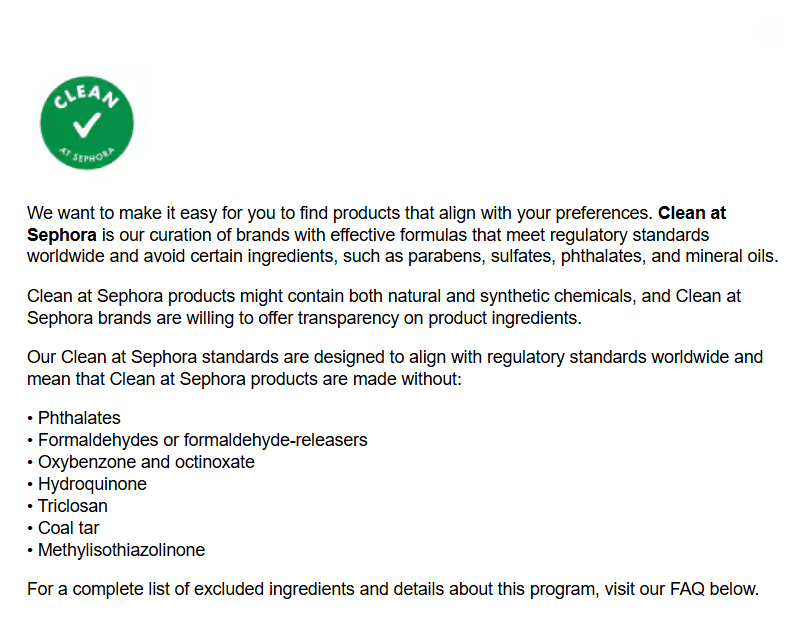
- Sephora’s “Clean at Sephora” program has been referenced in lawsuits questioning whether certain products met consumer expectations associated with the label.
- Honest Beauty has faced scrutiny in past “natural” marketing disputes.
- Major brands such as CoverGirl and Maybelline (Coty and L’Oréal) have been targets of false advertising suits involving ingredient or safety representations in various product lines.
- PFAS-related lawsuits have been filed against cosmetic manufacturers marketing products as “safe” or “clean,” alleging the presence of synthetic compounds.
The theory is consistent: if a “clean” product contains ingredients consumers would not expect, plaintiffs argue the label is deceptive.
Most claims are filed under:
- California’s Unfair Competition Law (UCL)
- California’s Consumers Legal Remedies Act (CLRA)
- New York General Business Law §349
These statutes make class actions easier to pursue.
When Does “Clean” Become a Deceptive Advertising Claim?
Short answer: When marketing implies safety or health benefits that are not substantiated.
The FTC requires advertising to be truthful, not misleading, and supported by competent and reliable evidence. Implied claims count.
Pairing “clean beauty” with phrases like:
- “No harmful chemicals”
- “Toxin-free”
- “Safer for your skin”
- “Better for you”
may imply a comparative safety advantage. Those implications require substantiation.
The FTC’s Green Guides also caution against vague environmental claims. If “clean” suggests environmental superiority, brands must support that message.
Source: FTC Act, 15 U.S.C. §45; FTC Green Guides.
How MoCRA’s Expanded FDA Authority Increases Exposure
Short answer: MoCRA doesn’t define “clean,” but it strengthens safety oversight.
MoCRA introduced:
- Mandatory facility registration
- Product listing requirements
- Serious adverse event reporting
- FDA mandatory recall authority
If marketing emphasizes safety while adverse event reports suggest otherwise, discrepancies may draw regulatory scrutiny.
Marketing claims and regulatory documentation must align.
Source: Modernization of Cosmetics Regulation Act of 2022.
The Legal Risk of “Free-From” Ingredient Claims
Short answer: “Free-from” lists can mislead if incomplete or exaggerated.
Common claims include:
- “No parabens”
- “No sulfates”
- “No phthalates”
- “No PFAS”
Risk arises when substitute ingredients raise similar safety debates, trace contaminants are detected, or messaging implies competitor products are unsafe.
Comparative implications can trigger Lanham Act claims by competitors.
Are Retailer “Clean” Standards a Legal Shield?
Short answer: No.
Retailers like Sephora and Ulta Beauty maintain internal ingredient standards. However, compliance with retailer criteria does not prevent consumer lawsuits.
Courts focus on consumer perception—not internal definitions. If marketing exceeds retailer standards, exposure increases.
When “Clean Beauty” Becomes Greenwashing
Short answer: When environmental or safety messaging lacks support.
Regulators and courts scrutinize:
- Vague claims like “eco-safe”
- “Chemical-free” statements
- Overstated sustainability benefits
- Unverified recyclability claims
California and New York regulators remain particularly active in this area.
Can Competitors Sue Over “Clean” Claims?
Yes.
Under Section 43(a) of the Lanham Act, competitors can challenge:
- False or misleading advertising
- Comparative safety claims
- Market share harm
In the beauty industry, ingredient-based marketing often invites competitor scrutiny.
Why Work With a Cpg Attorney in California on “Clean Beauty” Claims?
Short answer: California drives cosmetics litigation nationwide.
Many “clean beauty” lawsuits are filed under California’s UCL and CLRA. Even out-of-state brands face exposure if products are sold in California.
Juris Law Group, P.C. advises beauty companies on:
- FTC and California advertising compliance
- Substantiating “clean” and “non-toxic” claims
- MoCRA readiness and FDA response strategy
- California ingredient restrictions
- Trademark and trade dress protection
- Defense of false advertising and unfair competition claims
We focus on practical risk reduction—aligning marketing, regulatory documentation, and brand protection strategy. For companies seeking brand protection in California, compliance requires coordinated oversight across advertising, influencer content, retail partnerships, and IP protection.
Why “Clean Beauty” Litigation Is Likely to Continue
Three forces are converging:
- Ingredient transparency driven by social media
- Expanded FDA oversight under MoCRA
- Active consumer class action firms
“Clean” remains powerful marketing—but legally, it functions as a claim requiring definition and substantiation.
Brands that treat it as a compliance standard—not just a slogan—are better positioned to withstand scrutiny.
FREQUENTLY ASKED QUESTIONS (FAQs)
Is “clean beauty” regulated by the FDA?
No. The FDA does not define “clean beauty,” but cosmetics must comply with federal safety and labeling laws.
Can a brand be sued for using the word “clean”?
Yes. If consumers reasonably interpret “clean” as implying safety or ingredient exclusions that are inaccurate, litigation may follow.
Have major beauty brands faced these lawsuits?
Yes. Brands including Kosas, Honest Beauty, and products sold under retailer “clean” programs have faced litigation or scrutiny.
Does MoCRA regulate “clean” claims?
No. MoCRA expands FDA oversight of safety and reporting, but it does not define marketing terms like “clean.”
Are PFAS allegations affecting clean beauty marketing?
Yes. Lawsuits have targeted brands marketing products as “safe” or “clean” while allegedly containing PFAS.